
Looking for what to see in the sky this week? This guide highlights the upcoming astronomical events. Scroll down for sky maps and viewing tips, and use the Sky Tonight app to check when and where each object will appear in your sky.
ContentsSky Events Tonight: September 27
Main astronomy event tonight: Moon near Saturn.
Moon tonight: Waning gibbous Moon.
Planets visible tonight: Evening — Venus. Late evening to dawn — Saturn and Neptune. Late night to dawn — Uranus. Before dawn — Jupiter and Mars. Details: Planets Visible Tonight
Constellations visible tonight: Northern Hemisphere — Aquila, Cygnus, Capricornus, Delphinus, Sagitta, Equuleus, Vulpecula. Southern Hemisphere — Aquila, Capricornus, Pavo, Indus, Delphinus, Sagitta, Equuleus, Vulpecula, Microscopium. Details: Constellations in September 2026
Upcoming Astronomical Events: September 27-October 3, 2026
DateEventBest timeEquipmentSeptember 27Moon near SaturnEveningNaked eyeSeptember 28–29Moon, Hamal, and Sheratan form an isosceles triangleLate evening/early morningNaked eyeOctober 1Daytime Sextantids peakBefore dawnNaked eyeOctober 1Moon near UranusLate evening/nightBinoculars/telescopeOctober 1Moon near AldebaranLate evening/nightNaked eyeOctober 2–3Moon, Aldebaran & Betelgeuse triangleLate evening/early morningNaked eye
Below, you’ll find sky events arranged by date, with quick viewing tips to help you choose the best nights for stargazing. All dates are listed in GMT, so the exact calendar date may differ in your local time zone; however, the times shown on the sky maps are given in local time.
September 27: Moon near Saturn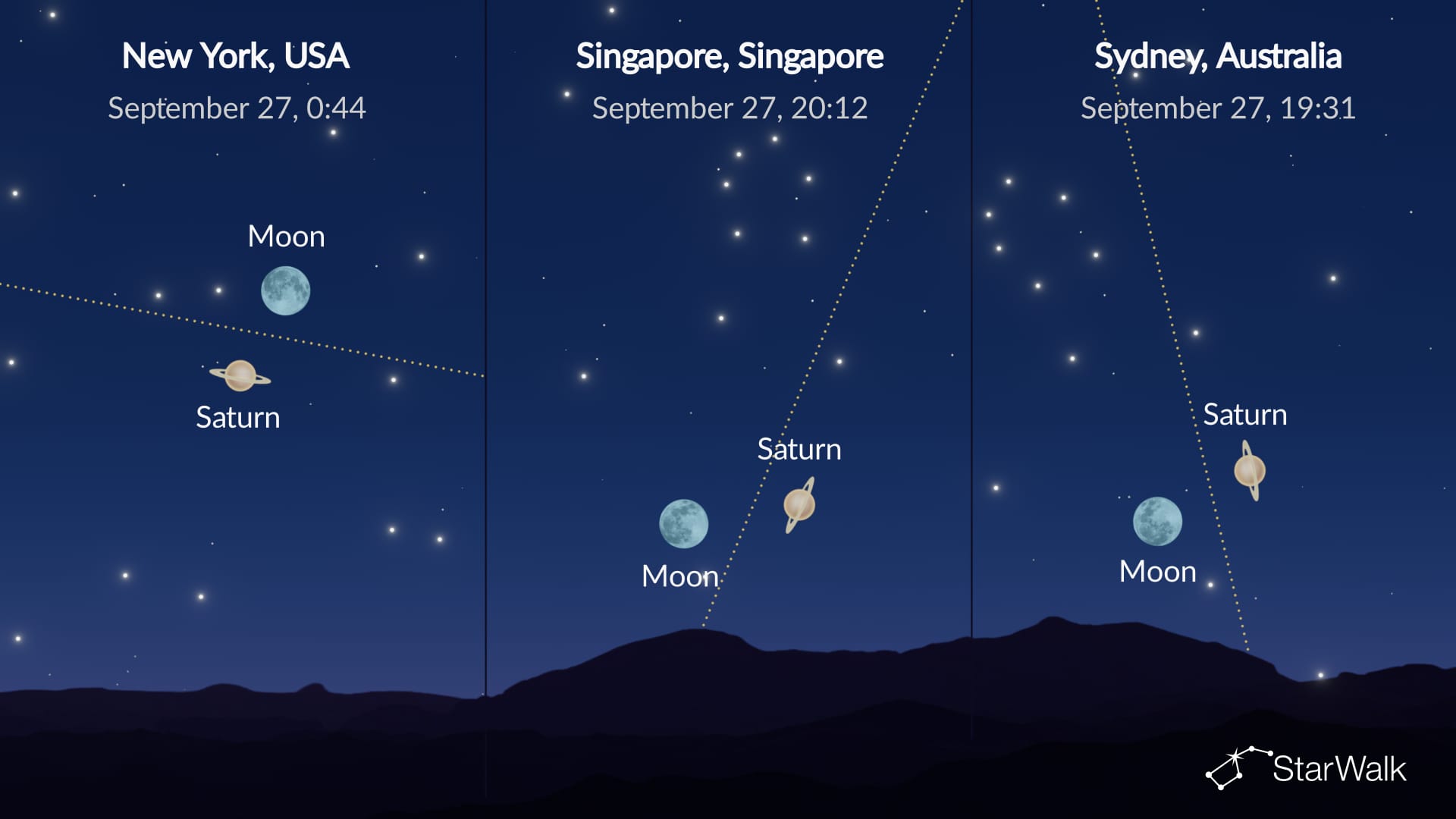 Look for Saturn close to the almost full Moon after sunset and through the night. The Moon will be hard to miss, and Saturn will appear nearby as a steady yellowish point of light. The pair should be easy to spot with the naked eye, although binoculars will make the view even nicer.September 28–29: Moon, Hamal, and Sheratan form a triangle
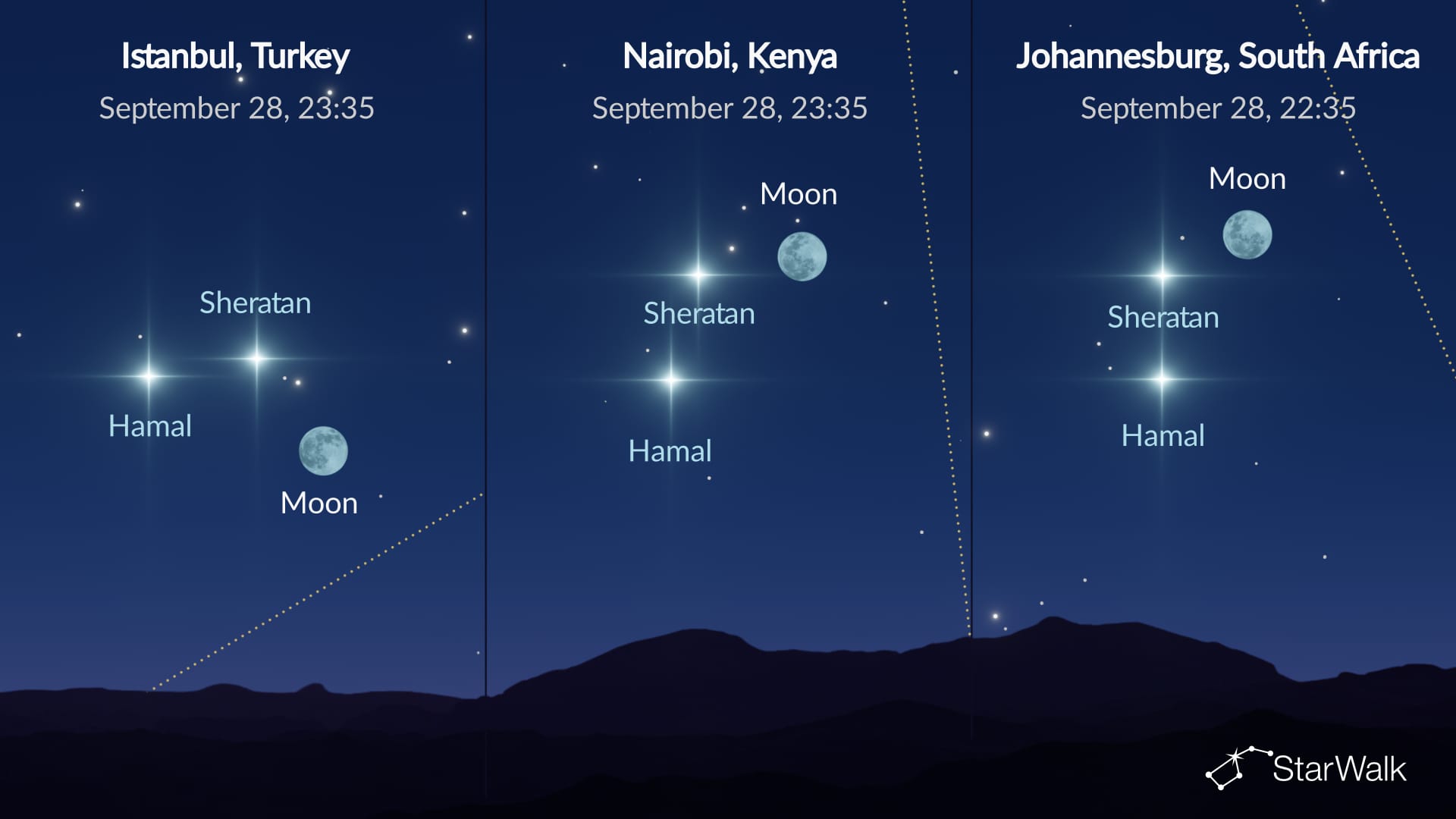 On the night of September 28–29, the Moon will pass near Hamal and Sheratan, the two brightest stars of Aries. Hamal and Sheratan sit about 4° apart; at the right time, the Moon will lie at a similar angular distance from Sheratan, forming a roughly isosceles triangle. The exact shape depends on your location and viewing time. All three are visible to the naked eye.October 1: Daytime Sextantid meteor shower peak; Moon near Uranus and Aldebaran
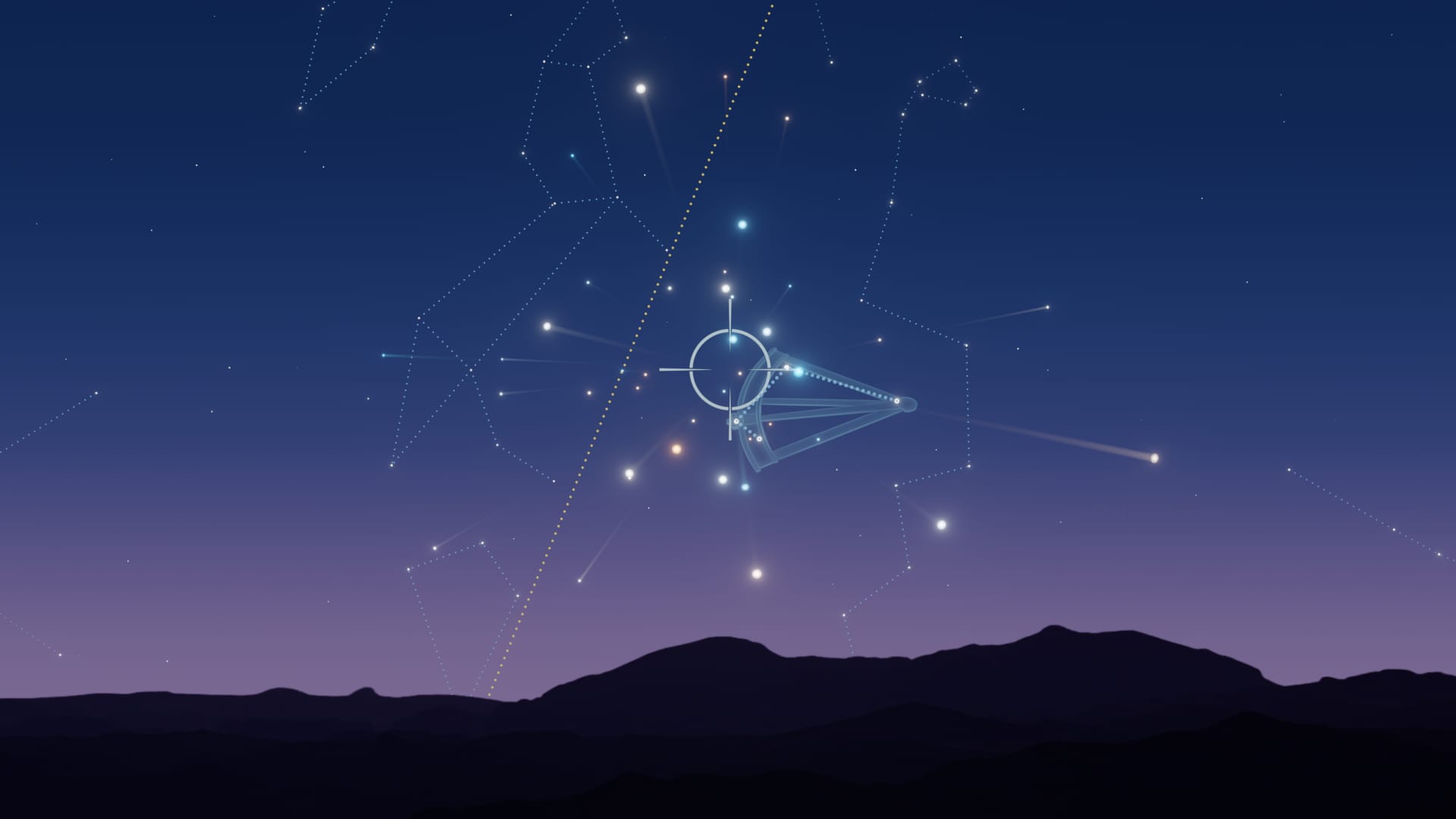 Just before sunrise, keep an eye on the eastern sky for the Daytime Sextantids. This is a modest meteor shower, so don’t expect a spectacular display — spotting even one meteor in the brightening dawn would be a nice catch. No equipment is needed, just a dark spot and a clear view toward the horizon.
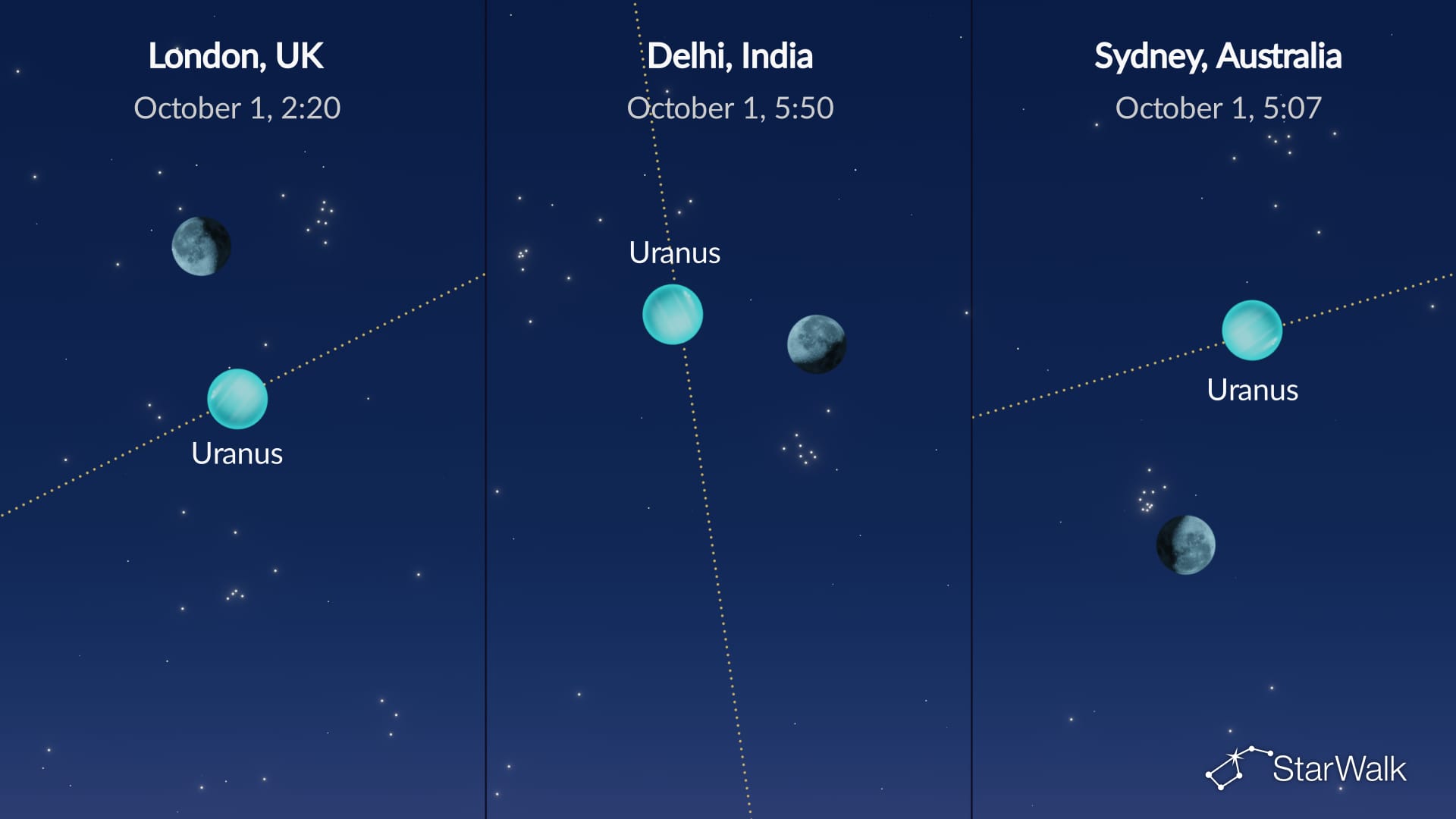 Look toward Taurus late at night to find the bright Moon passing near Uranus. The distant ice giant is much fainter than the Moon and won’t stand out to the naked eye, so binoculars or a telescope will help you pick it out. Aldebaran and the Pleiades provide familiar landmarks nearby.
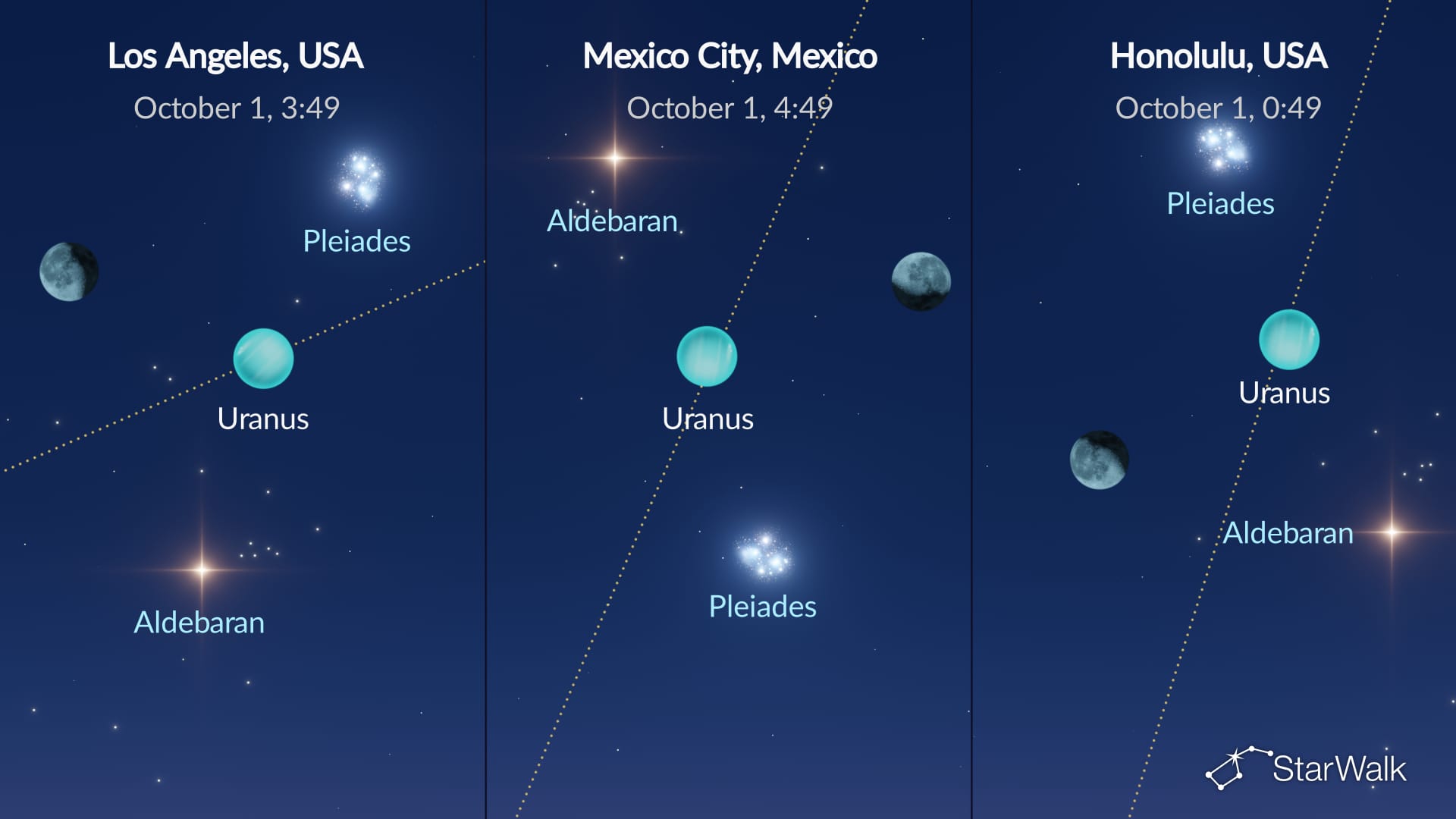 A few hours later, the Moon will move across Taurus from the vicinity of Uranus toward bright Aldebaran. The two won’t be extremely close, but they’ll make an eye-catching pair, with the Hyades and Pleiades adding even more detail to the scene. The Moon and Aldebaran are both easy to see with the naked eye.October 2–3: Moon, Aldebaran, and Betelgeuse form a triangle
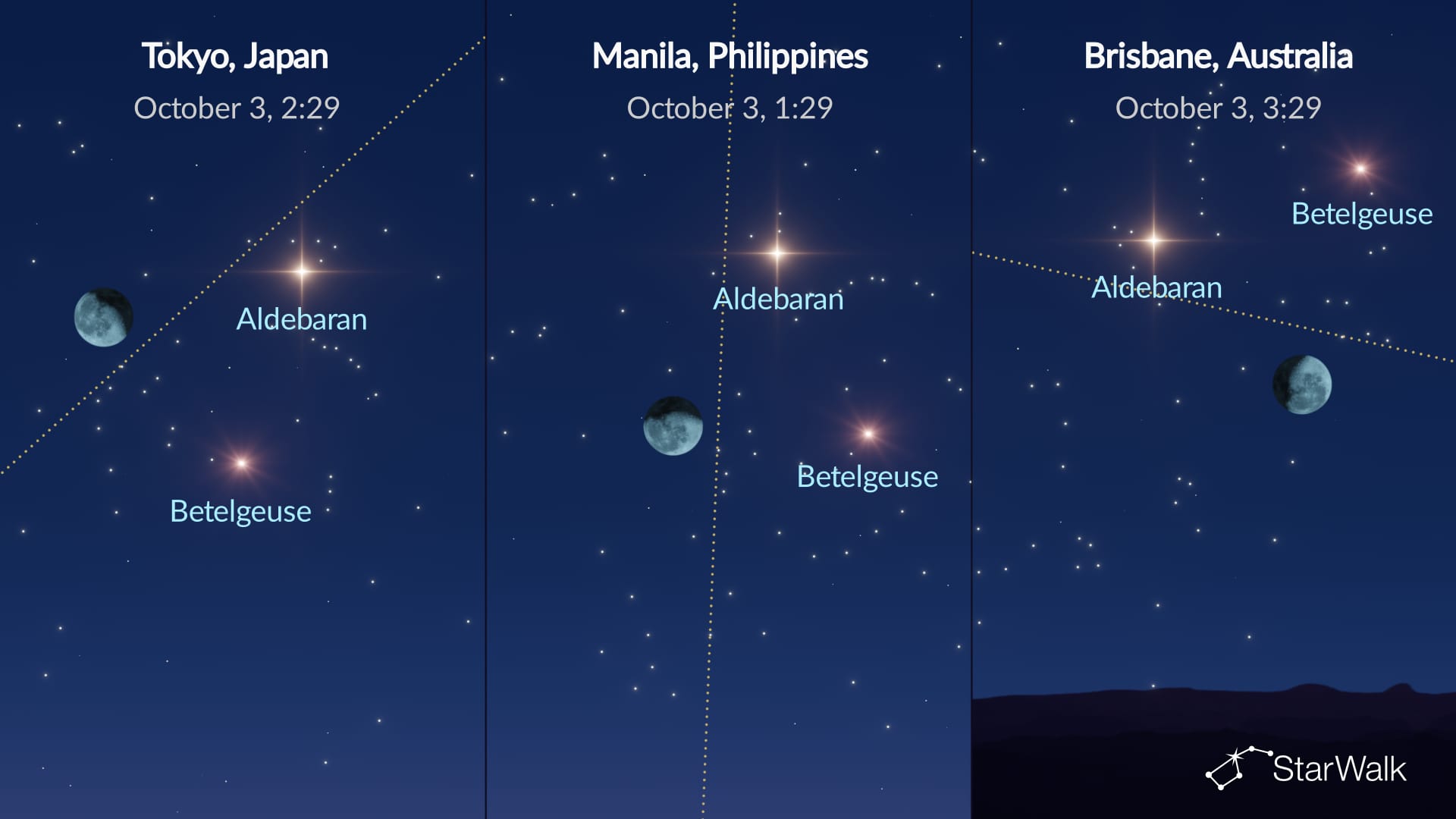 The Moon, Aldebaran, and Betelgeuse will form a large, striking triangle in the sky, with the two bright orange-red stars appearing on opposite sides of the Moon. The pattern will look especially close to an equilateral triangle late on October 2 and before dawn on October 3. The best view will be from East and Southeast Asia, Australia, and New Zealand. All three objects are easy to see with the naked eye.Night Sky Tonight: Bottom Line
There is almost always something worth seeing in the night sky. Use this guide to choose the best events for tonight and the coming days, but remember that visibility depends on your location, local time, weather, and light pollution. For the most accurate view, check the exact position of each object in the Sky Tonight app before you go outside.
Want to plan beyond the dates listed here? Check the full monthly calendar of astronomical events in September 2026.