
But Hipkins today said a figure for pay equity “won’t be a specific line item” in Labour’s fiscal plan.
“No government would put anything that involves bargaining as a specific line item in their plan,” he said.
Hipkins said Labour’s plan to reinstate the previous pay equity scheme was affordable.
“You’ll see our fiscal plan, but when it comes to issues of bargaining, Government doesn’t release the envelope for bargaining publicly. It never has and we’re certainly not going to start doing that now.”
National finance spokeswoman Nicola Willis said not putting the cost in the plan would be “an act of fiscal fraud”.
“The simple reality is this: they have gone around the country making a commitment that they will fully restore the pay equity regime,” she told the Herald.
“The cost of doing that has been public for 18 months. That cost is $11 billion at a minimum. So to say we will simply eliminate that from our fiscal plan is … an act of fiscal fraud and fundamentally undermines the credibility of any commitment Labour makes.”
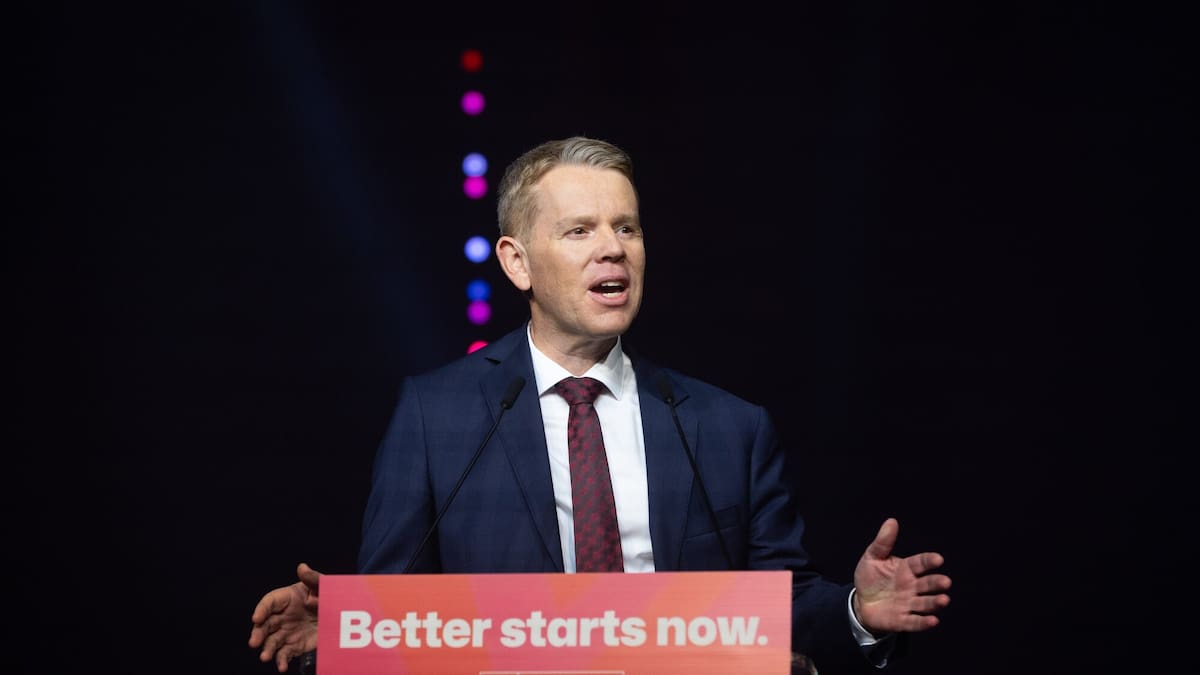
Labour’s Chris Hipkins says there won’t be a specific costing for pay equity in the party’s fiscal plan. Photo / Sylvie Whinray
Labour finance spokeswoman Barbara Edmonds also refused to say how much money Labour would put towards pay equity.
“We will have a sufficient contingency and we’ll show that as part of our fiscal plan,” she said.
Contingent liabilities in a Budget are possible costs the Government may incur if an event occurs, such as in this case the settlement of a claim after negotiations.
Pay equity is listed as an “unquantifiable contingent liability”, so it has no figure attached. There are also quantifiable contingent liabilities, with a given cost.
Asked by the Herald if there will be a numerical figure attached to pay equity as part of the overall contingency, Edmonds said: “We will have a sufficient contingency … there will be a sufficient number as part of the contingent liabilities”.
Pushed on whether New Zealanders will know going into the election how much money Labour would put aside for pay equity, Edmonds said: “There will be a contingent liability”.
She said the pay equity number “will be part of a contingent liability”.
Asked if she would make that number public or if New Zealanders would just see an overall amount, Edmonds repeated: “It will be part of a contingent liability.
“There are also contingent liabilities, but pay equity is obviously the biggest one.”
Edmonds said pay equity “has always been a negotiation”.
“It is always generally shown as a contingent liability in the Government’s books. We will be using the same treatment, and it will definitely be sufficient.”
Barbara Edmonds says the contingent liability will be sufficient to deal with pay equity changes. Photo / NZME
There was at least $12.8b previously in contingency for pay equity. That’s the amount Treasury said was returned from two contingency funds when the Government made its changes last year.
One fund was used to manage the cost of the Government’s pay equity obligations as an employer, while the second was to manage the Government’s contributions to pay equity settlements in the funded sector (where private organisations deliver Government services).
There was $3.2b returned from the first fund and $9.6b from the second, creating $12.8b overall. Of the $12.8b, just under $11b was in operating allowance and $1.8b was capital funding.
As the Government says it remains committed to pay equity – albeit with a tighter scheme – there is an undisclosed contingency for future costs it may face as an employer.
Edmonds has previously said the amount in the previous contingency funds was an estimate of what may be needed to settle claims.
“The $12.8b comes from contingency funds, basically money that’s set aside as a precaution. That amount is an estimate, Treasury’s best guess of what might be required,” she said earlier this year.
She said that was a different figure from what the actual pay equity settlements would cost.
“We’ve asked to see the detailed calculations behind Treasury’s estimates but much of that advice still hasn’t been made available.”
Jamie Ensor is the NZ Herald’s chief political reporter, based in the press gallery at Parliament. He was previously a TV reporter and digital producer in the Newshub press gallery office. He was a finalist in 2025 for Political Journalist of the Year at the Voyager Media Awards.