

Wellingtonians may pay more for electricity network
Wellington Electricity is looking to increase lines charges by nearly 30 percent across the region in the coming years.
The company said ageing infrastructure, a move away from gas, and increased storms are putting pressure on its network.
Consumer NZ says that will be tough on households already rationing electricity to get by.
‘We can’t wait’ – Electricity boss
Wellington Electricity chief executive Greg Skelton said from 2028, charges could increase by between an extra $144 and $168 for a year, on top of the $600 annual bill Wellingtonians already pay – an extra $12 to $14 per month.
Chief executive Greg Skelton said the company needed to spend $1 billion over the next 15 years.
“There’s no choice – we can’t sit back and go let’s wait another decade, if we do then the network…won’t provide the service that people are used to.”
Lines charges are set every five years and are regulated by the Commerce Commission. The company is planning to ask the commission to allow it to increase its prices, and has started consulting with Wellington residents.
Skelton said the city had 65,000 households still using gas, but expected that would soon change, with more drivers turning to electric vehicles, and households looking at installing solar.
RNZ / Baz Macdonald
Wellington Electricity had some of the lowest lines charges in the country, Skelton said, because it had a lot of assets underground and up to now, relatively high gas usage.
“The modelling we’ve done shows that once solar gets to around 25 percent of the consumers with solar, then there isn’t much more room for anyone else.”
He said the company was also looking to increase its 90 staff to 150, and improve its IT systems to be able to process more data.
At the moment the company could only access information from some of its substations in some of the city’s suburbs – it could not see detailed information about how much electricity was being used and at what time on specific streets.
He said some infrastructure was now ageing, and investment would need to target larger substations in the city first – which cost between $2 million and $4m to replace.
Skelton said a lot of “excavation and trenching work” of roads would be needed to fix the underground cable system to link this back to the national grid.
Staff would be holding drop-in centres in areas from November to talk to residents about the plans, and what it wanted to see from more investment.
‘People already rationing electricity – Consumer NZ
Lines charges made up about 35 percent of people’s power bills in the rest of the country – in the capital Wellington Electricity said it was about 25 percent.
Lines charges are incorporated into people’s power bills, and include distribution – the cost of poles, substations and lines, and also transmission – the cost charged by Transpower to operate the National Grid.
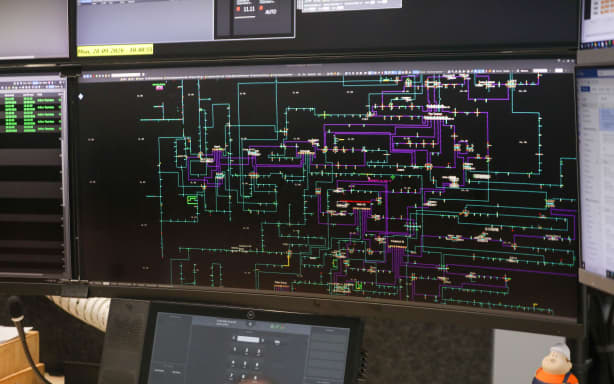
Inside the Wellington Electricity control room.
RNZ / Baz Macdonald
Consumer NZ’s Powerswitch manager Paul Fuge said while investment was necessary to keep the network reliable, Wellington Electricity’s increases came at a time when people were struggling.
“People are rationing their use of electricity to the point where it’s affecting their health and well-being.
“One in five households told us in our latest survey they have gone to bed cold, gone to bed early to stay warm to cut back on heating. And that’s really unfortunate in a first world country like New Zealand.”
Fuge said he expected lines charges elsewhere in New Zealand to also increase, as the pressures of weather events, electrification, and ageing infrastructure converged.
Throughout New Zealand total power bills had increased by 20 percent over the past two years, Fuge said, with a large share being due to network or lines charges.
The costs of infrastructure providing every day essentials like water, power and roads was becoming debilitating, Fuge said.
“The increases are more than inflation, and more than an increase in household incomes – and that’s what’s worrying, because these aren’t ‘nice to haves’.”
Fuge said people needed more help to get into lower-cost alternatives like solar and more efficient appliances.
He also recommended people looked at Powerswitch to check if they were paying too much on their power bill – about 90 percent of people were paying too much on their power, because they were not on the right plan, he said.