
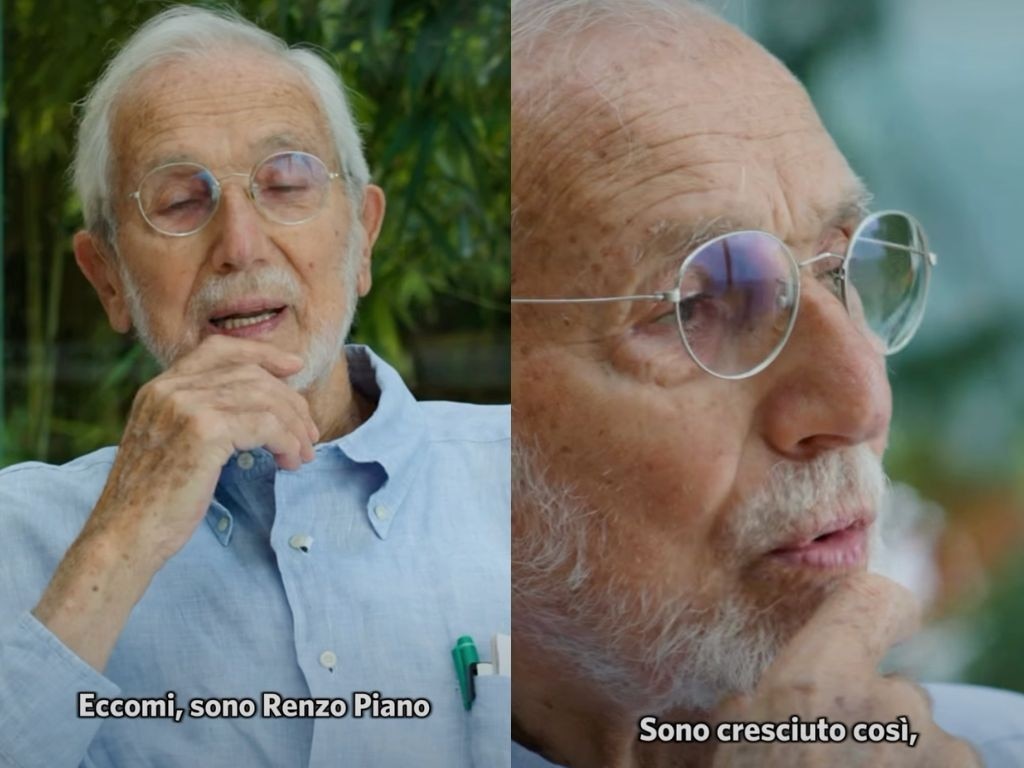
At school, however, Piano was “a dunce”. “Mrs Piano, your son is not normal. I’m sorry to say it, but it’s my duty,” one of his teachers once told his mother. That child would go on to become the architect behind the Centre Pompidou, the New York Times Building and The Shard, before returning to his native Genoa with the redevelopment of the Porto Antico and, in 2020, the San Giorgio Bridge. But in his telling, it all began much earlier, on his family’s small building sites.
“My father would sit me down on a pile of sand and I would stay there. I watched this extraordinary miracle of a column rising up,” Piano recalls. This is where the biographical story turns into a reflection on architecture. “I have been building all my life, everywhere,” he says. Yet the sense of wonder seems to be exactly the same as it was then: “The day before, it’s just sand, it’s nothing, and the next day there’s something standing upright. Building is this: a miracle.”