
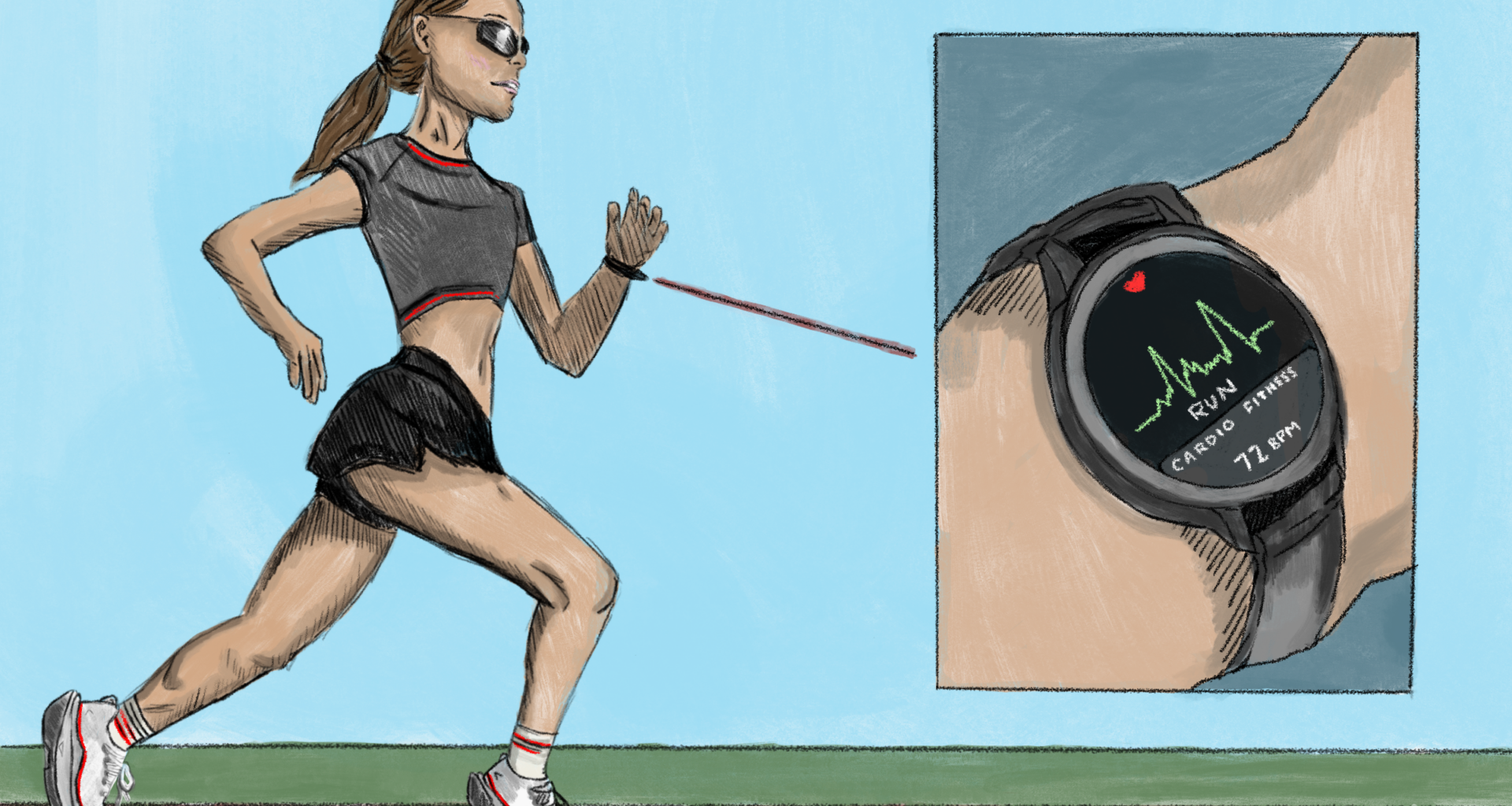
Over the past 10 years, wearable devices — like smartwatches and smart rings — have become increasingly popular among Americans. A School of Kinesiology research review published in July found the health metrics recorded by these devices can vary in accuracy across activity type and measurement method.
In an interview with The Michigan Daily, assistant kinesiology professor Adam Lepley, the study’s primary author and director of the PRIME Lab — which studies health technologies — said the review is meant to be a guide on how to understand and interpret the data collected by these devices.
“We have been working with smartwatches for the past seven years or so in our research, and one of the things that we thought was missing was this framework of, ‘How do individuals look at data coming from smartwatches?’” Lepley said. “‘What do you do with (the data)? How do you understand it? What’s the validity of it?’”
Wearable devices can track a variety of biomarkers including heart rate, sleep and step count, making them useful on an individual basis and in clinical settings. According to Lepley, smartwatches gather this data through sensor technology measuring position, movement, light signals and more.
Some biomarkers, such as heart rate, are measured directly through light-based signals providing information about pulse waves. Others are tracked more indirectly and synthesize information from several biomarkers to make well-supported predictions like VO2 max — the maximum amount of oxygen a person’s body can absorb and use — and sleep metrics. Out of the two measures, Lepley said biomarkers measured directly are more accurate than those indirectly.
“The ones that tend to be the least accurate are the ones that are truly predicted,” Lepley said. “With VO2 max, you’re not looking at oxygen consumption in any way. The device itself is guessing based on heart rate, based on intensity of exercise to give a value.”
In an interview with The Daily, Engineering junior Shane Iralson, PRIME Lab research assistant, said that smartwatches can measure trends in body fat percentage, but are not as consistent or accurate as longer processes like DXA scans.
“For a very accurate measurement of body fat percentage, the gold standard is a DXA scan,” Iralson said. “In our lab we use those and smartwatches, which give a gauge on a general trend instead of a more pinpointed number.”
In an interview with The Daily, Rackham student Purnima Stanek, PRIME Lab research assistant, said wearable devices generally present an affordable alternative to more precise measurement tools.
“If you’re looking for a lifestyle change or overall habit change, or seeing how you’re performing to then determine if you need to make changes, I think using devices such as a smartwatch or Oura Ring are helpful and cheaper than going into the lab every so often and getting these gold standard tests,” Stanek said.
Aside from monitoring health-related metrics, smartwatches may be valuable in other ways. Iralson said the presence of a smartwatch alone can motivate people to be more active.
“I think that they’re so beneficial,” Iralson said. “For this last study that we were working on, a lot of participants came in saying that they enjoyed having the watch on and enjoyed tracking their steps. It helped motivate them … not even just thinking about the metrics it gives, but just the fact that it’s there and gives people a goal to reach by the end of the day.”
Daily Staff Reporter Sonia Alizadeh can be reached at salizade@umich.edu.
Related articles