
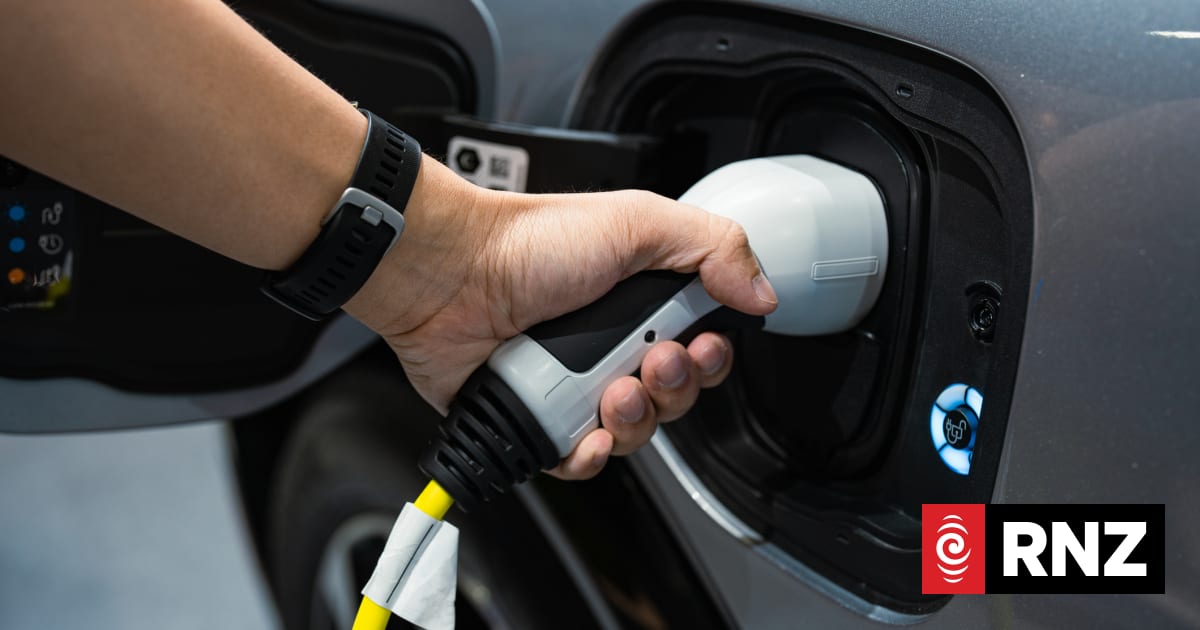
Higher fuel prices are driving New Zealanders to electric vehicles in significant numbers.
The number of EVs registered in the September quarter was up 206 percent on a year earlier.
New car registrations overall were up 19 percent. There were 55,317 passenger car registrations in the three months, up 14 percent year-on-year and above 50,000 for the first time since the end of 2023.
Among EVs, there was a 230 percent lift in full battery EV registrations and a 169 percent year-on-year increase in plug-in hybrids.
Conventional hybrids were up 7.7 percent.
Infometrics principal economist Brad Olsen said it aligned with fuel prices rising over the quarter from a low of $2.90 a litre for 91 to $3.35 at the end of September.
“I think what we’re seeing at the moment is that there’s quite a big focus from both households and businesses on trying to get the most fuel efficient and cost-effective option. Even if they’ve got to pay a bit more upfront for a new EV, it’s still got better running costs over time.”
He said full battery EVs and plug-in hybrids were 19 percent of all car registrations in the quarter compared to 7 percent a year earlier.
“The number of petrol and diesel registrations continue to fall, and that’s because people are again switching things up, trying to be a little bit more cost effective and making a much stronger decision on what car they might be purchasing next.”
He said the number of people buying these types of vehicles had fallen significantly when the clean car discount subsidy was removed in 2023, but then started to pick up again this year.
“Funnily enough New Zealand consumers are fairly rational. When prices go high for fuel people think ‘maybe I’m better off looking at an EV’ and they have.”
He said data earlier in the year showed a spike in interest in EVs and some commentators had wondered whether it would last.
“We were wondering, was this sort of just a quick flash in the pan? Was it going to mean households who were thinking about buying a vehicle anyway, when the Iran war came through, they would just switch towards an EV a whole lot quicker. But maybe there wouldn’t be an overall lift in registrations continuing.
“We’re now sort of six months in, and you have seen things continue. Now, yes, fuel prices have remained elevated, and that’s probably part of it. But I suspect as well, when households are looking out, and businesses also are looking out at what they might do with a vehicle, they’re going, ‘fuel prices do remain high. I don’t necessarily think they’re going to become cheap any time soon’. And so therefore, it’s still a better option.”
He said it also helped that there was now a wider range of EVs in the market at different price points.