
The December 2021 advice was from the Ministry of Health’s Covid-19 Vaccine Technical Advisory Group (CV Tag), which recommended considering changing vaccine mandate requirements for the 12-17 age group (under-12s couldn’t get vaccinated at that point) from two doses to one.
One dose provided good individual protection from infection, the advice said, but the risk of transmission among under-18s was “insufficient to justify” requiring them to have two. A second dose, especially three weeks after the first, “may add unnecessary risk to increasing the likelihood of myocarditis [heart inflammation]”.
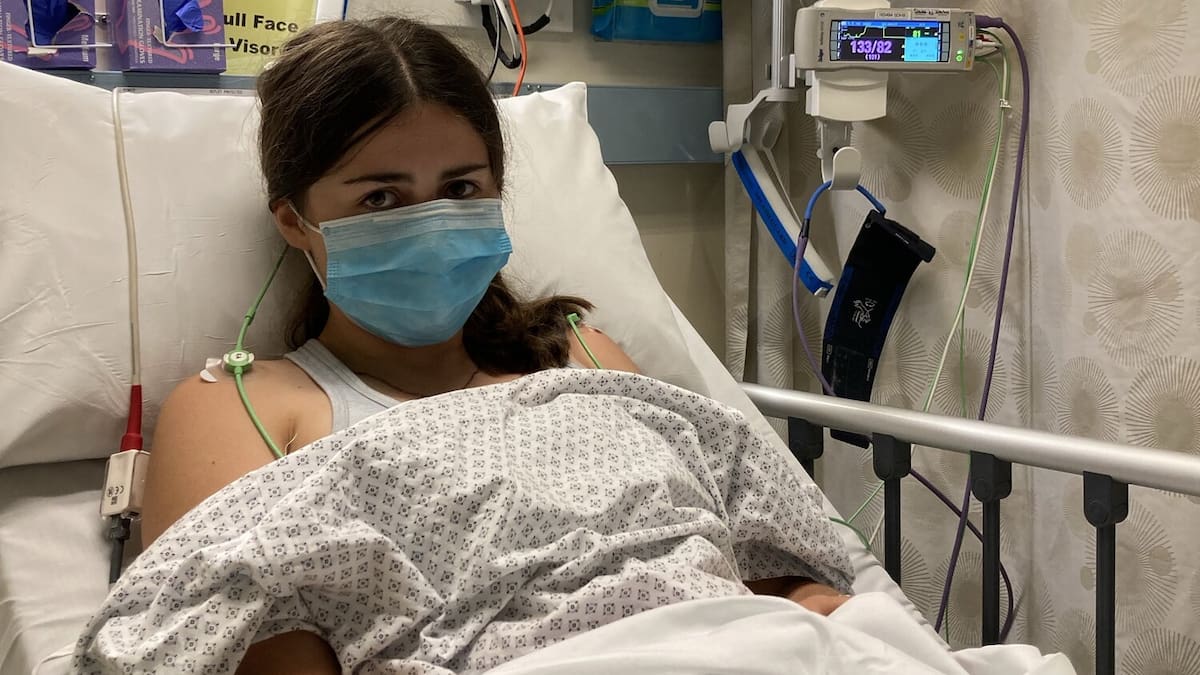
Beulink suffered vaccine-induced pericarditis (inflammation of the sac around the heart) following her second dose, three weeks after her first, in mid-February 2022. She was 14 at the time.
One reason she got the jab was the exclusion she’d felt from social and sporting events because of the two-dose requirements under the vaccine pass system.
This type of impact led the Government to drop vaccine passes for school-organised gatherings – but not until mid-March 2022.
By then, tens of thousands of young people in the 12-17 age group had received a second dose since December 9, 2021, when the advice landed on the desk of Sir Ashley Bloomfield, head of the health response at the time.
The Royal Commission, in light of the advice, said a two-dose requirement for under-18s was one of the “clear cases where the span of mandates went too far”.
The Ministry of Health acknowledged the “significant” failure in the advice not being delivered to ministers or made public in a timely manner.
If the advice had been sent to key ministers immediately, it would have provided justification for changing vaccine requirements for those aged 12-17 from two doses to one before the 2021/22 summer holidays.
Whether this would have happened is impossible to know. Chris Hipkins, Covid Response Minister at the time, has said he would have almost certainly asked more questions if he’d received it at the end of 2021.
If it had been made public at the time, it might also have impacted young people’s decisions about whether to be double-vaxxed. A key question in the court case will be whether young people could give informed consent if relevant information was not available to them or their families.
It’s unclear how many 12 to 17-year-olds decided to have a second dose because of the two-dose requirements in the vaccine pass system.
It’s also unclear how many suffered heart inflammation after a second or third dose. The self-reported data suggested potentially dozens of cases might have been avoided had the CV Tag advice been actioned in early 2022.
Sir Ashley Bloomfield received advice about changing the vaccine mandate for 12 to 17-year-olds in December 2021. Photo / Marty Melville
Bloomfield has refused all questions and interview requests about what happened to the advice after he received it.
He did provide a briefing to Hipkins before Christmas 2021 that included similar but less substantive CV Tag advice (from November 2021). As Hipkins was on leave, this was considered by his Cabinet colleague Dr Ayesha Verrall in early January 2022.
She has told the Herald she would have also asked more questions if she had seen the December 2021 CV Tag advice. The briefing, which was about booster dose mandates, did not include that advice, nor did it include recommendations about vaccine requirements for under-18s.
Hipkins told the Royal Commission he did not recall receiving the December 2021 CV Tag advice, but as the Herald revealed, a summary was included in a Cabinet paper by Hipkins in March 2022.
By the time a Cabinet committee considered the paper, the two-dose requirement in the vaccine pass system for school activities had already been dropped.
Cabinet agreed at its next meeting to end the education mandate, which was implemented at the start of April.
‘We want to prevent this from happening again’
Ashley Beulink and her mother Paula said their motivation for pursuing the legal action came from the “avoidable” harm the teenager and others had experienced.
“We know there are other young people like our Ashley who continue to experience heart issues still to this day from being mandated to take a two-dose schedule of the Covid vaccine,” they said in a statement.
“We want to prevent this ever being able to happen again, where important information was withheld relevant to the safety of children and making an informed decision about a medical treatment.
“Importantly, this may help those other families whose children also suffered heart issues from the vaccine.”
They are seeking accountability from those who “withheld” the expert advice, and acknowledgment of “breaches” that meant children and parents were unable to make informed decisions about getting the vaccine.
They also hoped it might lead to better transparency, so that “never again will children be put in such a position”.
Health Minister Simeon Brown, in his response to the Royal Commission’s report, has committed to releasing key advice behind major decisions in future pandemics within five working days.
The High Court has previously ruled the vaccine mandates for health and education workers were justified and lawful. Photo / NZME
Court previously upheld mandates
The courts have already looked into vaccine requirements and whether they were a justified limit on the right to refuse medical treatment.
Justice Francis Cooke, in an April 2022 High Court ruling, said the mandates covering workers in education and health sectors were justified when introduced, given the overall benefit to population health from minimising the spread of Covid-19.
He found the vaccine was safe and effective overall, and the trade-off of preventing unvaccinated teachers and health workers from working was not out of proportion to “the benefit to these communities in reducing the potential harm caused by Covid-19 itself”.
The ruling regarding the education mandate was challenged in the Court of Appeal, which in 2023 upheld Cooke’s ruling. It agreed with Cooke that the justification was weaker once Omicron arrived, but the mandate was still lawful.
“There was considerable uncertainty about its [Omicron’s] likely impact and the effectiveness of vaccination and other available measures to manage the associated public health risks,” the Court of Appeal judgment said.
“The minister was entitled, and was arguably required, to take a precautionary approach in his decision-making in order to minimise the immediate and very real threat to public health posed by the outbreak of Omicron and the consequent likely demands on the health care system.
“The lack of certainty as to the magnitude of the risk and the effectiveness of the measures available to mitigate it could not excuse the minister from discharging his responsibility to take appropriate action to protect the public, particularly the vulnerable.”
The ruling was further appealed to the Supreme Court on the grounds that material evidence had not been disclosed, which related to the low risk of transmission in classrooms.
The Supreme Court dismissed the appeal in 2024, saying the substance of the evidence in question was contested. “We observe that these points appear not to have been raised in the Court of Appeal, though they could have been,” the court said.
Legal action in the High Court in February 2022, also before Justice Cooke, was successful in challenging the police and New Zealand Defence Force (NZDF) mandates.
Cooke said these mandates were not a justified limit on people’s right to refuse medical treatment because the stated goal, rather than helping to minimise the spread of Covid, was to ensure continuity of service.
“Indeed health advice provided to the Government was that further mandates were not required to restrict the spread of Covid-19. I am not satisfied that continuity of these services is materially advanced by the [vaccination mandate] order,” Cooke said.
Barrister Tudor Clee is representing Ashley Beulink in the case being brought in the High Court in Dunedin. Photo / Jason Dorday
Beulink’s case differs in that it focuses on the 12-17 age group, the two-dose requirement in the vaccine pass system, and the expert advice that has not been considered by the courts before.
Tudor Clee, her lawyer, has previously been involved in legal action relating to the pandemic.
He successfully represented three protesters involved in the 2022 parliamentary occupation, including Laura Cassin, whose trespass charge was thrown out after “serious mistakes” in the police prosecution.
His cases also helped uncover a potentially deadly and unapproved restraint tactic – a press-up position with both hands on the restrained person’s head – that was taught to police cadets for years. It only came to the attention of police leadership, who axed it, after it was used by a sergeant during the parliamentary occupation.
Clee has also taken cases regarding emergency MIQ spots, including several pregnant women who were initially denied such places.
One of his high-profile cases was New Zealand journalist Charlotte Bellis, who was given an apology from Hipkins after the then-Covid Response Minister made inaccurate statements about her case.
Derek Cheng is a senior journalist who started at the Herald in 2004. He has worked several stints in the press gallery team and is a former deputy political editor.