

When the going gets tough during a drought, there’s nothing like hopping in the side-by-side with some of your mates and getting their eye over the farm.
That’s one of the tips offered by Wairarapa farmer Willie Falloon, who’s had 30 years’ experience farming sheep and beef on 1400 hectares at Gladstone during dry summers.
“I found that when it’s been a prolonged drought, you actually get tired and probably make some fundamental mistakes,” he told Country Life.
Lessons from the dry years as El Niño gathers force
Follow Country Life on Apple Podcasts, Spotify, iHeart or wherever you get your podcasts.
Being in “the detail every day” during a stressful time can sometimes cloud decision-making, whereas if your neighbours come around the farm with you, they’re likely to pick up on things you may have missed, he said.
Falloon was sharing his knowledge with other farmers, many of them the next generation on the land, at a Beef and Lamb NZ field day called Planning for Dry Success in late September.
With hailstones pelting down outside and a southerly blast sweeping up the country, drought couldn’t be further from the minds of the beanie-and-wool clad farmers forced indoors for the event.
They were urged to make drought plans now, as forecasts point to an intense El Niño bringing dry and windy conditions to northern and eastern parts of New Zealand, including Wairarapa.
Heat spikes are also expected in eastern New Zealand, and the wind and lack of rain meant an increased risk of wildfires, according to forecasters.
Only the country’s southwest is expecting increased rainfall because of El Niño.
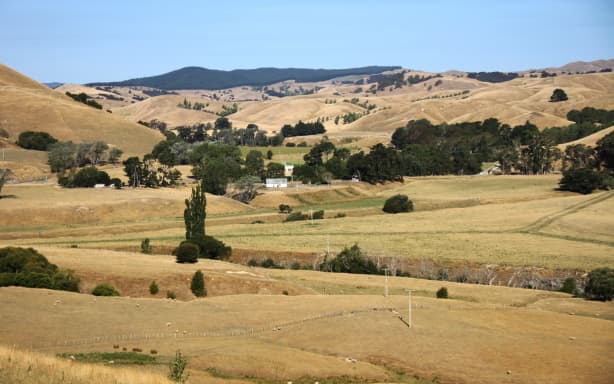
Dry farm land in Wairarapa, east of Masterton.
RNZ / Alexander Robertson
Falloon said over the decades he had learnt to build resilience and flexibility into his operation, and he was expecting El Niño to have the biggest impact through summer and into the autumn.
“We have an A to D lever system where we just keep pulling levers all the way through.”
He said it was important to act early before drought makes decisions for you – don’t just keep your plans in your head, write them down and even pin them to the wall.
“We also have 30 percent of our stock on our farms that are trading stock, so they are there as a flexibility to be able to get out of it any time we feel a grass pinch.”
Another lever he pulls is around choice of feed crop for his stock. This year he’s going with a kale-plantain mix rather than crops like chicory because of the larger seed, which he found was easier to germinate in low moisture.
Setting up sources of extra feed early is also advisable, Falloon said.
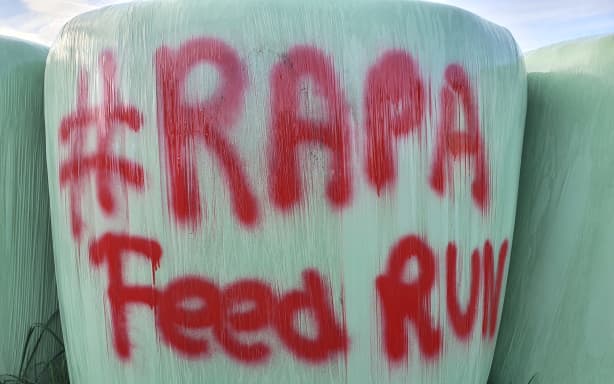
Bales donated from Wairarapa farmers to Hawkes Bay during 2020 drought
RNZ/Sally Round
Good pricing and high lambing percentages at the moment were working in farmers’ favour, Baker Ag farm consultant Hannah French told the audience.
She said pulling the trade stock lever is the earliest move for most farmers, ensuring feed is managed for capital stock, the base for future progeny.
“We’ve noticed a lot through our drought files that the people who deal with droughts the best are the ones that actually keep their capital stock numbers pretty consistent and the reason for that is because they can be profitable out the other end of a drought.
“[That] might be grazing off, it might be a bit of supplementary feeding.
“We’re in really good pricing at the moment so we’ve had quite a few people thinking about exiting some R2 (rising 2-year-old) cattle early, whether that’s a store trade or whether they’re feeding a bit of supplement like pumpkin or baleage to bring the kill forward from say December, January into kind of that October, November sort of timing.”
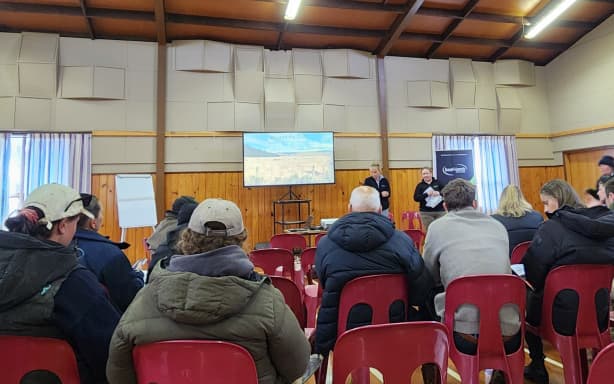
Wairarapa farmers gather to hear how to prepare for El Nino
RNZ/Sally Round
Robert Hickman, who farms sheep and beef on the coast near Castlepoint, had already sold a quarter of his mature in-calf cows in preparation, as well as non-replacement ewes with lambs at foot.
“That’s probably reduced our total carrying capacity by about 30 percent.”
Normally he would be fattening lambs in the summer through to finishing by July.
“We’ve decided to forego quite a bit of that purely on the concern that we don’t want to get stuck and be doing fire sales if it does go bad over summer.”
Hickman said he was concerned he may have moved too early, but having farmed in drought in northern Australia, he had grown up understanding “the best drought decisions are early drought decisions”.
That was echoed by Falloon.
“Don’t put everything at risk and just make sure, if you’re happy with [the price], don’t be greedy. Just take the money and move on to the next thing.”
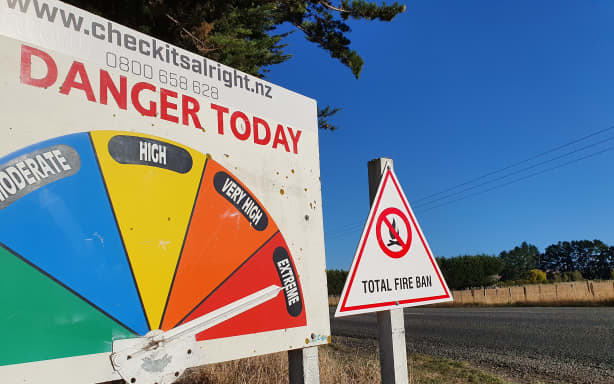
Wildfire risk is expected to be high for northern and eastern parts of NZ
RNZ/Sally Round
Having already weathered a series of damaging floods over the winter, Wairarapa farmers face another test.
They were urged to take care of themselves as well as their stock, making sure they had good nutrition, rest and social contact.
“Stock are resilient through droughts, but people often aren’t,” French said.
“If you’ve got someone who’s usually pretty chirpy and they’re starting to not get back to you or not be at as many things, just keeping in touch, that’s really good.”
And have that plan, farmers were told.
“Tick it off and celebrate the successes that you’re making. You know, procrastinating is not a good option in a drought,” Falloon said.