
Summary
New research shows awareness and use of oral nicotine pouches (ONPs) are increasing rapidly among adults in Aotearoa New Zealand (NZ) who smoke, despite the products currently being illegal to sell or supply. In surveys conducted one year apart, awareness of ONPs rose from 22% to 37%, while reported current use increased from 1% to 14%. The research found that some people who smoke are using ONPs to quit smoking, to become nicotine-free, or to reduce their cigarette consumption. However, others stopped using ONPs because they did not help them quit smoking or were not satisfying.
These findings are important because the Government has signalled plans to allow ONPs and other “reduced harm” nicotine products to be sold over the counter in NZ. While ONPs are likely to be less harmful than smoking, and could help some people quit, there is currently no definitive clinical trial evidence that they are safe, acceptable and effective to support a policy change. Greater vigilance and enforcement are needed to identify and penalise illegal ONP sales and promotions in NZ.
Despite decades of strong tobacco control policies, access to a national Quitline, and the availability of effective smoking cessation treatments, around 335,000-390,000 people in NZ aged 15 years and over still smoke tobacco.1 Smoking cessation treatments available in NZ2 include nicotine replacement therapy, nicotine vapes (endorsed by the NZ government as an effective stop smoking tool based on international3 and NZ clinical trial evidence),4-6 as well as two prescription medicines (varenicline, and bupropion). Informed by international7 and local research,6,8-9 cytisine has recently been approved in NZ as a pharmacy-only medication for treating nicotine dependence.
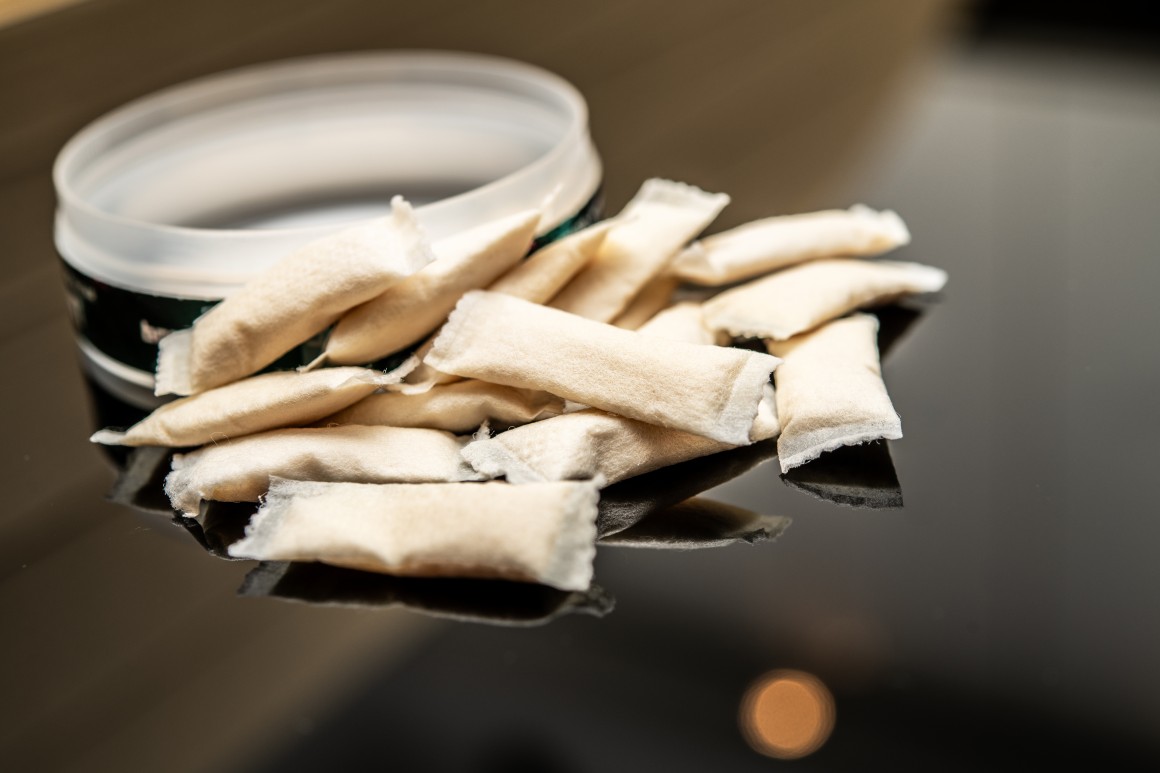
NZ’s current government has signalled that they intend to further support smoking cessation by ‘opening the door’ to other ‘reduced harm’ nicotine products, enabling them to be sold over the counter.10 These products include oral nicotine pouches (ONPs): small cellulose pouches that contain nicotine sourced either from natural tobacco or created in a laboratory. ONPs are currently illegal to sell or supply in NZ, but tobacco-derived nicotine pouches can be imported for personal use. ONPs are placed under the user’s lip, enabling the nicotine to be absorbed through their gum.
ONPs have the potential to support people to quit smoking and are likely to be less harmful than inhaled forms of nicotine, such as cigarettes, heated tobacco and vapes.10 However, there is no definitive trial evidence that pouches are effective and acceptable when used for smoking cessation.11
Given the possibility of impending law changes around the sale of ONPs, we undertook two online surveys of NZ adults (18 years and over) who smoke at least monthly, to understand whether they were aware of ONPs, had ever purchased them for personal use, and if so, whether they were using them to quit smoking. The surveys were undertaken a year apart (March 2025: 298 participants; and March-April 2026: 519 participants), as part of the CENIC-NZ study evaluating the knowledge, attitudes and potential responses of NZ adults who smoke, to tobacco policy changes (Appendix A).
Approximately 70% of participants in both surveys were aged 30-59 years, two-thirds were women, and almost 30% identified as Māori (Table 1). Most smoked 6-7 days a week (2025: 75%; 2026: 54%), and about a third vaped at least monthly.
We found a growing awareness of ONPs, from 22% in 2025 to 37% in 2026. Awareness was higher in males, those aged 18-39 years, and non-Māori (Table 1). In both surveys, the reported source of information on ONPs was primarily via social media (2025: 53%; 2026: 32%) and friends (2025: 28%; 2026: 31%), although information from family members (2025: 6%; 2026:19%) and health professionals (2025: 9%; 2026: 14%) increased.
Table 1: Summary of participants who reported being aware of oral nicotine pouches.
Survey one (2025)Survey two (2026)Invited to undertake the survey410914Undertook the survey 298519 Reported they were aware of the pouches64/298 (22%)193/519 (37%)Reported they had used pouches29/298 (10%)118/519 (23%)Currently used pouches 3/298 (1%)75/519 (14%)Formerly used pouches26/298 (9%)42/519 (8%) Demographics of those aware of pouches Male33/64 (52%)131/193 (68%)Female28/64 (44%)60/193 (31%)Another gender2/64 (3%)1/193 (1%)Preferred not to say1/64 (2%)1/193 (1%) Aged 18-3940/64 (63%)113/193 (59%)Aged 40-5917/64 (27%)62/193 (32%)Aged 60+7/64 (11%)18/193 (9%) Māori17/64 (27%)45/193 (23%)Non-Māori45/64 (70%)145/193 (75%)Preferred not to say 2/64 (3%) 2/193 (1%)
Seventy-five people in 2026 reported current pouch use (compared to only three people in the 2025 survey). The most common reasons for use were as a step to become smoke-free (21%) or nicotine-free (20%), and to replace some of their cigarettes so they didn’t have to give up smoking completely (19%). Of this group, 68% reported purchasing ONPs from a dairy, petrol station, vape shop or tobacco store in NZ. Further, 95% reported that coupons, sales, or other promotions were available at the time of purchase, despite such promotion being illegal.
In the 2025 survey, the most common reasons former pouch users stopping use were: it was too hard to get the ONPs they wanted (27%) or they didn’t find them satisfying enough (27%). In 2026, the main reasons for stopping use were: they didn’t find them satisfying enough (45%) and they did not help them quit smoking (24%).
Amongst former users (those who previously used or tried ONPs), common reasons for first use were curiosity (2025: 58%; 2026: 38%), because they were offered one (2025: 31%; 2026: 48%), because they thought they could help with quitting smoking (2025: 31%; 2026: 26%) or reducing their tobacco use (2025: 27%; 2026: 31%), or as a step to becoming nicotine-free (2025: 27%; 2026: 29%). Among participants with no history of ONP use, many did not want to try the products because they didn’t think they would be of any help with stopping smoking (2025: 24%; 2026: 32%).
These findings provide evidence of growing awareness and use of ONPs in the NZ adult population who smoke, a finding that aligns with earlier qualitative12 and quantitative findings for NZ and Canadian youth and young adults.13-14 Some, but not all, people are using ONPs to quit or reduce tobacco use, but do not always find them helpful – a finding which warrants further investigation.
What this Briefing addsThis study provides new data on the growth in awareness of ONPs in NZ adults who smoke, with awareness increasing across all ages (not just youth and young adults).Reported use of ONPs is increasing in the NZ adult population who smoke, supported by online marketplaces and their illegal promotion and sale by community retailers in NZ.Some respondents who smoke have tried ONPs, and/or are currently using them to quit smoking or nicotine, whilst others are using them to reduce how much they smoke. Implications for policy and practice Monitoring awareness, attitudes and use is essential to understand the impact of ONPs in NZ, especially for people with no history of nicotine use, and people using tobacco and other nicotine products. While ONPs are being used by some as a tool to quit smoking, clinical trial evidence of their safety and effectiveness is needed before any consideration of easing current restrictions on ONP sales and promotions.Greater vigilance and enforcement are needed to identify and penalise illegal ONP sales and promotions in NZ.
Authors details
Professor Natalie Walker, College of Medicine and Public Health, Flinders University, South Australia.
Rounak Haddadi, Faculty of Medical and Health Sciences, Waipapa Taumata Rau | University of Auckland
Zeke Wang, Faculty of Medical and Health Sciences, Waipapa Taumata Rau | University of Auckland
Varsha Parag, Faculty of Medical and Health Sciences, Waipapa Taumata Rau | University of Auckland
Professor Chris Bullen, Faculty of Medical and Health Sciences, Waipapa Taumata Rau | University of Auckland
Professor Dorothy Hatsukami, Department of Psychiatry and Behavioral Sciences, University of Minnesota, Minneapolis, Minnesota, United States.
Professor Eric Donny, Department of Translational Neuroscience, Wake Forest University School of Medicine, Winston-Salem, North Carolina, United States.
Assistant Professor Rachel Denlinger-Apte, Department of Social Sciences & Health Policy, Wake Forest University School of Medicine, Winston-Salem, North Carolina, United States.
Olaoluwakitan Babalola, Department of Translational Neuroscience, Wake Forest University School of Medicine, Winston-Salem, North Carolina, United States.
Heidi Beckerich, Department of Translational Neuroscience, Wake Forest University School of Medicine, Winston-Salem, North Carolina, United States.
Emily Harwood, Department of Social Sciences & Health Policy, Wake Forest University School of Medicine, Winston-Salem, North Carolina, United States.
Associate Professor George Laking, Faculty of Medical and Health Sciences, Waipapa Taumata Rau | University of Auckland
Associate Professor Michael Chaiton, Dalla Lana School of Public Health, University of Toronto, Toronto, Ontario, Canada.
Cassidy White, Department of Translational Neuroscience, Wake Forest University School of Medicine, Winston-Salem, North Carolina, United States.
Professor Joseph Koopmeiners, Division of Biostatistics & Health Data Science, University of Minnesota School of Public Health, Minneapolis, Minnesota, United States.
Funding
This work was supported by a grant from the National Institutes of Health (NIH) and the Food and Drug Administration (FDA) Center for Tobacco Products (R01DA058264: MPIs: Denlinger-Apte, Donny). NIH and FDA had no role in the study design, collection, analysis or interpretation of the data. The content is solely the responsibility of the authors and does not represent the official views of the NIH or FDA. The authors have no other conflicts of interest to declare.
Appendix
Survey methods and demographics of the surveyed populations
Recruitment: Participants were recruited using a range of strategies including social media advertising, flyers in the community, participants panels from previous studies, word of mouth, and promotion through community health organisations.
Eligibility: Participants were eligible if they were 18 years of age or older, lived in NZ as permanent residents or citizens, were able to read and understand the Participant Information Sheet and Consent Form in English or had support with translations when completing surveys, currently smoked tobacco at least one day per month and were willing to complete surveys for the study.
Study procedures: Participants were directed to a screening survey on the University of Auckland’s Research Electronic Data Capture site. Those who met the study criteria were included in the panel to receive future surveys, including the surveys on nicotine pouch use in 2025 and 2026.
Demographics of all respondents
Survey one (2025)Survey two (2026)Invited410 914Responded298519Demographics Male92 (31%) 217 (42%)Female198 (66%)295 (57%)Another gender5 (2%)3 (1%)Preferred not to say3 (1%)4 (1%) Aged 18-3984 (28%)179 (35%)Aged 40-59145 (49%)245 (47%)Aged 60+69 (23%)95 (18%) Māori 84 (28%) 136 (26%)Non-Māori 210 (70%) 375(72%)Preferred not to say4 (1%)8 (2%)