
File photo: Lusa / Lina Cebola
The Bank of Mozambique considers that manufacturing activity in the country remains constrained by Mozal—the nation’s largest industrial enterprise, closed since March—identifying additional internal and external risks that could impact the economy’s trajectory. “Short-term prospects point to a moderate recovery in economic activity (…). Meanwhile, the secondary sector remains constrained by the suspension of operations at Mozal,” reads the central bank’s latest Economic Climate and Inflation Outlook Report from September, to which Lusa obtained access today.
In the document, the central bank notes that economic recovery is ongoing, but emphasizes that the industrial sector remains under pressure due to the shutdown of Mozal, regarded as one of Africa’s largest aluminum smelters.
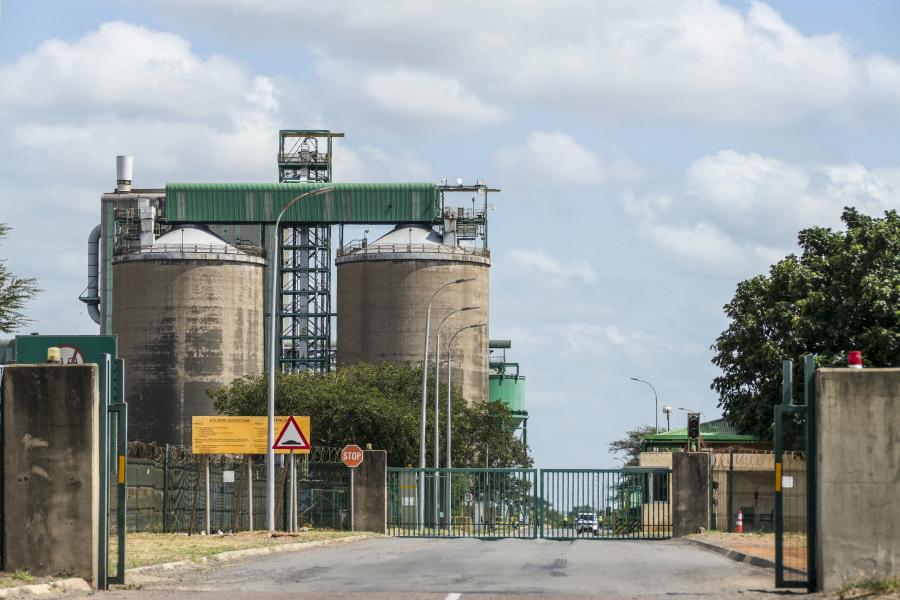
Located on the outskirts of Maputo, Mozal suspended operations in March of this year following several months of negotiations that failed to yield an agreement on the costs of electrical power required to sustain production. The smelter subsequently entered a care and maintenance regime.
Controlled by Australia’s South32, the company had deemed the proposed electricity supply tariff “completely unsustainable,” advocating for a maximum price near 51 dollars per megawatt-hour, compared to a proposal hovering around 100 dollars. The industrial plant, one of Mozambique’s primary exporters, produced 248,000 metric tons of aluminum in the fiscal year ending in June—a 30% drop compared to the prior period—while sales fell 22% to 275,000 metric tons.
Between April and June, the first full quarter following the operational suspension, Mozal recorded zero production, relying exclusively on aluminum sales drawn from existing inventories, according to company reports consulted by Lusa.
South32 has meanwhile estimated extraordinary costs equivalent to approximately 104 million euros associated with the smelter shutdown, including severance packages for workers and accounting write-downs related to raw materials and inventory. The company has previously acknowledged the possibility of restarting production should viable energy and economic conditions emerge.
Meanwhile, South Africa’s Industrial Development Corporation (IDC), which holds a 32.48% stake in Mozal, launched a tender in June to retain independent consultants to evaluate a potential acquisition of South32’s majority stake and analyze the feasibility of resuming operations.
In the report released in September, the Bank of Mozambique highlights that, excluding the contribution of natural gas megaprojects, economic activity continues to rely primarily on the primary and tertiary sectors, which have sustained the recovery observed throughout this year. The central bank points out, however, several risk factors capable of compromising the projected economic scenario for 2026 and 2027, such as the potential worsening of imported inflation amid international market volatility and fluctuations in essential commodity prices.
The report also highlights international geopolitical tensions, which could disrupt supply chains, freight transportation costs, and raw material prices.
Another factor of concern identified by the institution is the occurrence of extreme weather events, including phenomena associated with El Niño, carrying potential impacts on agricultural output, food prices, and overall economic activity.
The Bank of Mozambique further notes that public finance challenges—specifically the State’s financing requirements and the accumulation of payment arrears—continue to represent risk elements for the broader economy.
According to the institution, these factors could impact financial system liquidity, credit conditions, and business confidence among economic agents.
Source: Lusa