
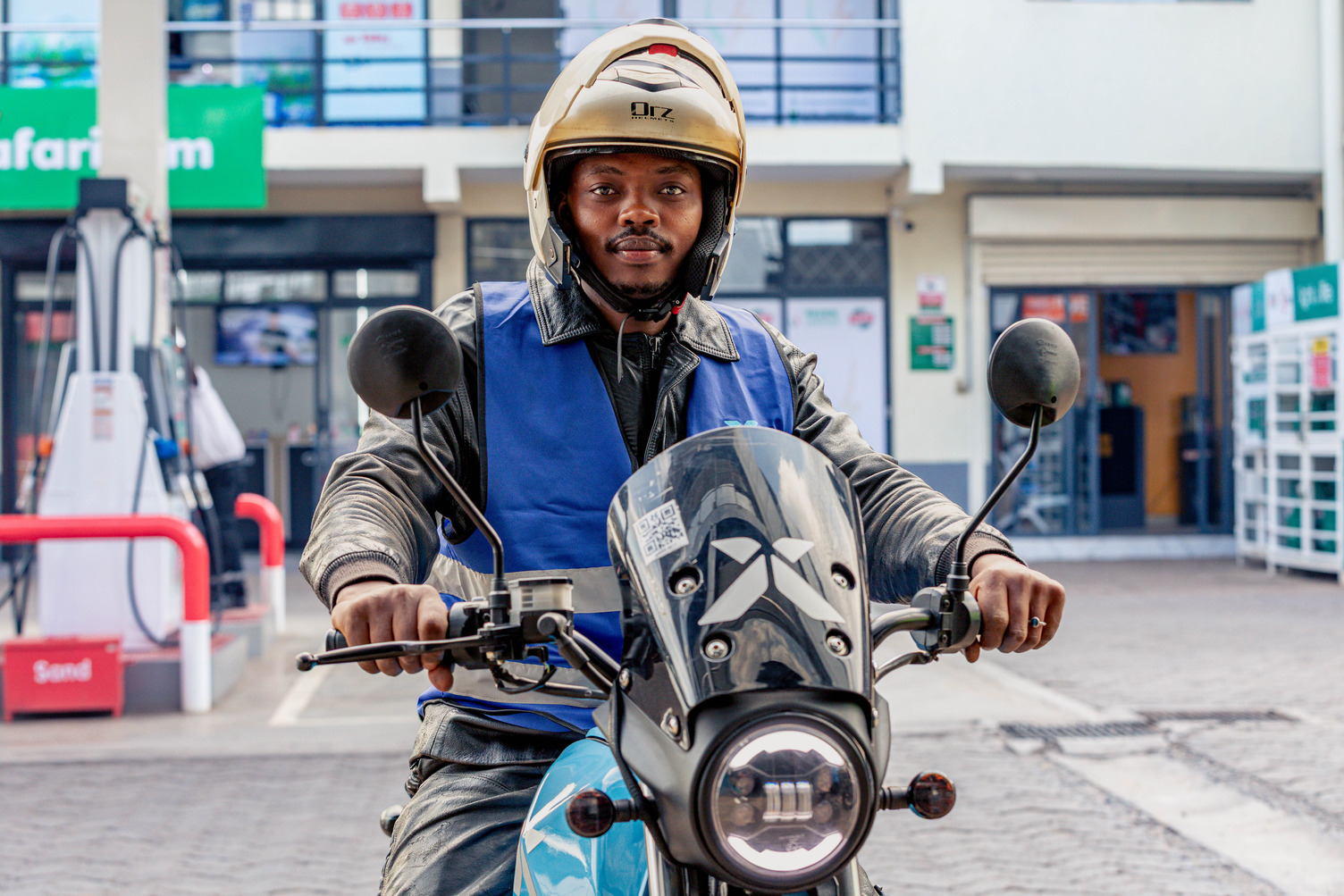
Steve Muigai spends his days driving a boda boda (motorcycle taxi) in the Kenyan capital, Nairobi. He makes a living ferrying goods and people through the chaotic urban streets, often covering up to 150 kilometres a day.
It’s demanding work. But since Muigai switched from a petrol-burning motorcycle to an electric one, it’s also more lucrative. The electricity needed to power his bike costs less than half of what he used to spend on petrol. Plus, he adds, it’s a healthier way to ride.
“There are no engine vibrations, and it’s quiet,” says Muigai. “By the time I’m done at the end of the day, I still feel good.”
Over the past several years the number of electric vehicles in Nairobi has exploded, led by boda bodas like Muigai’s. This electric mobility revolution holds the potential to dramatically improve air quality in the traffic-choked city; according to the Clean Air Fund, road transport accounts for 40 per cent of Nairobi’s fine particle air pollution. And in Kenya, where around 90 per cent of the grid is based on renewable energy, it would also dramatically reduce planet-warming greenhouse gas emissions.
“Over the past few years, we’ve seen a revolution in electric motorcycles in Nairobi,” says Rob De Jong, the Head of Sustainable Mobility at the United Nations Environment Programme (UNEP). “This is an important shift because transport is a major source of climate emissions and air pollution, especially in countries like Kenya.”
The country’s embrace of e-mobility extends beyond two-wheelers, with electric buses, cars and even bicycles establishing a foothold in the capital. But with the overwhelming majority of Kenyan transport still dependent on heavily polluting fossil fuel, this transition is far from accomplished.
So, what would it take for a city like Nairobi to go fully electric?
Nairobi’s electric motorcycle revolution
Adept at weaving between cars and zipping through Nairobi’s notorious traffic jams, motorcycles have long been a lifeline for urban commuters, as well as for the city’s booming delivery business. Over half of new vehicles registered in Nairobi each year are usually motorcycles, and their inefficient motors have an outsized impact on air pollution.
But in recent years Kenya has become a global leader in the rapid transition to electric motorcycles, the cornerstone of the country’s e-mobility revolution.
UNEP – which leads one of the world’s largest e-mobility programmes for low- and middle-income countries – helped kickstart Nairobi’s electric motorcycle market in 2021. That’s when it supported the rollout of 49 vehicles to demonstrate the feasibility of the technology and assess barriers to adoption.
Today around 15 per cent of new motorcycles are electric, says Kenya’s National Transport Safety Authority. Credit: Nayim Yusuf
Today around 15 per cent of new motorcycles are electric, says Kenya’s National Transport Safety Authority. De Jong expects this number to reach at least 90 per cent within the next few years.
One of the main drivers of this rapid uptake has been rising fuel prices, to which motorcycle drivers in the Kenyan capital are especially sensitive. This is because, unlike in many other parts of the world, most two-wheelers in Nairobi aren’t just commuter vehicles – they’re businesses.
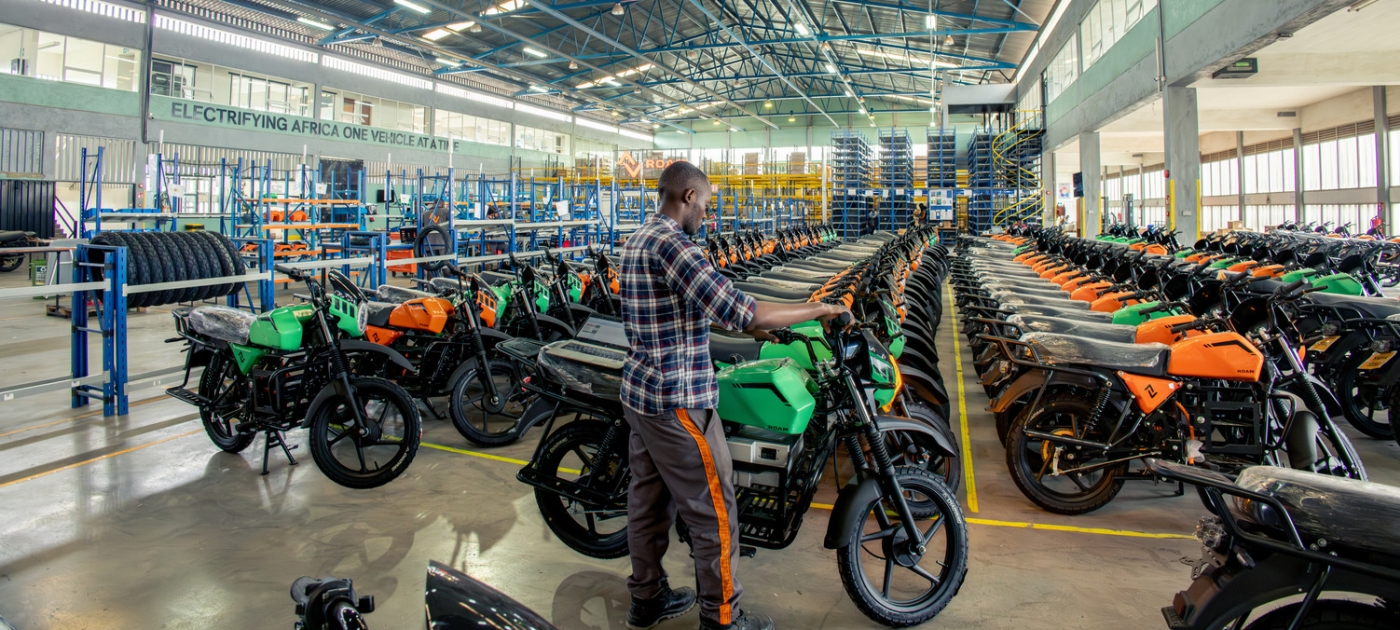
“It’s basically an entrepreneur on the move,” explains Habib Lukaya, Kenya Country Manager for an electric motorcycle company called Roam. Roam manufactures its vehicles locally, specializing in sturdy models designed for heavy use on rough Kenyan roads.
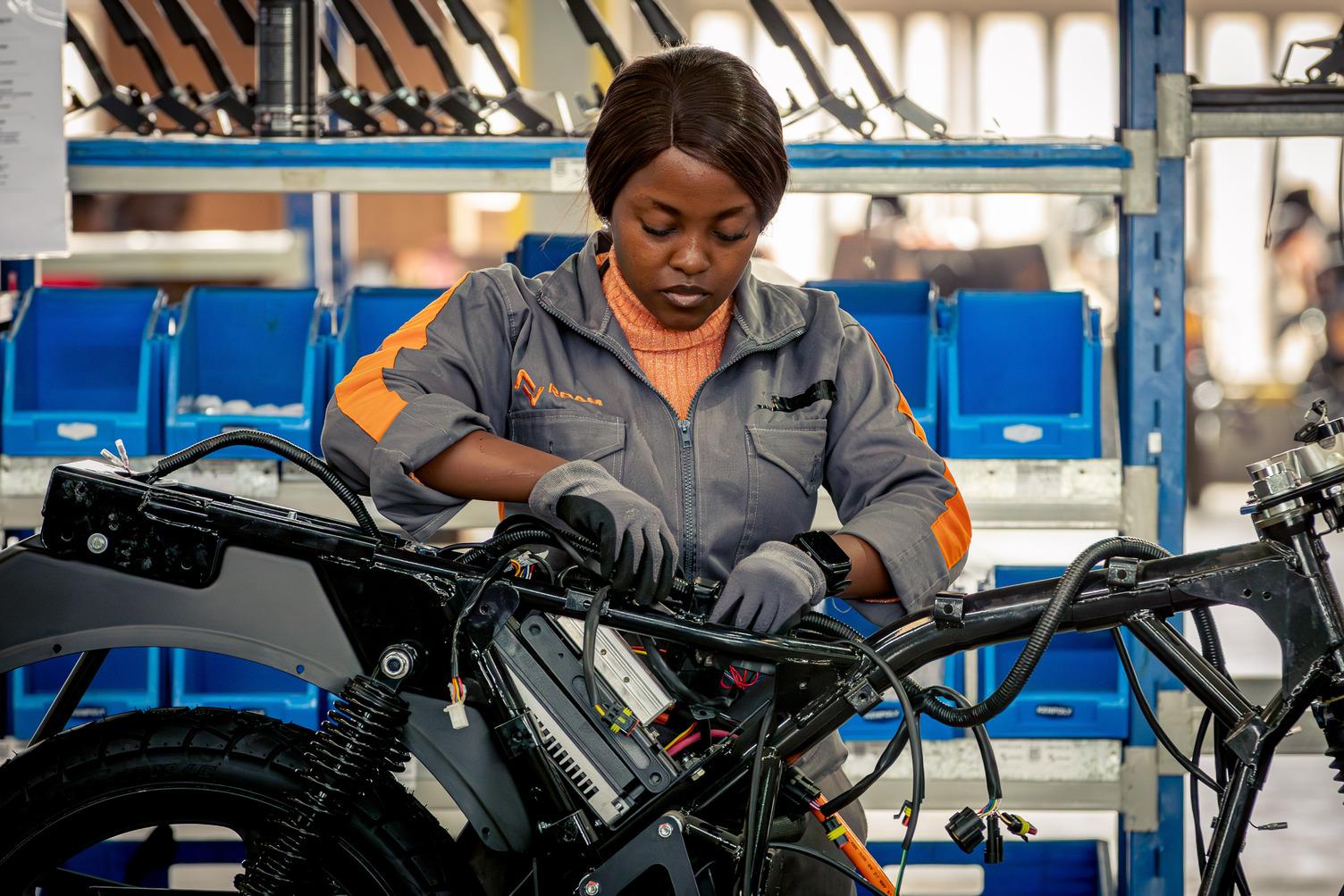
The demand for electric motorcycles is rising fast but experts say that for bike makers to expand, Kenya needs more electricity. Credit: Nayim Yusuf
“Two-wheelers are work tools,” he adds. “They’ll do deliveries, they’ll do passengers, they’ll do cargo. And most of these drivers are transitioning because of the high cost of fuel.”
The per-kilometre operating cost of electric motorcycles is significantly less than petrol-burning models, an economic argument that appeals to cost-conscious drivers using their bikes to make a living. “Some of these drivers go 100km a day or more, and that makes a much stronger case for an electric motorcycle,” De Jong explains. “By switching from petrol to electric, drivers can significantly increase their daily income.”
However, a company like Roam has a problem: electric motorcycles are considerably more expensive to purchase than models with internal combustion engines. “Not very many of our consumers or users can actually afford the product outright. The high upfront cost is a limiting factor,” admits Lukaya.
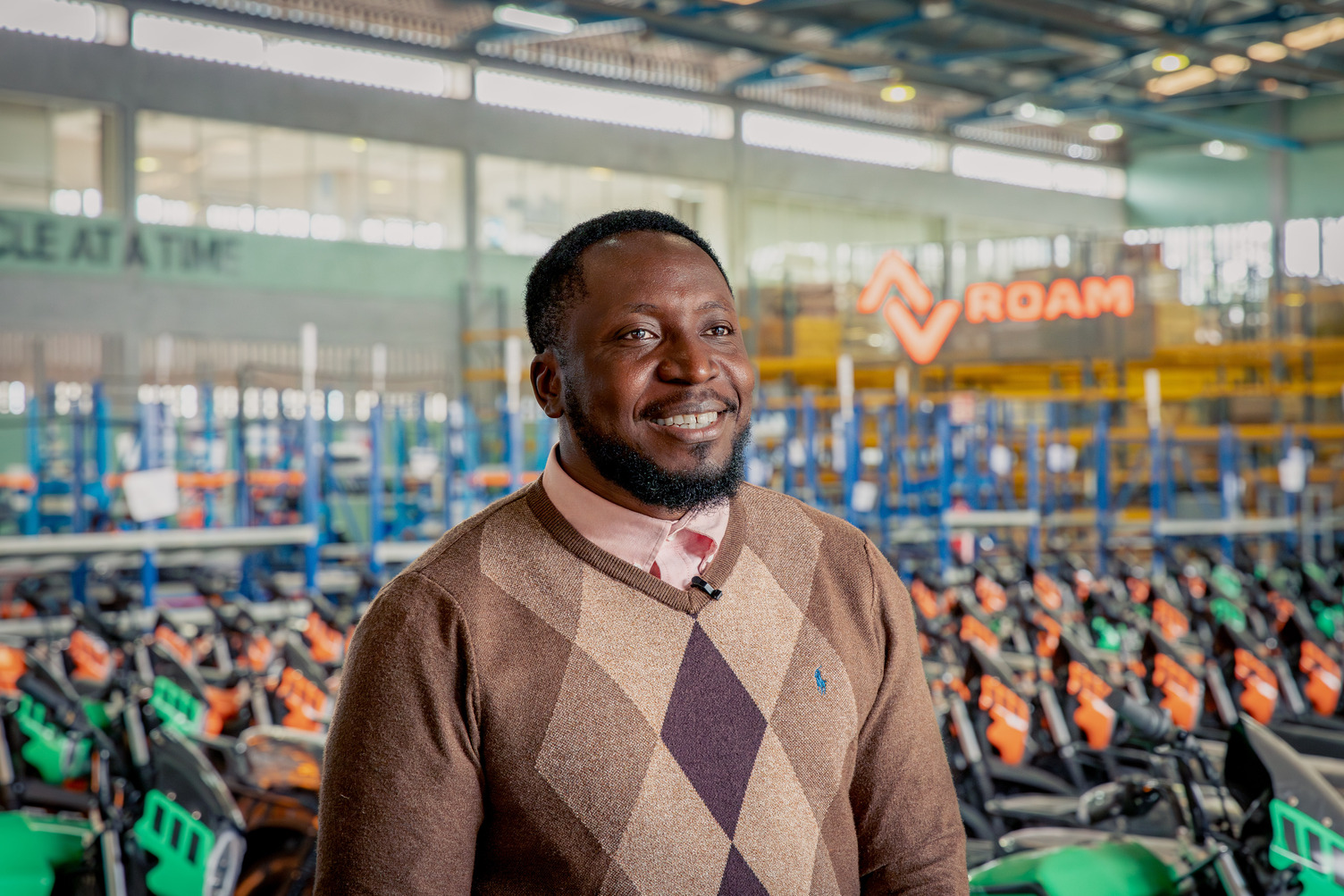
One of the main reasons drivers are flocking to electric motorcycles has been rising fuel prices. Credit: Nayim Yusuf
A number of other electric mobility companies are overcoming this challenge through a different business model altogether: battery swapping. These vehicles costs less upfront, but they don’t come with batteries. Drivers use a battery till it needs recharging, then swap it out – for a fee.
“By handling the cost of the battery, we reduce the total cost of the bike by around 25 per cent,” says Margaret Wawitima, Marketing Lead at Powerhive. “Our system makes it easier for boda boda riders to get into electric mobility, because they don’t need to worry about the cost or maintenance of the battery.”
Powerhive is one of several companies running networks of battery swapping stations around Nairobi. Not only is this solution affordable, it’s also quicker than charging – crucial for taxi or delivery drivers for whom downtime equals lost income.
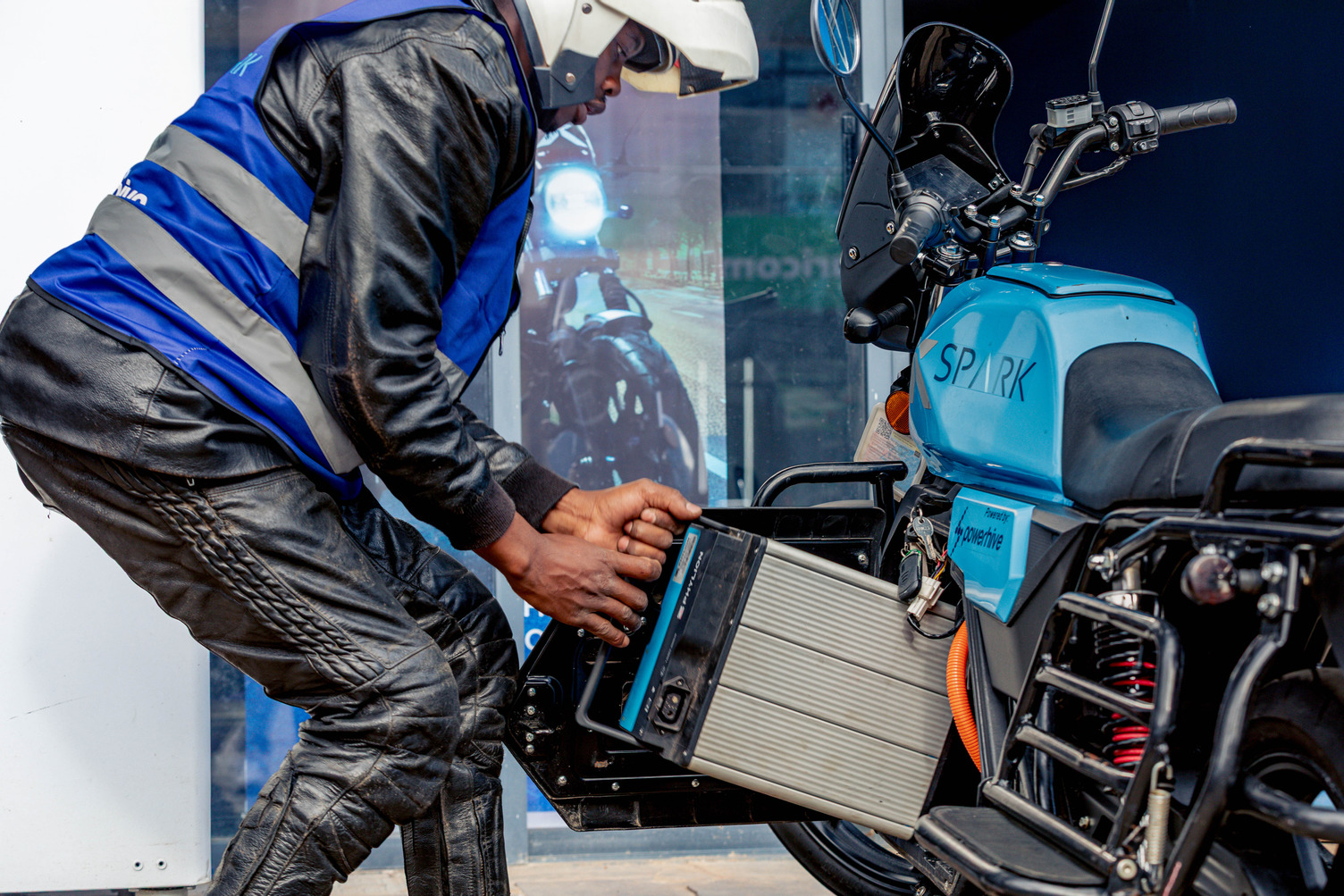
Several companies allow motorcycle drivers to swap out depleted batteries for fully charged ones, allowing drivers to get back on the road quickly. Credit: Nayim Yusuf
The demand for electric motorcycles is enormous, says Lukaya. But for companies like Roam, Powerhive and other electric mobility companies to expand further, Kenya needs more electricity.
“As a country we have less than 4,000 megawatts of electricity production,” he says. “If we are going to really transition, we need to double or triple the capacity to be able to sustain charging infrastructure.”
E-mobility for the masses
For their daily commute, most Nairobi residents rely not on motorcycles but on the undisputed overlords of the city’s crowded roads: buses. Often old and in poor condition, these lurching, diesel-chugging hulks are one of the leading causes of carbon dioxide emission and air pollution in the city.
But since 2022, Kenyan company BasiGo has been assembling and leasing electric buses, allowing commuters to swap choking fumes for a clean, quiet ride.
“Seventy per cent of people living in Nairobi will use a bus every single day,” says Jit Battacharya, BasiGo’s founder and CEO. “With fuel prices around the world increasing, this puts intense pressure on the economy and on public transport fares.”
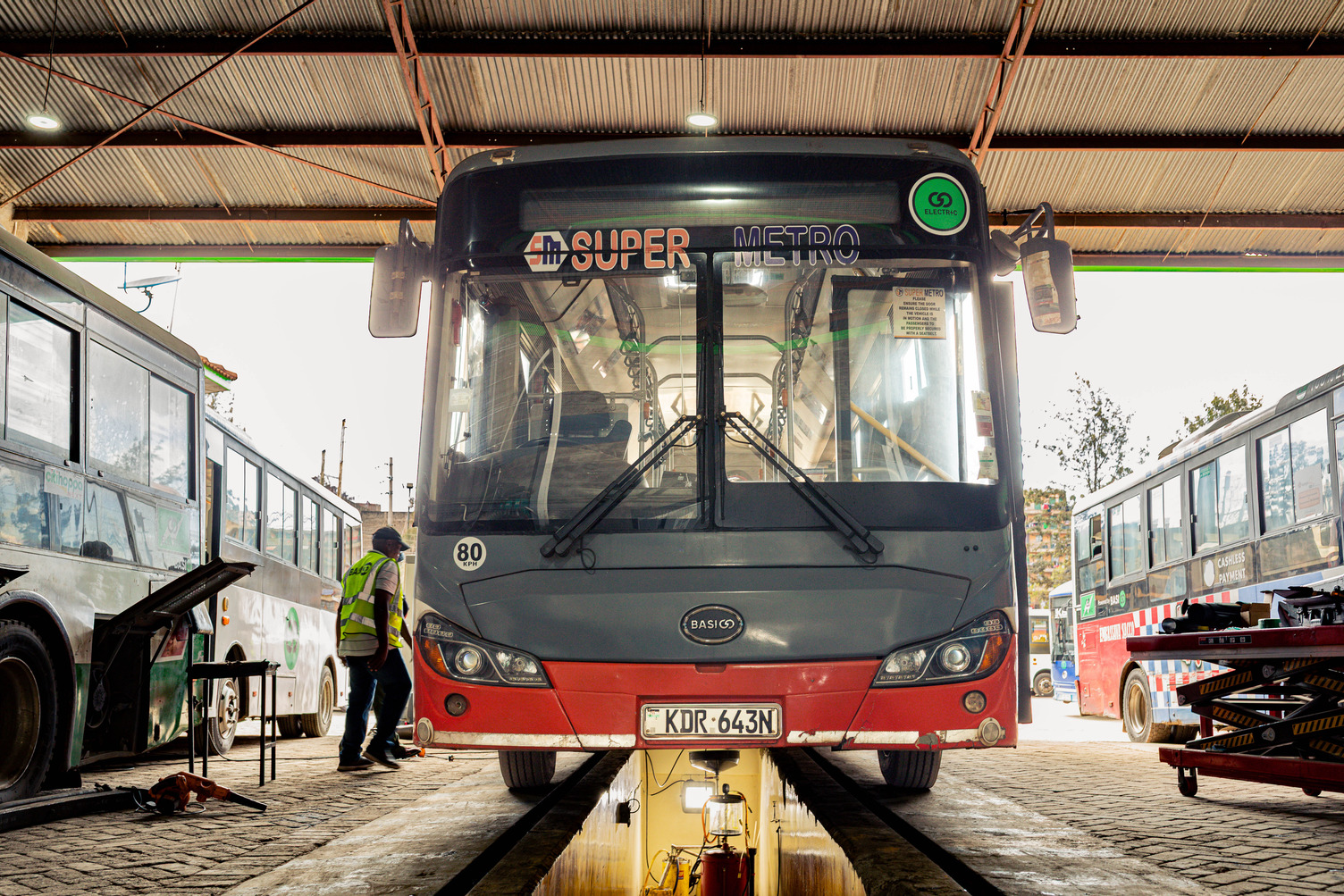
Since 2022, Kenyan company BasiGo has been assembling and leasing electric buses, allowing commuters to swap choking fumes for a clean, quiet ride. Credit: Nayim Yusuf
Nairobi’s 20,000 diesel-powered buses are also putting tremendous pressure on the environment. “When you replace one of these with one of our electric busses, it mitigates 50 tonnes of carbon dioxide emissions per year,” adds Battacharya. “That’s a greater impact on carbon dioxide emissions than an electric bus almost anywhere else in the world.”
BasiGo leases their buses to local operators, at a rate which includes battery charging and maintenance. This “pay-as-you-drive” model makes the buses themselves more affordable for private operators, explains Battacharya. And because buses are no longer subject to the cost of fuel, operating profits are both higher and more predictable.
Today there are around 125 BasiGo buses in Kenya and 52 in Rwanda, though Battacharya says their customers have reserved an additional 1,200. As with other electric vehicles, the market for electric buses is being limited by their higher price tags and the need for large investments in charging infrastructure.
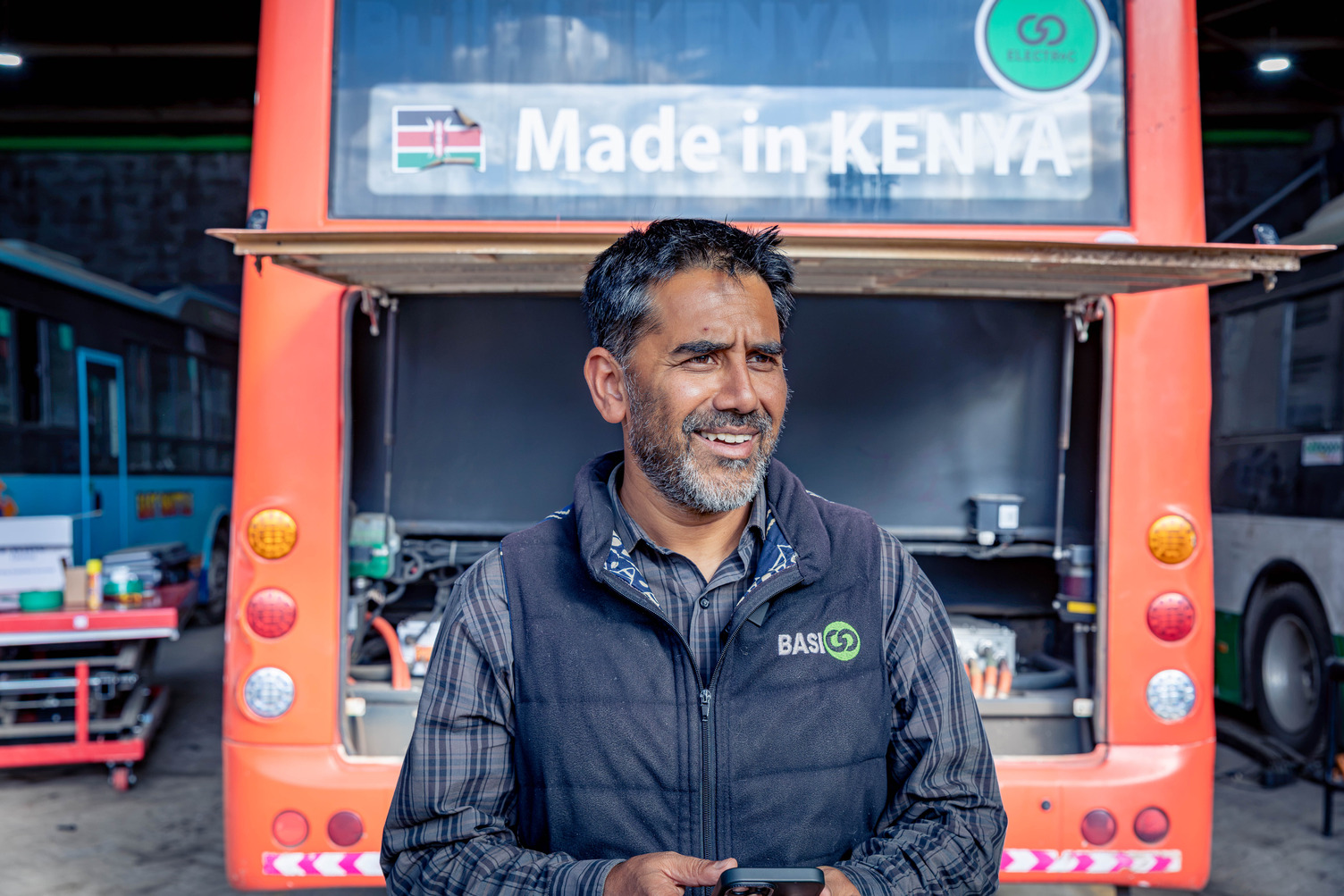
Today there are around 125 BasiGo buses in Kenya and 52 in Rwanda, though Battacharya says their customers have reserved an additional 1,200. Credit: Nayim Yusuf
“All electric vehicles are dealing with this fundamental problem of higher capital expenditures [than fossil fuel-burning vehicles] and higher upfront cost,” says Battacharya. To encourage the necessary investment, he adds, “the most important thing we need is an enabling ecosystem from governments. We need stable policy.”
Unique roadmaps to a cleaner future
Across nearly 50 projects, UNEP’s Sustainable Mobility team has been working with developing countries like Kenya to advance the technical standards and policies that will govern their e-mobility transitions.
“Low- and middle-income countries are developing their own roadmaps, and they’re all different,” says De Jong.
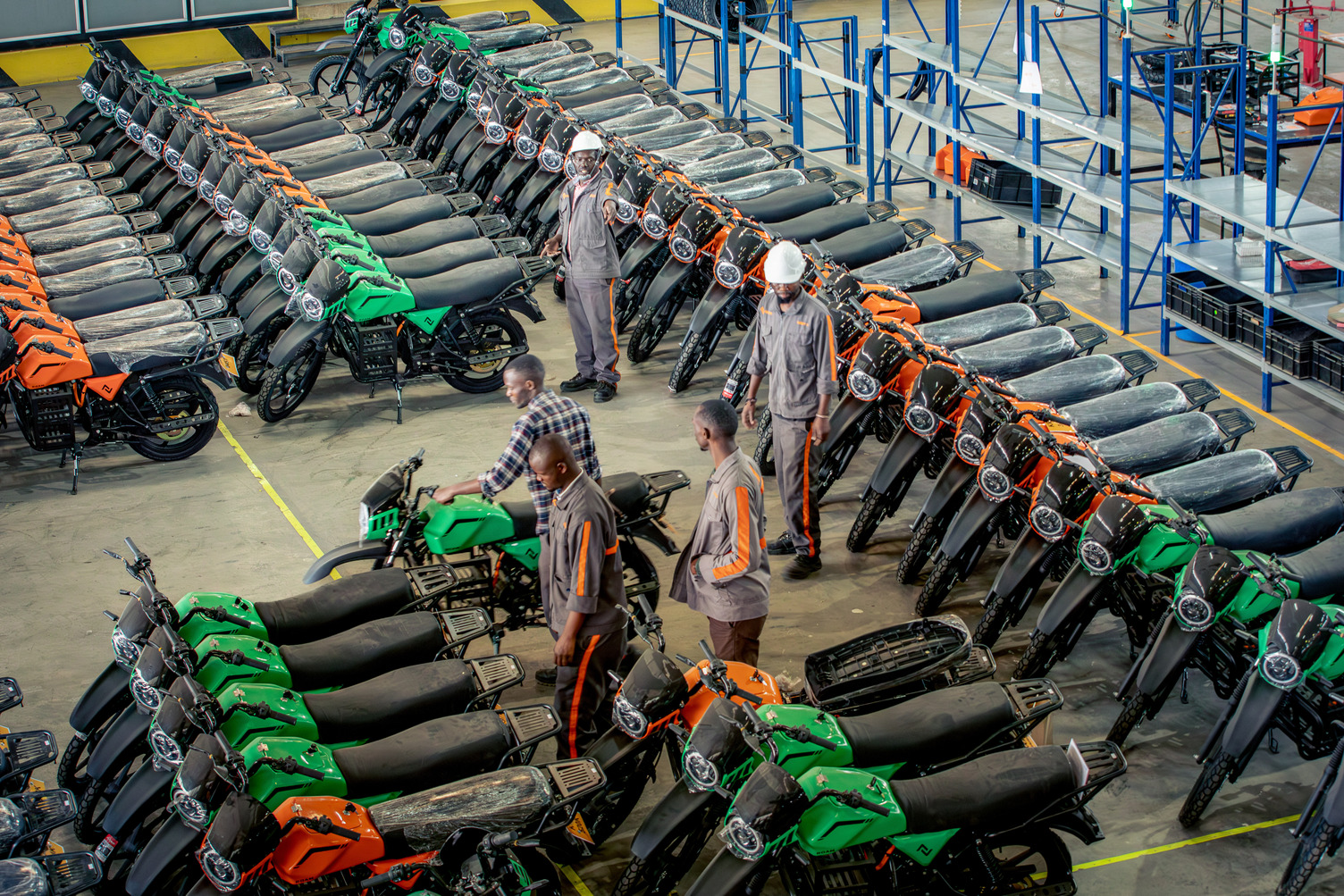
Some experts expect that within a few years, the vast majority of motorcycles sold in Kenya will be electric. Credit: Nayim Yusuf
Many are facing the same challenges as Kenya, including insufficient financing, inconsistent policies, and underdeveloped infrastructure. Nevertheless, a growing number of countries – particularly those dependent on imported fuel – are looking to benefit from their own, locally-produced energy resources, and to reap the environmental and social dividends of e-mobility.
“We’ve reached a tipping point,” says De Jong. “There’s still a lot of work to be done but this transition to zero-emissions transport is happening now, and it’s unstoppable.”