
For Hong Kong’s private banks, the question is no longer whether the city has reclaimed its position as a leading cross-border wealth hub. It is whether the business models that served the industry during the last cycle are still fit for the one now unfolding. As client priorities shift, product access becomes increasingly commoditised, and the demands on relationship managers grow more complex, the firms best positioned to thrive may be those willing to rethink not just what they offer but how they deliver it.
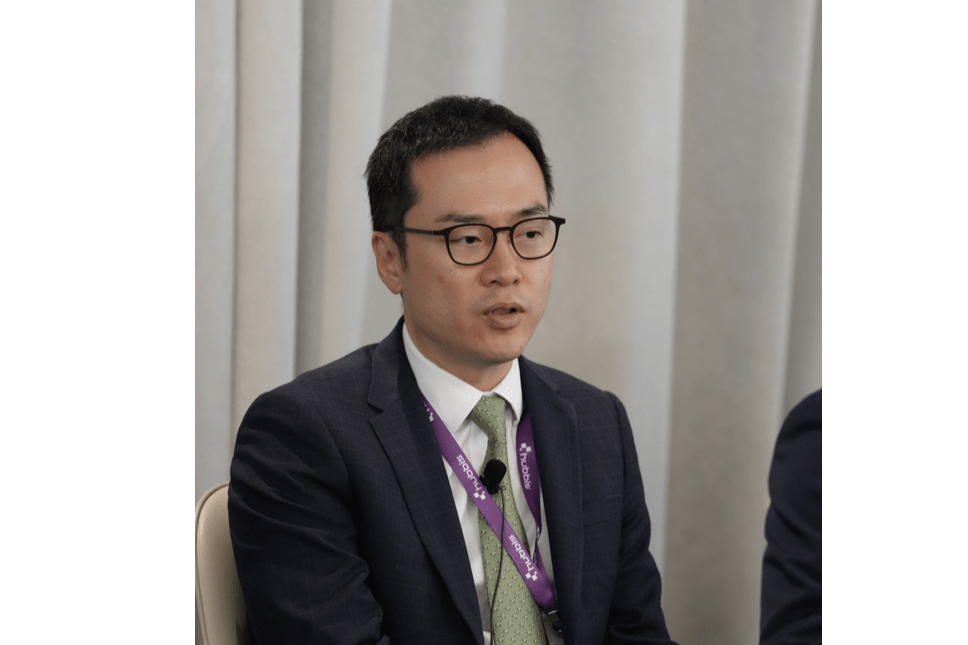
At the recent Hubbis Investment Forum – Hong Kong 2026, the opening panel discussion explored whether the city’s resurgence in wealth management represents a durable structural shift and how firms can convert rising assets into sustainable, profitable growth. Jaye Chiu, Head of Private Banking, Wealth Management Division at Bank of East Asia (BEA), offered a measured and practice-led perspective on the forces reshaping client expectations, the evolving role of the relationship manager, and the dynamics that continue to make Hong Kong a compelling centre for private wealth.
Key Takeaways
Hong Kong’s appeal as a wealth hub is becoming more internationally diversified, with increased interest from European and other non-mainland investors alongside continued flows from China.
The free flow of capital remains Hong Kong’s foundational advantage, underpinning the city’s role as the only part of China where capital moves without restriction.
Client priorities have shifted decisively over the past decade, moving away from returns-first mandates and towards asset protection, succession planning, tax efficiency, and the integration of personal and corporate wealth.
Product commoditisation across private banks means differentiation increasingly depends on coordination, connectivity, and the ability to deliver holistic solutions rather than individual instruments.
The relationship manager’s role has evolved from product promotion to orchestrating expertise across disciplines, requiring a fundamentally different skill set and professional network.
A Gateway That Works in Both Directions
Chiu opened by framing Hong Kong’s structural position relative to mainland China, a relationship that remains central to the city’s wealth management proposition but is evolving in important ways. While Hong Kong has long served as an offshore booking centre for mainland investors drawn by proximity and familiarity, Chiu was careful to present the dynamic as reciprocal rather than one-directional.
“Hong Kong is definitely a gateway to China approaching internationally, and I think vice versa is always true as well,” Chiu said. He pointed to two enduring advantages that sustain the city’s relevance for mainland clients. The first is access to a product set that remains considerably more advanced than what is available onshore. The second, and arguably more structural, is the free movement of capital. “Hong Kong is the only place in China where there’s free flow of capital,” Chiu noted. “As long as this remains true, I think Hong Kong is still going to be a very important wealth hub for the Chinese mainland investors.”
But Chiu was equally keen to highlight what he described as a meaningful shift in the composition of Hong Kong’s client base. Over the past two years, BEA has observed a noticeable increase in appetite from international investors choosing to book assets in Hong Kong, particularly from Europe and the Middle East. Geopolitical complexity, Chiu suggested, is prompting a broader set of investors to consider Hong Kong as a diversification play, and BEA’s long operating history in the region has resonated with those looking for a trusted local partner.
The result, in Chiu’s view, is a more resilient foundation for growth. “I think it’s a lot more sustainable compared to before, where we’re hugely dependent on the Chinese mainland investors,” he said. “Now I think the investors we’re getting are much more internationally diversifying.”
A Decade of Shifting Priorities
Perhaps the most striking element of Chiu’s contribution was his account of how fundamentally client expectations have changed. The shift, he argued, has been not incremental but transformational, altering the nature of the advisory conversation itself.
“Just remember if you talk about like five to ten years ago, at the top of the list of clients is always, how much return can I get? What is the risk adjusted return of portfolio? How do I get access to the best products?” Chiu recalled. That returns-first mindset, he suggested, has given way to a far more layered set of concerns. Today, clients are asking how to protect assets in a complex environment, how to structure succession planning, how to prevent family conflicts, and how to minimise their tax exposure, a topic Chiu noted is very much at the top of many Chinese clients’ minds.
Equally significant is the growing expectation that a private bank can connect a client’s personal and corporate needs within a single relationship, and bridge their onshore and offshore wealth into a coherent, holistic view. Clients no longer accept fragmented advice across different parts of their financial lives. They want integration, and the institutions that can offer it are, in Chiu’s assessment, best placed to deepen relationships and retain relevance.
The Chef, Not the Ingredients
With product access widely available and broadly similar across major private banks, Chiu argued that the competitive battleground has moved decisively from shelf breadth to service execution. Private banking, he observed, remains a fundamentally people-centric business, but the nature of what clients expect from their relationship managers has changed beyond recognition.
“Gone are the days when private bankers were simply product promoters,” Chiu said. “Nowadays, this does not cut it anymore.” The modern relationship manager, in his assessment, needs to be solutions-driven, with an understanding of the end-to-end needs of each client. That does not necessarily mean having all the answers individually, but it does mean being what Chiu described as “super connected”, with the right contacts and coordination skills to assemble a complete solution from across different areas of expertise.
He distilled the point with a memorable analogy. “While the ingredients may be the same, how to actually cook the dish really depends on the experience and the talent of the chef,” Chiu said. The implication was that in a market where product shelves have converged, the quality of advisory orchestration is what separates one institution from another. Two banks may hold broadly the same range of instruments, but the value they create depends on how effectively their people combine those instruments into something tailored and coherent for each client.
It is also, Chiu suggested, what makes the industry worth staying in. “That’s why private banking is still a very interesting business,” he said.
A Broader Foundation
Chiu’s remarks painted a picture of a private banking market in Hong Kong that is maturing in ways that favour institutions with deep roots and a willingness to adapt. The client base is diversifying beyond its historical reliance on mainland capital. The advisory conversation has evolved from a transactional, returns-driven pitch into a holistic dialogue around protection, succession, and integration. And the measure of competitive strength has shifted from what a bank can place on the shelf to how effectively its people can coordinate expertise around each client’s full set of needs.