
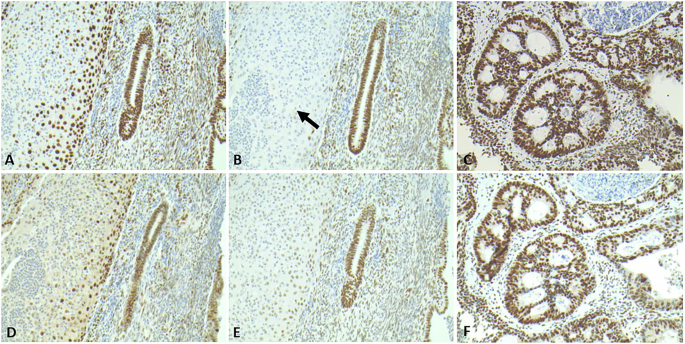
Gallon R, Gawthorpe P, Phelps RL, Hayes C, Borthwick GM, Santibanez-Koref M, et al. How should we test for Lynch syndrome? A review of current guidelines and future strategies. Cancers. 2021;13:406. https://doi.org/10.3390/cancers13030406.
Peltomäki P. Update on Lynch syndrome genomics. Fam Cancer. 2016;15:385–93. https://doi.org/10.1007/s10689-016-9882-8.
Dominguez-Valentin M, Sampson JR, Seppälä TT, ten Broeke SW, Plazzer JP, Nakken S, et al. Cancer risks by gene, age and gender in 6350 carriers of pathogenic mismatch repair variants: findings from the Prospective Lynch Syndrome Database. Genet Med. 2020;22:15–25. https://doi.org/10.1038/s41436-019-0596-9.
van der Werf-‘t Lam AS, Dowty JG, Italia M, Bakker AC, Koops F, Bleeker F, et al. Cancer risks for MSH6 pathogenic variant carriers. Eur J Cancer. 2025;231:116098. https://doi.org/10.1016/j.ejca.2025.116098.
Elze L, van der Post RS, Vos JR, Mensenkamp AR, de Hullu MSC, Nagtegaal ID, et al. Microsatellite instability in noncolorectal and nonendometrial malignancies in patients with Lynch syndrome. J Natl Cancer Inst. 2023;115:853–60. https://doi.org/10.1093/jnci/djad063.
Chen W, Hampel H, Pearlman R, Jones D, Zhao W, Alsomali M, et al. Unexpected expression of mismatch repair protein is more commonly seen with pathogenic missense than with other mutations in Lynch syndrome. Hum Pathol. 2020;103:34–41. https://doi.org/10.1016/j.humpath.2020.07.001.
Castellsagué E, Liu J, Volenik A, Giroux S, Gagné R, Maranda B, et al. Characterization of a novel founder MSH6 mutation causing Lynch syndrome in the French Canadian population. Clin Genet. 2015;87:536–42. https://doi.org/10.1111/cge.12526.
Raskin L, Schwenter F, Freytsis M, Tischkowitz M, Wong N, Chong G, et al. Characterization of two Ashkenazi Jewish founder mutations in the MSH6 gene causing Lynch syndrome. Clin Genet. 2011;79:512–22. https://doi.org/10.1111/j.1399-0004.2010.01594.x.
Pinto C, Pinheiro M, Peixoto A, Santos C, Veiga I, Rocha P, et al. Co-occurrence of nonsense mutations in MSH6 and MSH2 in Lynch syndrome families, evidencing that not all truncating mutations are equal. J Hum Genet. 2016;61:151–6. https://doi.org/10.1038/jhg.2015.124.
Pinheiro M, Francisco I, Pinto C, Peixoto A, Veiga I, Filipe B, et al. The nonsense mutation MSH2 c.2152C>T shows a founder effect in Portuguese Lynch syndrome families. Genes Chromosomes Cancer. 2019;58:657–64. https://doi.org/10.1002/gcc.22759.
Pinheiro M, Pinto C, Peixoto A, Veiga I, Mesquita B, Henrique R, et al. The MSH2 c.388_389del mutation shows a founder effect in Portuguese Lynch syndrome families. Clin Genet. 2013;84:244–50. https://doi.org/10.1111/cge.12062.
Pinheiro M, Pinto C, Peixoto A, Veiga I, Mesquita B, Henrique R, et al. A novel exonic rearrangement affecting MLH1 and the contiguous LRRFIP2 is a founder mutation in Portuguese Lynch syndrome families. Genet Med. 2011;13:895–902. https://doi.org/10.1097/GIM.0b013e31821dd525.
Guerrini-Rousseau L, Varlet P, Colas C, Andreiuolo F, Bourdeaut F, Dahan K, et al. Constitutional mismatch repair deficiency-associated brain tumors: report from the European C4CMMRD consortium. Neurooncol Adv. 2019;1. vdz033. https://doi.org/10.1093/noajnl/vdz033.
Tavtigian SV, Harrison SM, Boucher KM, Biesecker LG. Fitting a naturally scaled point system to the ACMG/AMP variant classification guidelines. Hum Mutat. 2020;41:1734–7. https://doi.org/10.1002/humu.24088.
Richards S, Aziz N, Bale S, Bick D, Das S, Gastier-Foster J, et al. Standards and guidelines for the interpretation of sequence variants: a joint consensus recommendation of the American College of Medical Genetics and Genomics and the Association for Molecular Pathology. Genet Med. 2015;17:405–24. https://doi.org/10.1038/gim.2015.30.
CanVIG-UK. Mismatch repair genes: CanVIG-UK gene-specific guidance. Available from: https://www.cangene-canvaruk.org/gene-specific-recommendations
Feng BJ. COOL (Co-segregation Online) v3. 2026. Available from: https://fenglab.chpc.utah.edu/cool3/manual.html
Thompson BA, Spurdle AB, Plazzer JP, Greenblatt MS, Akagi K, Al-Mulla F, et al. Application of a 5-tiered scheme for standardized classification of 2,360 unique mismatch repair gene variants in the InSiGHT locus-specific database. Nat Genet. 2014;46:107–15. https://doi.org/10.1038/ng.2854.
Wang C, Feng M, Kou Y, Kuang W, Wang W, Liang D. Evaluation of microsatellite instability patterns in mismatch repair deficiency: a retrospective analysis of 285 endometrial cancers. Front Immunol. 2025;16:1628979. https://doi.org/10.3389/fimmu.2025.1628979.
Helderman NC, Strobel F, Bohaumilitzky L, Terlouw D, van der Werf-‘t Lam AS, van Wezel T, et al. Lower degree of microsatellite instability in colorectal carcinomas from MSH6-associated Lynch syndrome patients. Mod Pathol. 2025;38:100757. https://doi.org/10.1016/j.modpat.2025.100757.
Frederiksen JH, Jensen SB, Tümer Z, Hansen TVO. Classification of MSH6 variants of uncertain significance using functional assays. Int J Mol Sci. 2021;22:8627 https://doi.org/10.3390/ijms22168627.
Møller P, Seppälä TT, Ahadova A, Crosbie EJ, Holinski-Feder E, Scott R, et al. Dominantly inherited microsatellite instability cancer – the four Lynch syndromes – an EHTG, PLSD position statement. Hered Cancer Clin Pract. 2023;21:19. https://doi.org/10.1186/s13053-023-00263-3.
National Comprehensive Cancer Network. Genetic/familial high-risk assessment: colorectal, endometrial and gastric. Version 1.2025. Plymouth Meeting (PA): National Comprehensive Cancer Network; 2025. Available from: https://www.nccn.org/guidelines/guidelines-detail?category=2&id=1544
Glykofridis IE, Dekker M, Stoepker C, van Ravesteyn TW, Tiersma Y, van der Ham CG, et al. An accurate cellular assay to determine pathogenicity of coding and noncoding variants in Lynch syndrome genes. Proc Natl Acad Sci USA. 2026;123:e2517801123. https://doi.org/10.1073/pnas.2517801123.
Drost M, Tiersma Y, Thompson BA, Frederiksen JH, Keijzers G, Glubb D, et al. A functional assay-based procedure to classify mismatch repair gene variants in Lynch syndrome. Genet Med. 2019;21:1486–96. https://doi.org/10.1038/s41436-018-0372-2.