
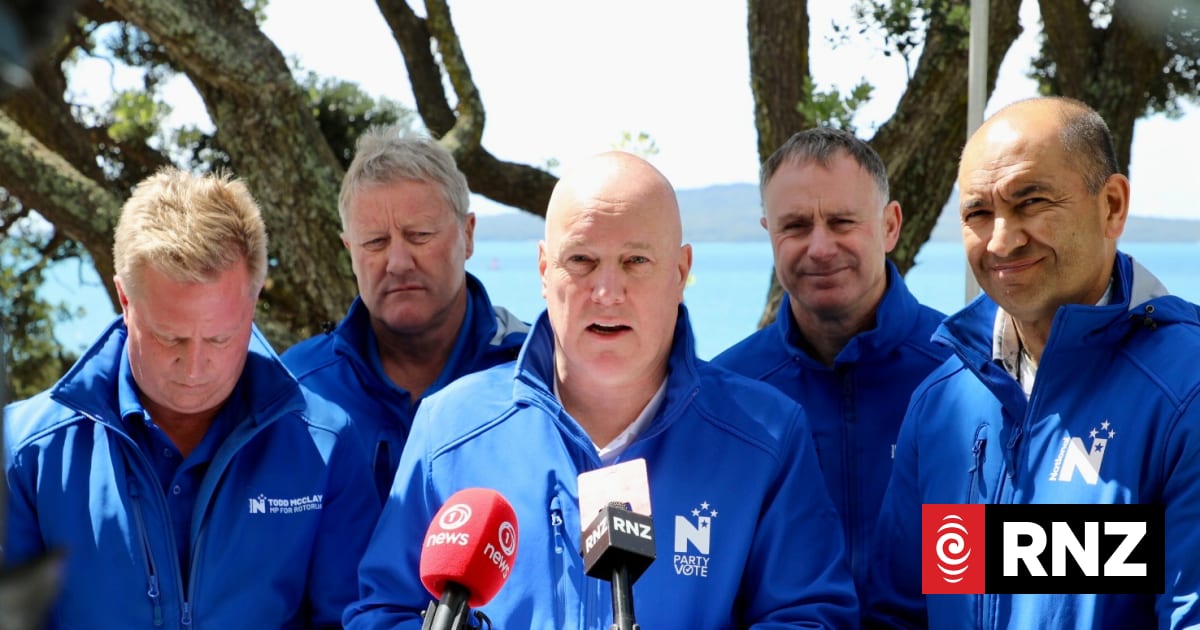
An earlier version of this story said the party proposed a ban on commercial fishing. This has been corrected to ring-net fishing.
The National Party would follow the Greens in banning ring-net fishing in the Hauraki Gulf’s high protection areas, as part of its election fisheries policy.
The party says if re-elected, it will also establish a new marine reserve off Waiheke Island, expand the size of the Goat Island reserve, and ban the commercial sale of marlin.
It has stopped short of a ban on bottom trawling, with a policy document saying National would review bottom trawling on seamounts, with an aim to increase protections from 32 percent to 50 percent of New Zealand’s exclusive economic zone by 2040.
A $20 million ‘fish tech innovation fund’ would, in partnership with the seafood sector, help reduce the impact of bottom trawling, aiming to improve fishing gear.
National is also ruling out a recreational fishing licence, saying “fishing for a feed is a Kiwi right.”
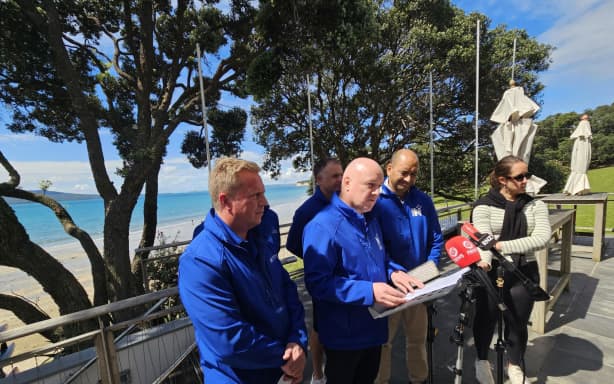
National Party oceans and fishing policy announcement, October 2026.
RNZ
Oceans and fisheries spokesperson Todd McClay said all fishers, commercial and recreational, depended on the health of New Zealand’s waters.
“While some people catch their own fish, most New Zealanders enjoy seafood from their local supermarket or fish and chip shop. Ensuring the long-term sustainability of our fisheries is critical for both coastal communities and consumers.”
Speaking to media, leader Christopher Luxon said the Hauraki Gulf is special to Aucklanders and is the city’s “playground and the centrepiece of it”.
A ban on ring-net fishing in the gulf would mean a reversal of the government’s previous position which has allowed it. McClay said it had been important to allow fishers to adjust for a period of time.
“Some of them were dependent upon it, but it’s a very clear signal. We’re now saying that can come to an end. There are other areas they can fish, but we think it’s the most important time to do that.”
McClay said during their fishing trip on Saturday morning, Luxon had caught “the biggest fish of any of us”, although the leader said he was spear fishing, and caught three fish. Others came back with kina and pāua.
He said the ban would require legislation, but it would come into force “very quick after the election”.
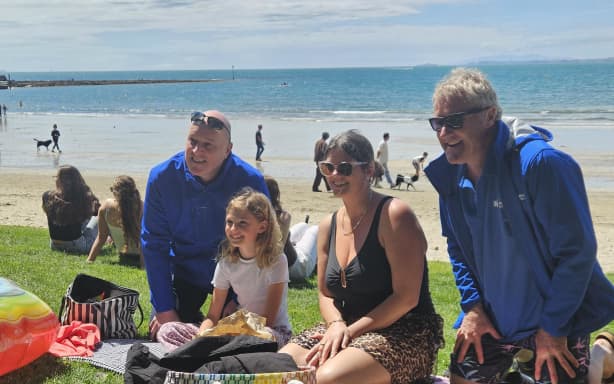
Christopher Luxon and other National Party candidates campaign in Auckland, October 2026.
RNZ
New Zealand First’s Shane Jones has been championing the fishing industry in this term of government, but McClay said Jones “also recognises we need to get balance”.
Asked if Jones would be unhappy with the policy, Luxon said “I don’t really care”.
“This is a National Party policy, and it’s actually, between now and November the 7th, it’s about party vote National,” he said.
The party’s policy also promises a review of bottom trawling on seamounts, but Luxon pushed back on a full ban or phase-out.
“If 70 percent of our seafood is coming out of bottom trawling in New Zealand, the price of fish is going to go through the roof. In the same way, an oil and gas ban led to the price of electricity going through the roof … that’s why we’re starting that process of actually wanting to have a look at the review.”
He said he expected there would be “a lot of bipartisanship from the community sector, from iwi, from commercial and rec[reational] fishers”.
With the Opportunity Party having set a bottom-trawling ban as a bottom line, Luxon rejected the suggestion he could end up working with them, even if its leader ruled out proposals National was opposed to like a land tax.
“We’re not talking about coalition negotiations because that’s a hypothetical conversation … We’ve ruled out the Opportunity Party. We’ve been clear about the parties we would and wouldn’t work with from the beginning of the year. There’s no change for us,” Luxon said.
Earlier this month, the Greens released their own fisheries policy, which included a total ban on bottom trawling, starting with seamounts and ecologically significant areas like the Hauraki Gulf.
It would also immediately ban ring-net fishing in the Hauraki Gulf’s high protection areas, while National has not put a time-frame on its policy.
Ring-net fishing has been exempt under the Hauraki Gulf / Tīkapa Moana Marine Protection regulations, with authorised people allowed to do so between 1 March and 31 August, and only for kahawai, grey mullet, and trevally.