
The National Emergency Management Agency said there was no tsunami threat for New Zealand.
The Pacific Tsunami Warning Centre said tsunami waves of up to 3m above tide levels were possible along the coast of Panama and up to 1m for some coasts of Ecuador.
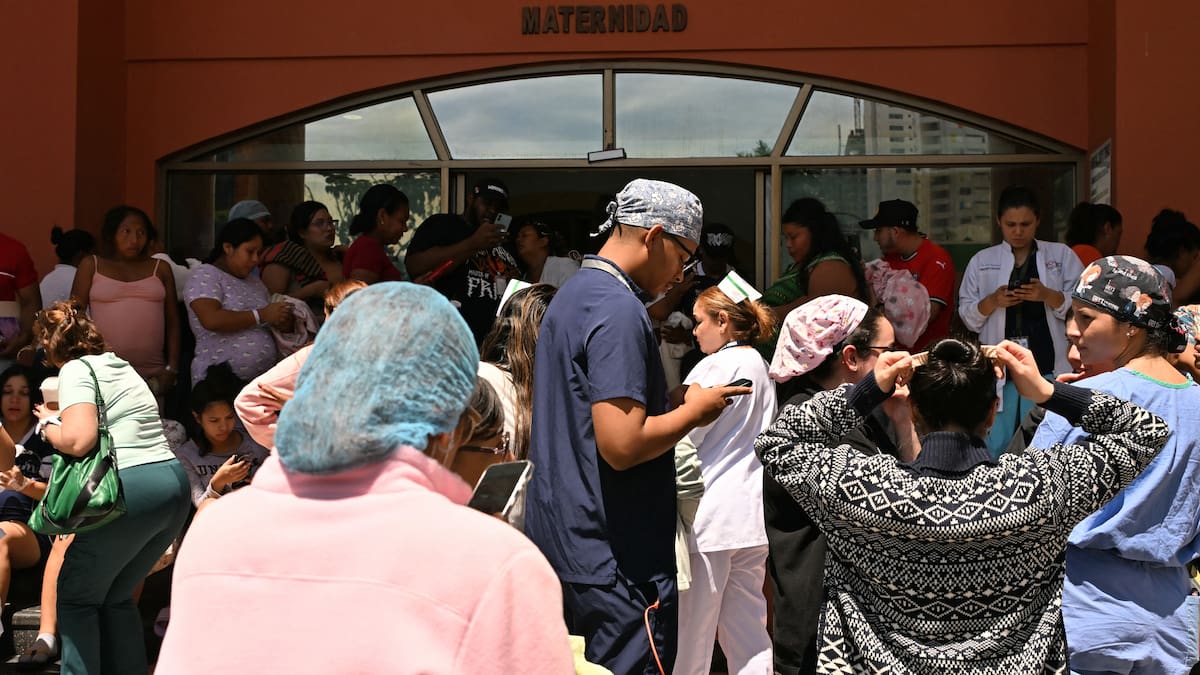
Tremors were felt in Panama City, where buildings shook and people evacuated into the streets
AP reported: “Visibly shaken residents gathered outside as they waited for news of the quake’s impact.”
The quake, registered at a shallow depth of 12 kilometres, was felt across the country of around 4.5 million people, according to the National Civil Protection System, and lasted for around a minute.
The damaged St John Baptist Cathedral in Penonome, Panama. Photo / Getty Images
USGS said the epicentre was 10km from the small town of Pitaloza Arriba in the south-centre of Panama. Graphic / Getty Images
There were no reports yet of casualties but extensive damage was expected, particularly in the centre of the Central American nation.
Panama’s President Jose Raul Mulino labelled the quake a “major disaster” and said it destroyed roads near the epicentre.
Mulino also did not say whether there were any casualties.
Luis Poveda, a factory worker in the central city of Santiago de Veraguas, told AFP: “I’m in shock right now and haven’t been able to contact my family.”
Arnulfo Santos, a worker at a flour mill in the same city, said: “We all ran out of the building, the power lines were swaying, and everyone was outside.”
AFP reported that part of a hotel had collapsed in the town of Penonome, 150km southwest of Panama City.
A church in Penonome was also seriously damaged and other buildings showed cracks, according to local reports.
A collapsed building and damaged cars in Penonome. Photo / AFP
More than 80 aftershocks, one a magnitude-6 tremor, were recorded by the local geosciences institute.
Writing on X, Panamanian President Jose Raul Mulino called for calm, saying: “What happened should not be used to generate alarms and disorder.”
Earthquakes are rare in Panama and when they do occur they usually strike in western Chiriqui province, bordering Costa Rica.
The Panamanian quake is at least the fourth quake this year in Latin America surpassing 7.0 in magnitude, after devastating earthquakes in Venezuela in June and a powerful earthquake in western Colombia in August.