
Last month, the winners of Nikon’s Small World in Motion competition were announced.
The contest celebrates images and videos taken using powerful microscopes, to reveal extremely small details we wouldn’t normally be able to see.
The winning video was submitted by Dr Ning Xu, a scientist at China’s Tsinghua University.
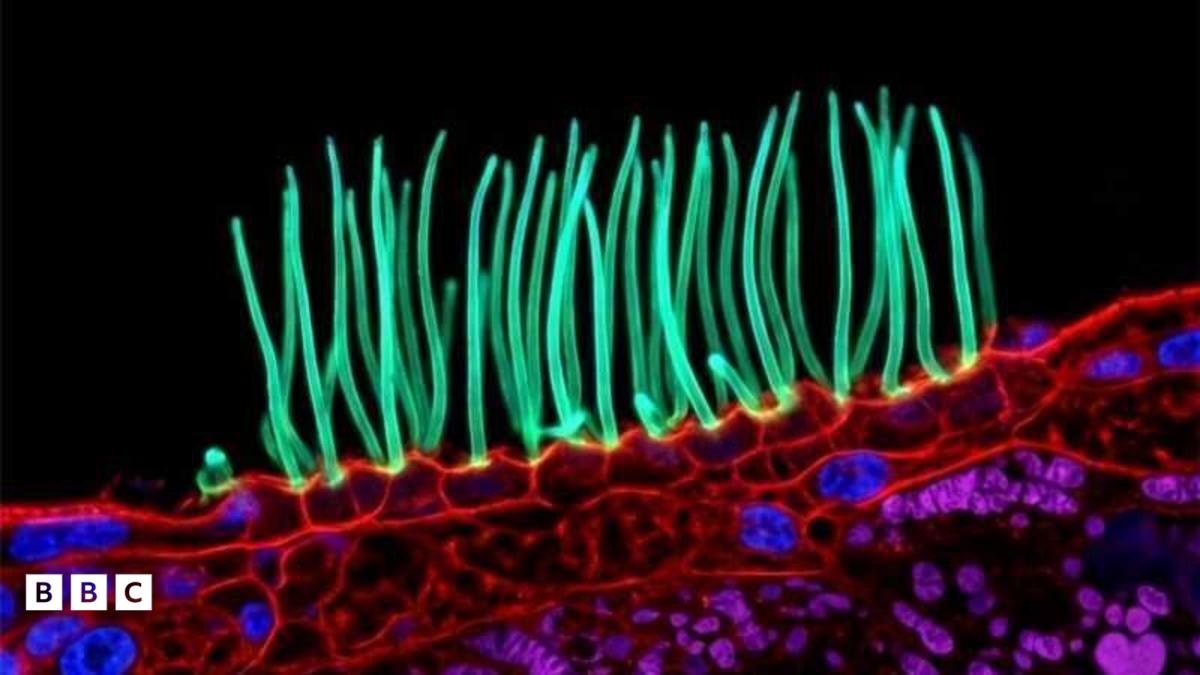
It showed tiny, hair-like structures called cilia moving inside a lung.
Cilia help to sweep mucus and other particles out of the airways, helping to keep the lungs clear.
After the video won, a number of scientists – including some who had judged the competition in the past – complained to Nikon that the video did not appear to be real.
Dr Xu had acknowledged using AI, but said he believed he had followed the rules, and had cooperated with Nikon’s investigation.
However, after reviewing the video and other evidence, Nikon decided that the entry did not meet its rules on generative AI and removed it from the competition.
The company added its decision was not a judgement of the entrant’s professional reputation or scientific contributions.
The BBC has approached Dr Xu for comment.