
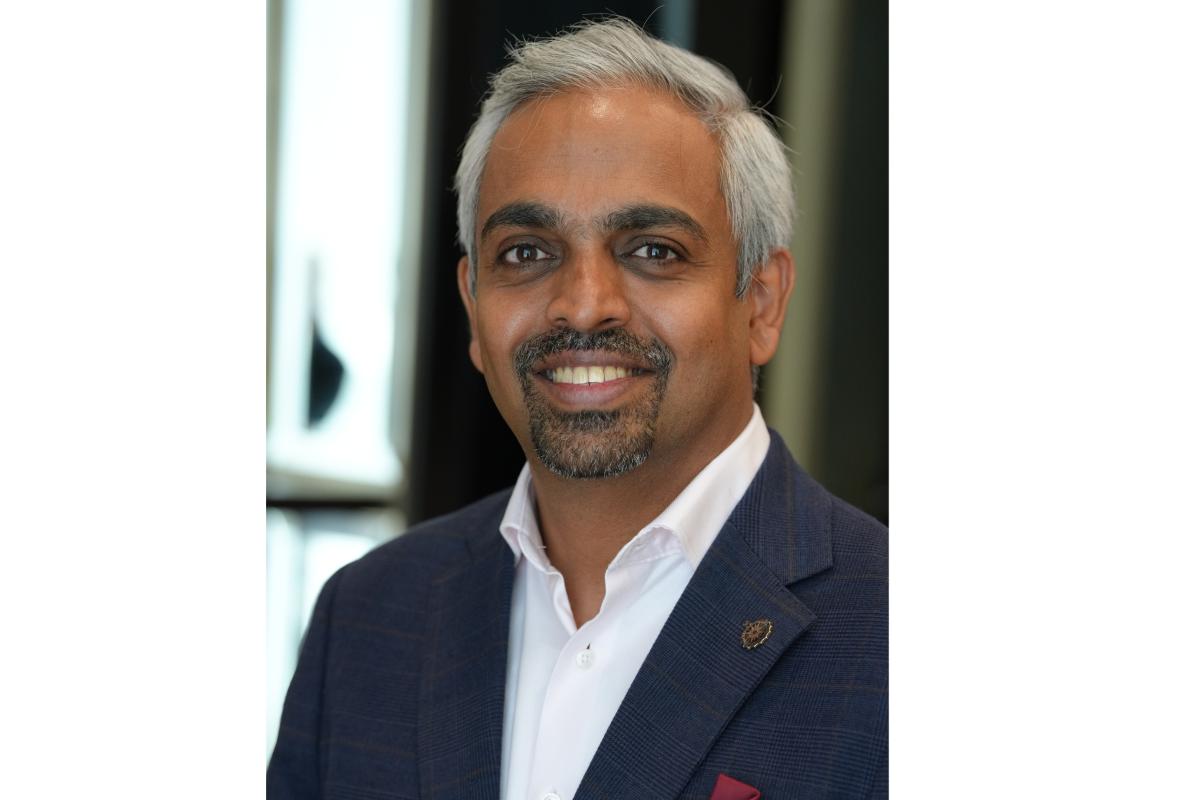
At the Hubbis and Intellect Design Arena event Beyond Fund Distribution – Building Lasting Investor Relationships at The St. Regis Hotel in Kuala Lumpur on 1 October 2026, Hari Menon, Partner & Global Business Head – Wealth and Capital Markets, IntellectAI, presented a model for connecting customer acquisition, investment guidance, servicing and operations. The event was attended by over 30 senior leaders from Malaysia’s leading asset management companies. His focus was how institutions could put those capabilities into use while retaining control over decisions and the pace of technology change.
Hari combined a tour of IntellectAI’s wealth platform with an illustrative investor journey and a proposal to shorten implementation. The common foundation was connected institutional knowledge, used both to support artificial intelligence (AI) agents and to make the dependencies within a platform visible to the institution adopting it.
The presentation also set out commercial and delivery ambitions, including a three-month go-live target and discounts of up to 80% on standard product implementation. The proposed model distinguished standard product implementation from institution-specific changes, which would be scoped and charged separately.
Key Takeaways
Connect the Full Journey: Hari described a platform spanning prospecting, onboarding, investment planning, compliance and ongoing servicing, across digital and adviser-assisted channels.
Keep People in Control: Purpose-built wealth agents were presented as support for customer-facing and operational teams, with humans retaining authority over their use.
Use Institutional Context: A multidimensional, multilayered system of connected knowledge (MSOCK) brings customer, market, portfolio and research information together for use within workflows.
Adopt Capabilities Progressively: The eMACH.ai architecture allows institutions to select components and work with existing systems rather than replace every part of their platform together.
Govern Agents and Models: Purple Fabric combines connected knowledge, agent orchestration, model selection and enterprise governance, including controls to stop agents.
Reset Implementation Economics: Hari outlined a three-month adoption model and a discount on standard implementation, with bespoke work charged on a time-and-materials basis.
Make Change Visible: The Wealth Spatial Graph maps relationships between users, journeys, events and services so institutions can assess the consequences of a proposed change.
About The Event
Hubbis hosted Beyond Fund Distribution: Building Lasting Investor Relationships, an invitation-only Asset Management Leaders’ Lunch, in exclusive collaboration with Intellect Design Arena at The St. Regis Kuala Lumpur on 1 October 2026. Designed for senior leaders from Malaysia’s asset management and unit trust industry, the gathering focused on distribution, agency business, digital transformation and AI, operations and customer propositions. The programme featured a keynote by Banesh Prabhu, Chief Executive Officer of IntellectAI, a presentation by Hari Menon, Partner & Global Business Head – Wealth and Capital Markets at IntellectAI, and a panel discussion chaired by Michael Stanhope, Founder & Chief Executive Officer of Hubbis. Discussions explored adviser enablement, connected digital and adviser-led channels, and the role of goals and retirement planning in building lasting investor relationships.
Financial Services Experience with a New Delivery Model
Hari began by situating IntellectAI within Intellect Design Arena. He described the group as a financial technology product company with 33 years of domain experience, more than 500 customers and a presence across 62 countries. Design thinking and a focus on financial services were the characteristics he emphasised.
Within that broader organisation, IntellectAI’s wealth and capital markets business combines the group’s established domain knowledge with platforms designed around cloud technology, AI and composable architecture. Hari said the approach allowed the business to deliver connected knowledge as part of the platform and accelerate implementation.
The relevance to Malaysian distributors was the ability to combine those capabilities with their own business requirements. Hari ’s presentation moved from the group’s credentials to how a platform could serve different investors, users and channels without treating each as an isolated system.
A Platform Across Segments and Channels
Hari described coverage ranging from retail and mass affluent investors to private banking and trust clients. The platform supports different asset classes and users, including customers, unit trust consultants, advisers, fund managers and risk and compliance teams.
The distribution model can likewise vary. Institutions may offer direct self-service, an adviser-led relationship, robo-advisory or a hybrid arrangement. Hari ’s argument was that the underlying platform should be able to support those choices while maintaining context across the customer’s lifecycle.
MSOCK sits at the centre of that design. It brings together domain knowledge, market information, customer and account data, portfolios and research. The knowledge is intended to support both the current operation and the institution’s understanding of what it could build or change next.
Hari also recognised existing investments in platforms, data providers and partnerships. Integration was part of the proposition: institutions could connect those resources to the new capabilities rather than regard them as investments that had to be discarded.
Purpose Built Agents with Human Control
The platform’s AI component was described through more than 45 wealth agents, designed for particular activities rather than offered as general-purpose assistants. Their applications span onboarding, investment planning, research, compliance and operations.
Hari stressed the importance of understanding the wealth domain, the data used at each stage and the context of the investor’s relationship. That allows an agent to support a defined task within a wider journey, rather than produce an answer detached from the institution’s process.
“It is the human in control. It is AI in the loop,” he said.
The design objective was to help people do more and make better use of information. A relationship manager (RM), for example, could receive preparation for a meeting or a prompt about a customer’s changing circumstances, while retaining responsibility for the interaction. Operational agents could reduce the work required behind that conversation.
Hari tied the agents to four business outcomes: RM productivity, revenue generation, compliance and client experience. The following illustration showed how a series of relatively specific interventions could contribute to those outcomes over time.
Sophie’s Journey from Prospect to Retirement
Hari used Sophie, a 52-year-old woman who had sold her business, to bring the platform to life. He explicitly described her as an illustrative client assembled from different customer journeys IntellectAI had encountered. The sequence should therefore be read as a composite demonstration, rather than the documented history of one investor.
The journey began with a prospect who had been on an institution’s list for some time without converting. News of the business sale prompted an agent to alert the RM to a possible opportunity to reconnect. Other agents prepared information for the first meeting, supported initial due diligence and generated a trial proposal using information already held.
In the onboarding example Hari incorporated into the story, the availability of connected information helped reduce the process to less than a day. He contrasted that with the days or months that can separate an initial conversation from an active account, during which the institution risks losing the prospect.
The relationship continued after investment. When markets moved, a proactive message explained that the institution was aware of the effect on the portfolio and was managing it. Sophie’s intention to retire at 55 and take a six-month world cruise informed planning and a later portfolio rebalance.
One of Hari ’s most striking examples concerned a service problem. Repeated difficulties with an application had frustrated the customer. An alert to the RM prompted a personal call, and the issue was resolved within 24 hours in the example he described. The intervention connected a technical problem to the person responsible for the relationship before dissatisfaction was left to deepen.
“This is probably the simplest but the most impactful touch point,” Hari observed.
At retirement, information about earlier discussions could also support a timely conversation about an annuity. The significance of the sequence was continuity: acquisition, suitability, investment changes and service experience could inform one another, rather than require the investor or RM to restart the conversation at each stage.
Building Around Existing Technology
Hari explained eMACH.ai through its architectural principles: event-driven processes, microservices, application programming interfaces (APIs), cloud readiness, headless design and embedded AI.
Events allow the system to trigger an action or workflow when something relevant happens. Microservices make functions independently deployable, while APIs allow components and agents to connect with other systems. Headless design separates the underlying capabilities from the interface through which users access them.
That separation gives an institution choices about adoption. It could take the agents, an RM channel or a particular module, and retain other parts of its existing technology. Hari also described support for cloud and on-premises deployment.
“We will help you change one block at a time, not everything at once,” he said.
He linked progressive implementation to the experience of the people using the system. Keeping familiar interfaces where possible could reduce the retraining associated with each change. The proposition was to complement the institution’s investments while introducing the capabilities it needed next.
Purple Fabric Connects Knowledge and Governance
Purple Fabric, Intellect’s enterprise AI platform, provides four components behind the model. MSOCK makes relevant structured and unstructured information available, including market data and institutional knowledge. Hari said it complements existing data warehouses and data lakes by consuming information from its existing location rather than duplicating it.
Enterprise Digital Experts provides the means to create, orchestrate and manage agents, including a kill switch. The Model Optimisation Hub allows institutions to compare and change the models used for different tasks. It can accommodate large language models (LLMs) as well as an institution’s own machine learning or deep learning models.
Hari warned against committing the architecture to one model provider when capabilities were changing so quickly. Model choice was therefore part of the institution’s continuing control over the platform.
Enterprise Governance completes the structure. It governs access to data and the controls applied to agents, including measures addressing hallucinations and inappropriate outputs. In Hari ’s account, the other capabilities depended on that layer being present: connected information and capable agents still require rules about who can use them and how.
Shorter Implementation with a Defined Commercial Offer
Hari proposed a reset of the conventional implementation timetable. IntellectAI wanted institutions to go live in three months rather than undertake projects lasting twelve, eighteen or twenty-four months. He cited seven new customer platform go-lives across wealth and capital markets in the preceding twelve months and four active implementations using the newer model.
The commercial offer was a discount of up to 80% on standard product implementation, with institution-specific changes charged on a time-and-materials basis. The distinction matters: the discount concerned implementation of the standard product, rather than the full price of a platform or every element of a bespoke project.
Connected knowledge was also being used to change how requirements and testing were handled. Hari said IntellectAI could bring a business requirements document (BRD) to the customer for confirmation, reducing the time spent establishing the product’s capabilities through walkthroughs.
He described shorter system integration testing (SIT) and user acceptance testing (UAT), and said regression testing could support product updates without additional UAT. The extent of testing would depend on the scope of the change and each institution’s acceptance requirements.
Seeing the Consequences of a Change
The final demonstration addressed a familiar source of implementation uncertainty: understanding what a change will affect. Hari showed a Wealth Spatial Graph linking six dimensions, including offices, user personas, modules, events, user journeys and microservices.
Customer onboarding served as the example. The graph connected that journey to the relevant customer-management event, onboarding and account-opening module, RM persona and office, and the underlying technical services. Hari described the ability to move into further detail and explore similar relationships elsewhere in the platform.
For a proposed change, the connected graph was intended to identify affected components and help establish the effort required. That would give the institution a stronger basis for decisions about cost, timing and scope, reducing its dependence on the supplier’s account of the work involved.
He closed by emphasising that the presentation concerned capabilities and delivery methods already in use with IntellectAI customers. His challenge to institutions was to identify where they wanted to begin, using a defined part of the wealth journey and greater visibility of the technology supporting it.