
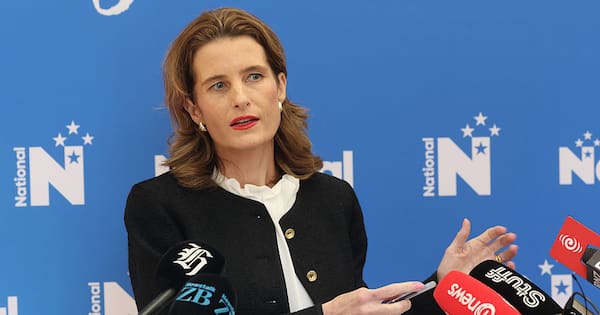
National has officially put new tax cuts on ice if re-elected, with Nicola Willis saying reducing debt in her fiscal plan must come first and relief would be considered when Government books are in better shape.
The party’s finance spokesperson released National’s fiscal plan this afternoon as she continues to beat the drum on restraint around spending commitments.
National has reconfirmed it intends to return the government’s books to a surplus in 2028/29, with new promises to pay for it partly through cuts to foreign aid and welfare.
Willis, who is also National’s finance and economic growth spokesperson, said the party could see a route to tax relief but would not take it yet.
“National’s approach has got us this far, but our plan needs three more years to bed in. That is how we help Kiwis secure their future,” she said in a media release.
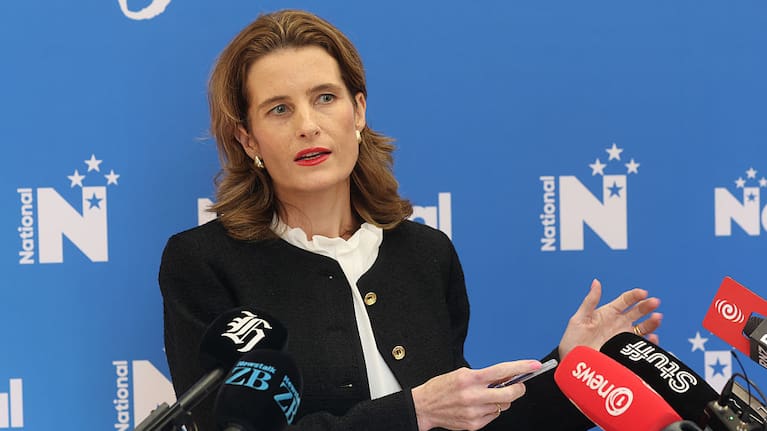
“While our fiscal plan shows a pathway to potential tax relief for working New Zealanders, now is not the time to cut taxes.
“National’s priority is to get on top of the debt first so that our kids and grandkids aren’t left with a bigger bill and to ensure we have a bigger buffer to withstand future global shocks.”
The plan stated any future National government, if elected, would consider tax relief once the books were “back in the black”, but it made no firm commitment.
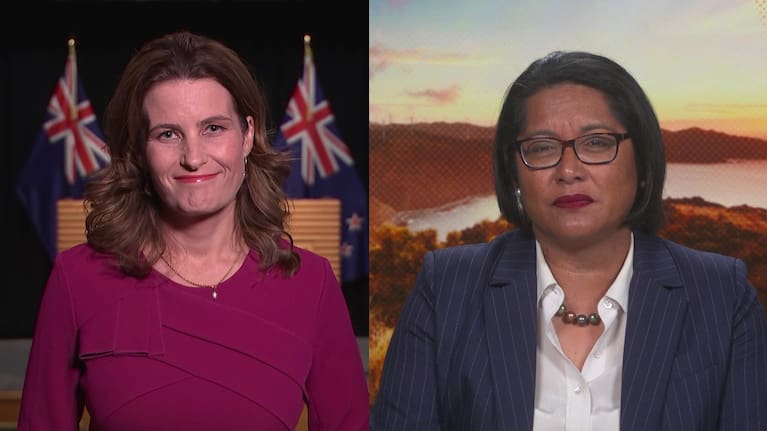
The two people vying to be finance minister appeared on Q+A. (Source: Q and A)
“New Zealanders have worked hard through a tough few years. National’s plan is about rewarding that hard work, letting more of what people earn stay in their pockets, and building a more secure future for families and businesses,” Willis said.
“Our plan will set New Zealand up for the future and put us in a stronger position to withstand the next severe weather event, natural disaster or global shock.
“Getting debt down is essential to delivering lasting prosperity for New Zealand.
“Less debt helps keep inflation and interest rates down, which means lower mortgage and business borrowing costs. That gives households more breathing room in their budget, and businesses the confidence to invest, build and hire.
Net core Crown debt is forecast to peak at 43.9% of GDP in 2027/28, before falling to 39.5% by 2030/31.
The Government has finally opened its books, with the Treasury outlining the Crown’s financial position. (Source: Breakfast)
Labour finance spokesperson Barbara Edmonds dismissed the plan as “more cuts, more chaos, and absolutely nothing for the cost of living”.
Same limits but different-sized commitments
National and Labour have both signed up to a $2.4 billion operating allowance and a return to surplus for the government books in 2028/29.
The gap between them is how much each would tax and spend within those limits. Willis has been keenly sceptical of Labour’s numbers in recent weeks.
Labour’s fiscal plan raised about $11 billion in new revenue over the forecast period, mostly from its capital gains tax and repealing National’s Investment Boost tax break.
National would fund its plan partly with about $1 billion in spending reduction, including cutting $431.2 million from the foreign aid budget and $583 million from what it has called “stronger welfare expectations and case management”.
But Treasury’s highlighting long-term challenges, including the cost of superannuation. (Source: 1News)
Meanwhile, in health, National set aside $15.4 billion for extra health spending, and said health made up 88% of its spending commitments. Its total included $604 million more for Pharmac’s medicines budget and lowering the bowel screening age to 50.
Most of it, $14.6 billion, is to cover rising health costs from inflation, wages and population growth, based on Treasury’s Pre-election Economic and Fiscal Update.
Labour’s plan put its additional health funding at $15.5 billion, almost the same total, but split quite differently. Labour put about $2.5 billion towards new health policies, including three free GP visits a year and free prescriptions, and $13 billion towards rising costs.
Pay equity and a BNZ buy-back are among the agenda. (Source: 1News)
That is $1.55 billion less than National for cost pressures, with all of the gap in 2030/31, the last year of the forecast. Labour’s Chris Hipkins has previously said the party’s policies, such as more GP visits, would aid in reducing pressure on hospitals.
National’s cost-pressure funding climbs to $5.94 billion by 2030/31.
Another stark figure in the plan was that National set aside $25.2 million over four years in operational spending for policies it had yet to announce. Labour’s plan released weeks ago held $968 million for future announcements.
Both parties leave far larger sums unallocated within their operating allowances with about $7.5 billion for National and $10.5 billion for Labour.
National says its share would cover things like pay rounds for teachers and police and new investment. Labour would have to use that money to fund for additional health system pressures and the pay equity claims under the laws it has promised to bring back.
In a media release today, Willis repeated National’s pledge of no new taxes and took aim at her opponents over their ambitions for a different path of spending.
“National is the party of low tax,” she said.
“Labour and its coalition partners have proposed at least nine new taxes which will cost the average household $2263 a year.”
Labour has proposed a capital gains tax but denies it wants any others.
Labour hits back
Speaking to media, Edmonds said the plan wasn’t “worth the paper it’s written on”.
“More cuts, more chaos, and absolutely nothing for the cost of living, which is the number one issue to New Zealanders,” she said.
“This is just more hollow promises from the National Party, who have broken almost every promise they made to New Zealanders in 2023. They have made the economy worse, not better. This three-page fiscal paper is not even worth the paper it’s written on.”
Asked whether holding off on tax cuts proved National’s tax cuts this term had been irresponsible, she said Willis had broken a promise not to borrow for them.
“In her first Budget, she had to borrow $12 billion for those tax cuts,” Edmonds said.
“We had been telling her since 2023 that New Zealand couldn’t afford it, but she still charged ahead and borrowed more.”
On Labour’s own position, Edmonds said tax relief would be considered when the fiscal environment allowed for it, but getting back to surplus came first.
“The reason why you want to get into surplus is to make sure you have enough room within your books in case the shock happens,” she said.