

Today’s Moon explorers won’t have the luxury of GPS-like tech for navigation. But JAXA is trying to change that for future lunar visitors.
The space agency tapped Japanese space startup ArkEdge Space for two projects designed to improve navigation on the Moon. These awards build on work the startup is already doing with the Japanese space agency, including designing a constellation of small satellites around the Moon to enable navigation.
MoonQuest: Under the first contract, ArkEdge will conduct a study on adding a Lunar Augmented Navigation Service (LANS) receiver on the pressured crew rover being developed by JAXA to be used during the US-led Artemis program.
Under the study:
ArkEdge will design the receiver to fit on the rover, and establish a timeline for testing and integration.The company will determine the mass, power, and heat-dissipation requirements of the system.The startup will also highlight areas where tech will need to improve to support the system.
Signal received: ArkEdge will also develop a receiver to detect signals from Japan’s Lunar Navigation Satellite System demo sat (also built by ArkEdge). The company is also building the demo to be able to receive signals from NASA and ESA sats, ensuring that international interoperability is baked into lunar navigation from the start.
“Both satellites that transmit navigation signals, and receivers that use those signals, are essential to realizing lunar navigation services,” Toshihiro Shibukawa, manager of ArkEdge’s PNT department, said in a statement. “We believe that ArkEdge Space’s involvement in lunar PNT development is significant for the future of human exploration on the Moon.”
ArkEdge did not reveal the value of either award.
Related Stories
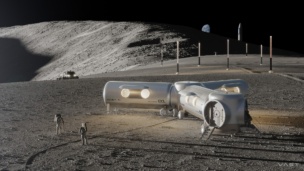
Vast announced a Lunar Programs division, building on its commercial space station and satellite development work to support NASA’s Moon Base ambitions.
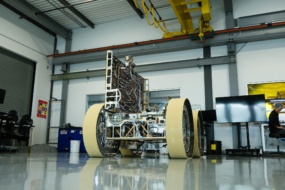
A new partnership between Astrolab and Interstellar Mapping is one giant leap for mapkind.
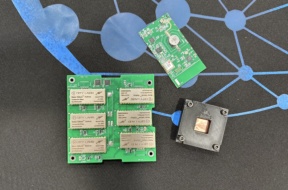
Following the success of City Labs’ first nuclear-powered betavoltaic demo, City Labs is planning a demo of its radioisotope heating unit.
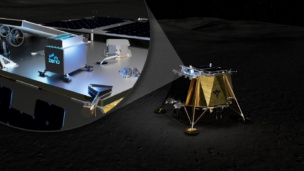
Zeno Power is ready to pull its first all-nighter. On Wednesday, the nuclear-energy startup announced a commercial payload agreement with Firefly Aerospace ($FLY) to send a radioisotope heating unit (RHU) on a Firefly mission launching to the Moon NET 2028. The mission—flying on Firefly’s CS-8 CLPS mission—aims to demonstrate Zeno’s ability to keep a 5W…
More Stories
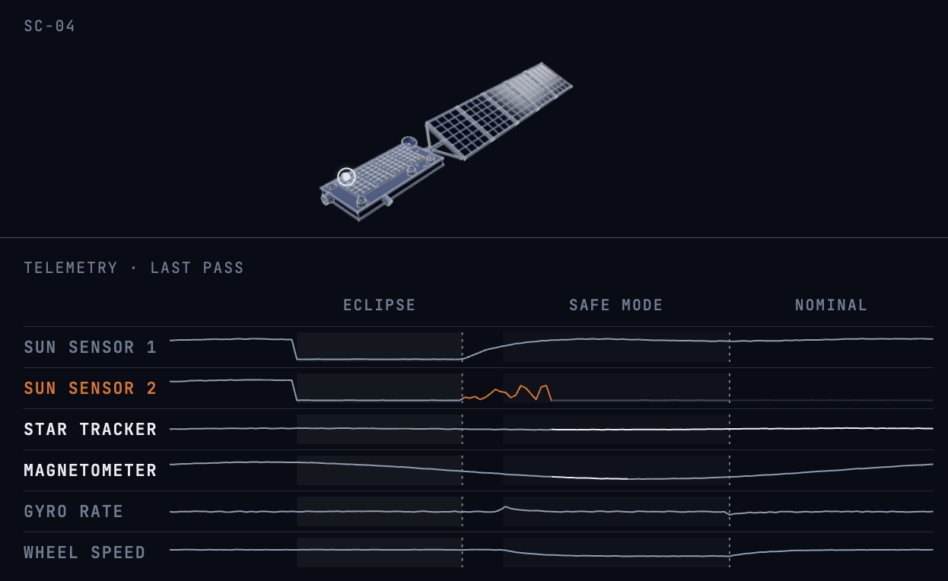 Illustrative example of INTELLACT platform. Image: In Orbit Aerospace
In Orbit Aerospace has swapped reentry vehicles for autonomy software, and NASA and the Space Force are funding the shift.
The Torrance, CA-based startup has won new government contracts for its onboard AI system, which the company says can run a spacecraft’s operations without waiting on ground control.
“We’re scaling to the point where you simply can’t have one, or even more, ground operators monitoring the satellite,” In Orbit CTO and cofounder Ishaan Patel told Payload. “When the problem scales that far, I think we need to have an increased sense of autonomy for the vehicle.”
Load More