
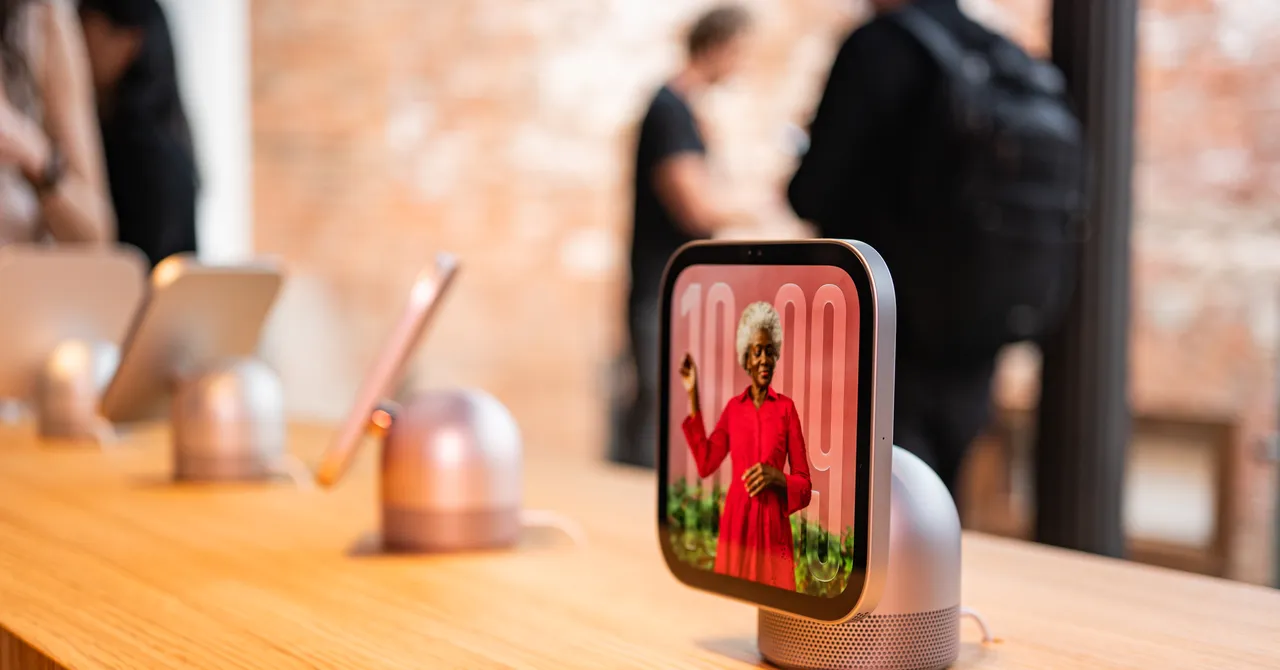
The aluminum hardware, powered by Apple’s A18 chip, comes in four colors: silver, starlight, rose pink, and space gray (Apple color-matches the woven cable, too). The standard HomeView has a speaker base with a screen that tilts manually up or down for angled viewing, but you can also buy a wall-mountable version. The latter offers three mounts to choose from, one of which is DIY-friendly and has a visible power cord that needs to run to an outlet. The other two are designed for professional installers, either hardwired or connected via Power over Ethernet (PoE).
Technically, the primary speakers—two full-range drivers—are built into the screen. But the standard HomeView has a base that houses a down-firing woofer and two force-canceling passive radiators for stronger bass. It sounds pretty good based on a very limited listening experience, and can fill a large room quite well. The wall-mounted variant won’t have that extra oomph but Apple claims it tunes the audio for wall placement.
The 7-inch Liquid Retina display has familiar elements, like True Tone, which adjusts the screen’s color temperature to match the room’s lighting. The ambient light sensor can also reduce display brightness from 500 nits to 0.3 nits, which is the lowest brightness Apple has ever engineered on a screen. That’ll be helpful if you place the HomeView on the nightstand.
That is, if you’re comfortable placing a camera-equipped display in the bedroom. A 12-megapixel Center Stage camera and four-microphone array sit on the front, but they aren’t just for FaceTime calls. The camera handles facial recognition, allowing the software to adapt to whoever is looking at the screen. Apple says all of this data stays on device.
“Trust is becoming increasingly important with rising consumer expectations around privacy and security,” writes Anshika Jain, principal analyst at Counterpoint, in an email to WIRED. “In fact, Apple could actually benefit from its privacy-first approach.”