
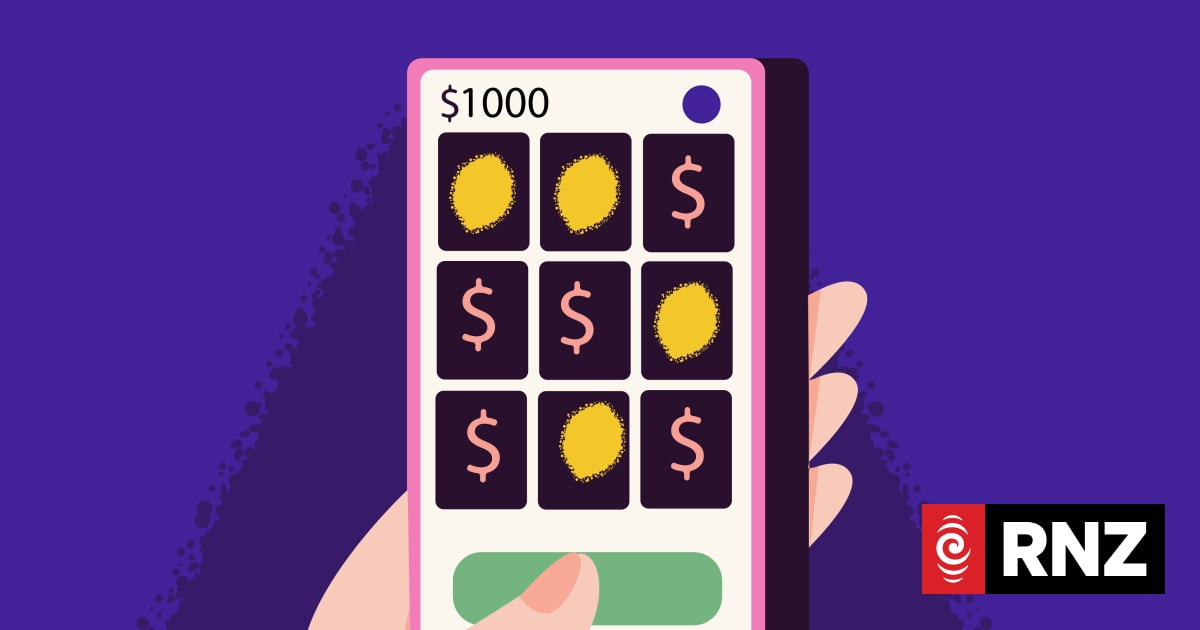
Warning: This story discusses gambling addiction.
A former problem gambler says regulators need sharper teeth as ads for illegal online casinos continue to infiltrate the phones of recovering addicts.
Jack* remembers the moment he hit rock bottom.
“I’d go to a casino after work and stay until I lost everything. Come home and play online during the night,” he said.
“Then I lost my job, so I lost my income, and so I turned to crime and stealing off loved ones to support my habits. I knew then, I hated myself enough to ask for help.”
Jack fell into the world of gambling when he saw an ad online.
“I saw an ad for some free spins, went through that and won a little bit. Spent that, so I signed up and put some more money in, and I won big,” he said.
“I couldn’t get the money out as quickly as I’d put it in, because I had to verify my things and jump through hoops, so by the time I was eligible to withdraw it I had spent it, and more.”
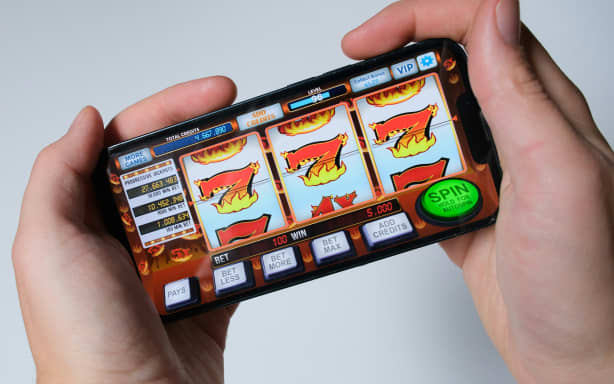
Jack fell into gambling after seeing an ad for free spins.
Niek Doup / Unsplash
That quickly spiralled into an addiction.
“For me it went in line with my drug addiction. Smoking meth and gambling would keep me up for days,” Jack recounted.
“I knew it was a problem, but I kept doing it.”
It was hitting rock bottom and finally asking for help that broke the cycle, but what followed was a years-long recovery process – and plenty more ads and emails trying to lure him back.
“I used to get parcels delivered to my door saying, in hindsight, ‘you’re such a good loser’, but really saying ‘you’re such a good VIP member, here’s some nice Christmas gifts for you’,” he said.
“I still see plenty of ads online. I always see a plug here and there on Instagram, I still get dozens of emails each day.”
Advertising an overseas gambling site is illegal in New Zealand, and the only local operators allowed to do so, for now, are the TAB, its sister app Betcha, and Lotto.
But on an open internet, Problem Gambling Foundation advocacy director Andree Froude said escaping the addiction was harder than ever.
“It’s carrying a casino around in your pocket, and is such a very different experience to what it used to be like when our Gambling Act came into being in 2003,” she said.
“Unfortunately our regulation hasn’t kept up with the changes that have happened.”

Problem Gambling Foundation advocacy director Andree Froude.
RNZ / Cole Eastham-Farrelly
She said current regulations hadn’t stopped overseas sites trying their luck with underhanded methods.
“We’ve seen a gambling operator tag a wall, physically tag a wall, near to where university students hang out,” she said.
“It’s almost like guerrilla marketing, where obviously they’re hoping people will Google it.”
Froude said it was time to ban all gambling ads, even for licensed operators.
“We’d like to see it banned. It just doesn’t seem right that a harmful commodity like gambling, they’re able to advertise in some situations without any restrictions, which is the case with the TAB and Lotto, really.”
“I think they should [ban gambling ads]. People who want to play it can find a way to play it. The adverts, the inducements, the excitement and allure is definitely going to drag people back in,” he said.
“For example, I’m on a health diet, I jump on the motorway and by the time I get from south Auckland to the city I’ve seen so many KFC ads I end up getting a KFC box. It’ll be like that for people on a journey of recovery, trying to be gamble free. By the time they get to town they’re playing – they don’t mean to, but it’s really triggering.”

TAB chief executive Nick Roberts.
Supplied / TAB
TAB chief executive Nick Roberts said it had a statutory obligation to minimise the risks of problem gambling.
“Illegal offshore gambling sites still reach New Zealanders. They operate outside New Zealand law and are under no such obligation,” he said.
“Those who want to bet on racing and sport are safer doing so with the regulated local operator. Advertising allows them to be channelled to a platform subject to New Zealand law, where harm minimisation tools are available, betting behaviour is monitored and there is the ability to intervene where indicators of potential harm emerge.”
Advertising veteran Mike Hutcheson said the internet had made it almost impossible to regulate ads.
“It’s really probably nigh on impossible because there are so many sources, so many gaps in the floorboards that let the mice in,” he said.
“I think, unless you put a blanket ban on all incoming gambling sources you’re kind of wasting your time. It’s whack-a-mole.”
In 2027, up to 15 online casinos would be given license to operate and advertise in New Zealand.
They would be subject to strict rules, but Jack worried the new sites, ads and sponsorships would make it impossible for recovering gamblers to avoid their triggers.
*Name changed for privacy.
Where to get help:
Need to Talk? Free call or text 1737 any time to speak to a trained counsellor, for any reason.Safer Gambling Aotearoa (https://safergambling.org.nz/): Call 0800 654 655 or text 8006.Problem Gambling Foundation (https://www.pgf.nz/): Call 0800 664 262 or text 5819.Lifeline: 0800 543 354 or text HELP to 4357.Suicide Crisis Helpline: 0508 828 865 / 0508 TAUTOKO. This is a service for people who may be thinking about suicide, or those who are concerned about family or friends.Depression Helpline: 0800 111 757 or text 4202.Samaritans: 0800 726 666.Youthline: 0800 376 633 or text 234 or email talk@youthline.co.nz.What’s Up: 0800 WHATSUP / 0800 9428 787. This is free counselling for 5 to 19-year-olds.Asian Family Services: 0800 862 342 or text 832. Languages spoken: Mandarin, Cantonese, Korean, Vietnamese, Thai, Japanese, Hindi, Gujarati, Marathi, and English.Rural Support Trust Helpline: 0800 787 254.Healthline: 0800 611 116.Rainbow Youth: (09) 376 4155.OUTLine: 0800 688 5463.
If it is an emergency and you feel like you or someone else is at risk, call 111.