
“Make sure your house roof is steady, check on nearby trees that won’t become a problem during strong winds,” he said.
“Look at your communications, in terms of radio or TV, in the event the power goes out. People should also make sure they can communicate with neighbours or family to ensure they are safe, and that you are safe.”
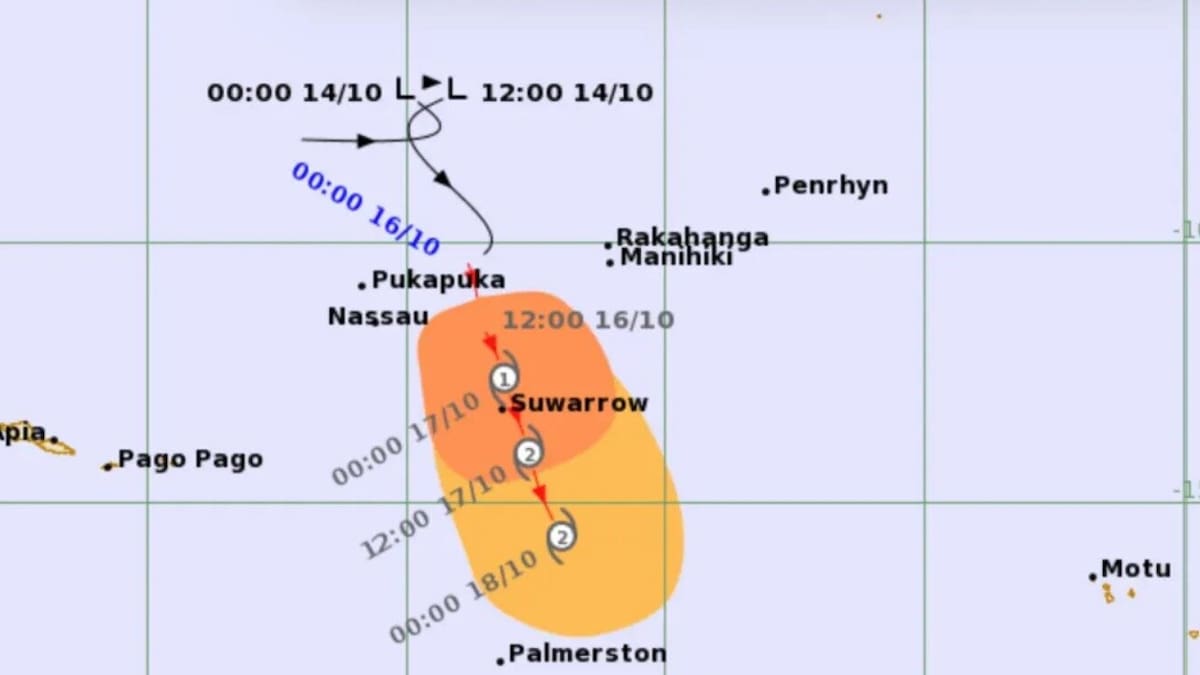
Vaiimene said the Emergency Cook Islands team has a response guideline for what people need to do if the tropical depression becomes a tropical cyclone.
The Meteorological Service, which is working closely with the Fiji Meteorological Service, said the wind conditions associated with the tropical depression were similar to a tropical cyclone status.
“In the latest bulletin, they have indicated that the chances of the tropical depression forming into a tropical cyclone in the next day or two is high,” Vaiimene said.
The Cook Islands are in an El Niño climate situation, which Vaiimene said is contributing to the unusually early development of a possible tropical cyclone.
The official tropical cyclone season starts on November 1.
Earth Sciences New Zealand has predicted elevated cyclone activity for parts of the Pacific in the coming cyclone season.