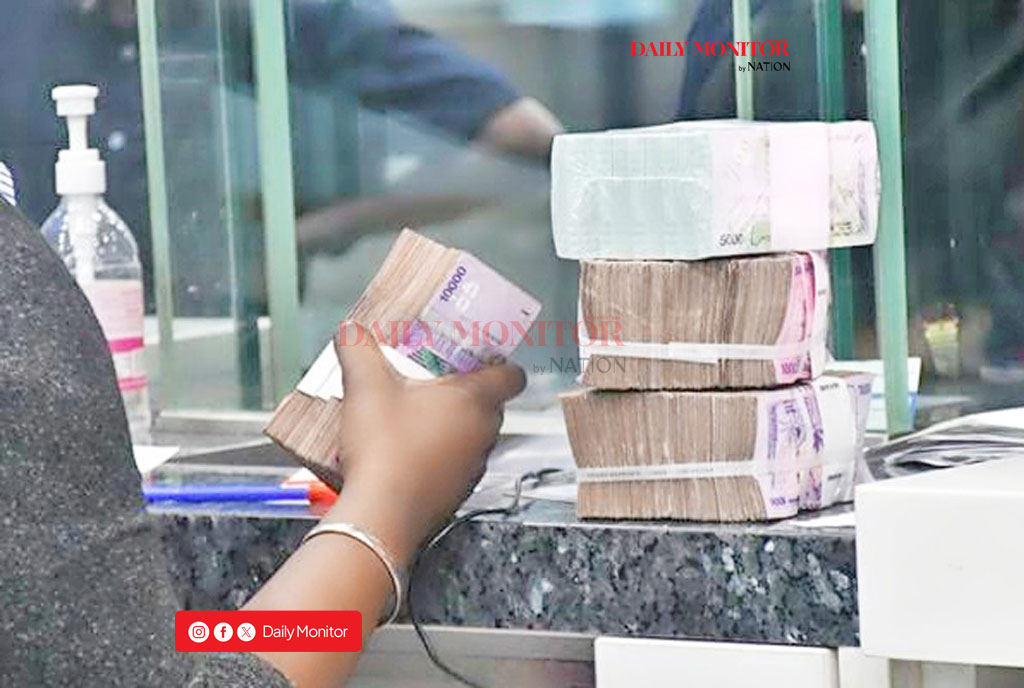
The Bank of Uganda (BoU) has returned to direct intervention in the foreign exchange market for the first time since June 2022, selling approximately $30 million (Shs120 billion) late on Wednesday in an aggressive bid to arrest the local currency’s slide past the psychological Shs4,000 threshold against the US dollar.
The direct market sale capped a dramatic week in which the central bank was forced to convene an emergency Monetary Policy Committee (MPC) meeting and deliver its largest benchmark interest rate increase in 15 years.
In his weekly market assessment, Mr. Stephen Kaboyo, Partner at Alpha Capital and forex market analyst, noted that the local unit experienced significant volatility following BoU’s multi-pronged approach.
“Uganda Shilling experienced major shifts after the BoU stepped in with a hike in the benchmark rate following an emergency Monetary Policy meeting. In a multi-pronged approach, the Central Bank, in a surprise move, also intervened in the market, an action last seen in June 2022 by selling about 30 million dollars (Shs120 billion) late on Wednesday. The move triggered a strong rebound, driving the shilling back below the 4000 threshold. However, in subsequent market sessions, the currency surrendered its short-lived gains,” Mr. Kaboyo said.
Looking ahead, Mr. Kaboyo warned that market fundamentals remain fragile. “In the coming days, the outlook indicates that underlying pressures remain intact. The shilling will continue facing persistent downward market forces that will keep it on the back foot, with the primary driver being the substantial outstanding exposure of portfolio investors to the local bond market. The unpredictable nature of these flows will keep the unit on the edge,” he added.
The central bank’s intervention briefly halted eight consecutive sessions of losses after the currency hit a record low of Shs4,143 per dollar—its weakest level since 1993, making it the worst-performing currency among 144 tracked globally by Bloomberg this month. Data from LSEG showed the shilling temporarily gaining over 2 percent on the day following the action.
In an official statement detailing the outcomes of the special MPC meeting held on October 14, 2026, BoU Governor Dr. Michael Atingi-Ego announced a dramatic 225-basis-point increase in the Central Bank Rate (CBR), lifting it from 9.75 percent to 12.0 percent. The hike represents the largest monthly increase since October 2011 and elevates the benchmark rate to its highest level since December 2016, ending a two-year period of unchanged monetary policy. Additionally, the central bank raised the Cash Reserve Requirement (CRR) for commercial banks from 11.0 percent to 13.5 percent, effective September 24.
The central bank linked the drastic tightening to heightened Middle East geopolitical conflicts, surging global energy prices, and tighter international financial conditions. These external headwinds expanded Uganda’s current account deficit by $1.4 billion (Shs5.6 trillion) to a total of $4.6 billion (Shs18.4 trillion), while headline inflation accelerated to 4.6 percent in September up from 4.1 percent in August.
Adding to the liquidity strain, estimates from Citigroup reveal that over $200 million (Shs799.8 billion) exited Uganda’s domestic market in just two weeks as offshore investors reallocated capital from local government bonds into higher-yielding US dollar assets.
Introduced in July 2011 at 13 percent under BoU’s Inflation Targeting Lite framework, the CBR serves as a key signal for the cost of money and aims to anchor core inflation around 5 percent.
The policy rate reached a historic peak of 23 percent in November 2011 when inflation approached 30 percent, before gradually easing to 9.5 percent by October 2017. During the COVID-19 pandemic in June 2021, the rate hit an all-time low of 6.5 percent to stimulate economic activity. Prior to the latest decision, the rate was last raised during an emergency meeting in July 2022 to 8.5 percent and had remained steady at 9.75 percent since October 2024.
Financial experts and economists remain divided on whether monetary tightening is the effective remedy for current market conditions.
Mr. Uthman Mayanja, Country Senior Partner at PwC Uganda, explained that the central bank’s primary objective is mitigating imported inflation pressures.
“The Bank of Uganda’s decision is about controlling inflation. As the shilling weakens, imports such as fuel and machinery become more expensive. Eventually, this drives prices for consumer goods higher. The typical response is to raise interest rates to make saving more attractive and borrowing more expensive, thereby easing pressure on prices. In turn, higher interest rates strengthen local and international demand for Ugandan treasury bills and bonds, which should reduce pressure on the Shilling. In short, the Bank is tightening money supply today to contain inflation risks from a weaker shilling, while also making shilling-denominated investments more attractive,” Mr. Mayanja noted.
Conversely, Dr. Fred Muhumuza, a senior economist at Makerere University, argued that hiking interest rates is an inadequate solution for external supply-side shocks.
“The central bank is trying to also tell people to think twice before you borrow,” Dr. Muhumuza stated, pointing out that “BoU is emphasising the message of risk aversion, but to even tell them that this is not a risk, it is a reality…that is the space we are in.” He maintained that raising domestic interest rates cannot resolve imported fuel price inflation or structural foreign exchange shortages.
Adding to these concerns, Dr. Susan Kavuma warned that commercial banks will rapidly transmit the higher central bank rate to end-user borrowing costs, severely dampening private sector credit growth. She highlighted that Uganda’s average lending rate of 17.3 percent recorded in July was already higher than neighboring regional peers like Kenya.
Similarly, Ms. Jane Nalunga, Country Director at SEATINI Uganda, cautioned that the ultimate economic burden will fall on vulnerable households and small businesses.
“BoU has raised the CBR by 225 basis points to respond to the record depreciation of the shilling, worsening BoP amid the mounting inflation pressure. It’s important to note that this is a remarkable increase marking the end of the 2 years of unchanged rates,” Ms. Nalunga said. “While the increase in the CBR intends to curb inflationary pressures and exchange rate depreciation, it comes at a cost.”