
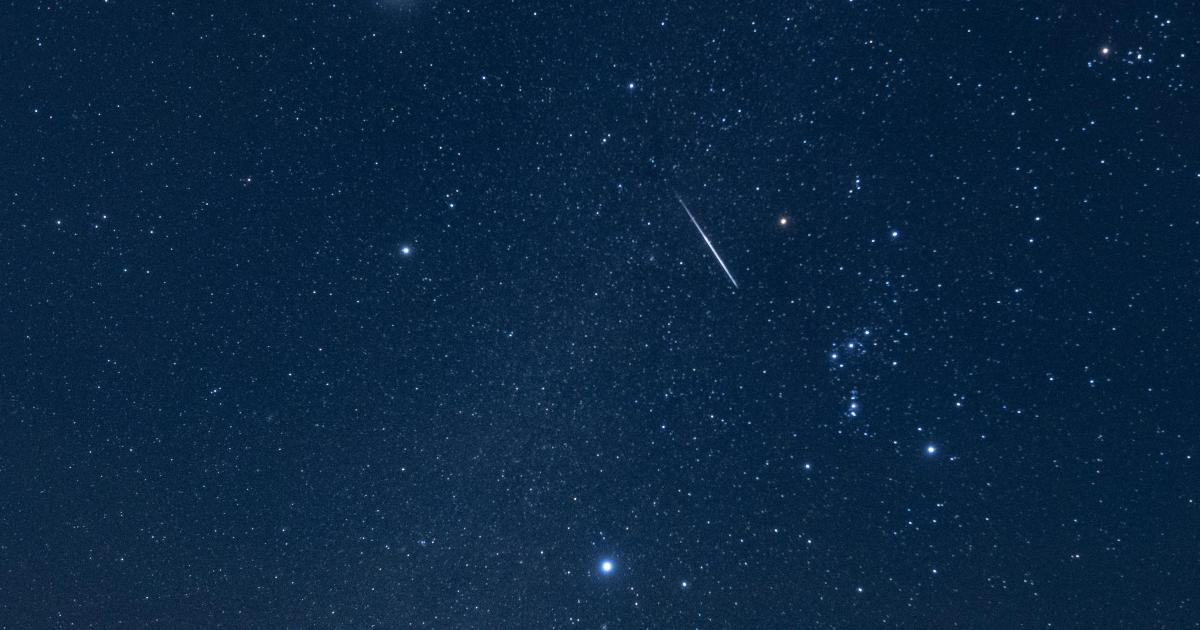
The Orionids are visible each year between October 2 and November 7.
Here is how they can best be viewed in the UK.
What is the Orionid meteor shower?
The Orionids are an annual event, towards the end of each year.
However, they are considered “extra special” by many, as they are actually pieces of Comet 1P/Halley, famously known as Halley’s Comet.
As explained by the Royal Museums Greenwich: “A meteor is a piece of space debris that burns up as it enters the earth’s atmosphere creating a ‘shooting star’.
“Certain times of the year are known for spectacular displays and these are generally associated with comets that have passed by after spewing fragments in their wake.”
While Halley’s Comet only flies by Earth once every 75 to 76 years, the annual shower provides some compensation for those who may miss that once-in-a-lifetime event.
How to see the Orionid meteor shower in the UK
Meteors from the Orionid shower can be seen with the naked eye from all parts of the sky, though they appear to originate from the constellation Orion.
Stargazers are advised to find a dark, open area away from city lights.
This year, the shower will peak on the night of October 21 and continue into the early hours of October 22.
However, a waxing gibbous moon will add extra light to the sky on October 21, which could make the meteors harder to spot.
Recommended reading:
RMG says: “Hunting for meteors, like the rest of astronomy, is a waiting game, so it’s best to bring a comfy chair to sit on and to wrap up warm as you could be outside for a while.
“You will need to allow your eyes to adjust to the dark.”
No special equipment is needed to enjoy the display.
Have you ever spotted a meteor shower before? Let us know in the comments below.