
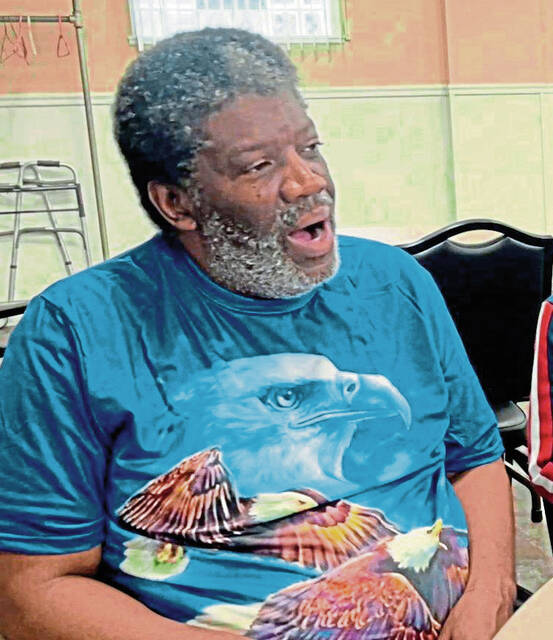
Ethel Hayden worked in patient registry at Allegheny Valley Hospital before retiring. Her son, Keith, labored as a steelworker at ATI. His brother, Robert, retired as an Air Force veteran.
Together, the Tarentum residents — Ethel, 90; Robert, 67; and Keith, 65 — pool resources as they live together to keep costs at bay, but money is still tight.
“Everybody does their part,” Keith said.
While many retirees are finding their way amid heightened everyday costs and rising inflation, the Haydens all receive pensions, unlike a growing number of retirees.
Fewer workers and retirees enjoy that luxury today than previous generations, as companies have shifted from pensions to defined employee contribution plans like 401(k)s.
That move has changed the landscape of retirement.
Where once workers knew they would have a defined, consistent income in retirement from a pension, many today are left to fend for themselves. They rely on savings stashed in accounts such as IRAs and employer-sponsored 401(k)s.
Still, some workers don’t have access to a 401(k) plan through work, and others might not be financially able to contribute to such a plan. Still others might not be familiar with retirement savings options that exist outside of 401(k)s.
That has left an increasing reliance on Social Security, which itself faces an uncertain funding future.
A look at the numbers
About 29% of adults had a pension through an employer, according to a 2023-24 report by the Federal Reserve.
In 1984, more than twice that — 67% of all wage and salary workers — were covered by a pension plan, according to U.S. Census data.
In 2023, there were 11.1 million active participants in a defined benefit plan, or pension, compared to 96.4 million active participants in a defined contribution plan like a 401(k), according to data from the U.S. Department of Labor.
Forty years earlier, about 53 million workers participated in a pension plan, and about 6% of workers contributed to an employer-sponsored “thrift plan,” or 401(k), according to a census report.
This change in retirement savings behavior and plans has impacted not only the older population, but also the current workforce.
About half of Americans today don’t have money saved for retirement, largely because they aren’t offered an employee-sponsored benefit plan, said Laura Quinby, associate director of labor markets and household finance at the Center for Retirement Research at Boston College.
Often, it’s lower-wage industries such retail and hospitality that don’t offer retirement savings plans to employees, Quinby said.
“That lack of coverage is really important for explaining why so many households end up with insufficient resources for maintaining their standard of living in retirement,” she said.
Not having access to retirement benefits leaves those households at risk of not being able to afford their standard of living during retirement, even if they work until 65, according to the Center for Retirement Research at Boston College.
The decline in private-sector pensions, which began largely during the 1980s, hasn’t moved the needle much on workers’ ability to save, Quinby said.
In 1989, about 51% of Americans didn’t have retirement savings, whereas in 2022, that number was about 53%, she said.
Those who do save generally aren’t saving enough, she said.
It’s not necessarily a consumer behavior problem but an income, access and tax subsidy problem, said Monique Morrissey, senior economist at the Economic Policy Institute, a Washington-based nonprofit think tank.
“It’s been a really terrible situation that we’re in (where) tax subsidies and employer benefits are not targeted … for the people who need them most,” Morrissey said.
With a smaller nest egg, many workers are opting to delay retirement and stay on the job, she said.
The United States ranks as the fifth highest employment rate for 65 and older adults among the 25 largest advanced economies, according to data from the International Labor Organization.
“It’s a treacherous system where people are hoping to keep working because they don’t have savings or a pension but they might not be able to (keep working),” Morrissey said.
That’s just what Keith Hayden, the retired steelworker, did after his retirement, opting first for a security job and later finding employment as a custodian at Walmart.
“You have to get another job sometimes to supplement what you have,” he said.
401(k) outpaces the pension
Pensions give workers a set monthly amount of money for the rest of their lives after retirement. Some also include employer-supported healthcare benefits if workers retire before they become eligible for Medicare at 65.
Though some pension plans allow employees to contribute to them, they differ from 401(k) plans in that employers, not employees, usually are responsible for the lion’s share of contributions.
Government, public sector and union jobs still are more likely to offer pensions, but most private-sector jobs have shifted to defined employee contribution plans, like 401(k) plans, said Keith Donnelly, an accounting professor at the University of Pittsburgh.
Some companies grandfather in employees who have pensions but have since stopped offering them to new employees.
One reason pensions started being phased out is increased lifespans, Donnelly said.
Employers “never thought when they created these pensions that people would live into their 80s and 90s,” he said. “So, basically, people weren’t putting enough into the pension funds versus what people were taking out of it.”
The rise of 401(k) plans gave employers a lower-cost option.
A 401(k) is a contribution plan rather than a benefit plan. Employees put money into a 401(k) and their employer typically matches a percentage of that — basically the reverse of pensions.
“Once they put the match in, they’re more or less done with that,” Donnelly said of employers. The 401(k) plans also don’t include company-supported healthcare for retirees, further lowering costs for employers.
The death knell for pensions was the 2008 financial crisis because the employee contributions dropped significantly, underfunding many plans, according to Amy Braun-Bostich, CEO at Pittsburgh financial planning firm Braun-Bostich and Associates.
The retirement mix
Despite the shift in focus of the 1990s surrounding 401(k) plans, they never were meant to be a person’s sole vehicle for retirement, said Jeanne Thompson, senior retirement strategist at LPL Financial in California.
The 401(k) was introduced originally as a supplemental savings account but has since become the “primary pillar” of most people’s nest egg, Thompson said.
Instead, retirees need a broader mix of income options that include their 401(k) or a pension, Social Security, and personal investments and savings, experts say.
And they need to start that mix at a young age. Starting early is crucial, said David John, a senior strategic policy adviser at the AARP Public Policy Institute.
“If you save early, you can save a smaller percentage of your income and arrive at a decent level of savings (because of compounding interest),” he said.
People should avoid taking money out of their savings before retirement, if possible, and roll over their money from their company-sponsored account into a new tax-deferred account when they switch jobs, John said. Cashing out a 401(k), for example, when changing jobs can lead to significant tax bills, lowering the amount available as savings.
One of the benefits of a 401(k) over a pension is that you can take your saved money with you to a new job, Thompson said.
“Do not cash out,” Thompson said. “Roll it into an IRA or roll it into your new employer’s 401(k) because that money will really compound over time.”
Waiting as long as possible to take Social Security is also important, John said.
Once you retire, he said, it’s good to have different ways for the money to come in rather than cashing it out all at once.
One option is putting money into an investment fund that has phased withdrawal benefits, annuities or deferred longevity insurance, John said.
The amount you should save for retirement depends on how you spend, Braun-Bostich said.
“In general you should have about 25 times what your spending is going to be, your annual spending,” she said.
According to data from the U.S. Bureau of Labor Statistics, the average one-person household in the 2023-24 fiscal year spent just under $48,000. Per common retirement advice, to save 25 times your annual spending, a one-person household spending $48,000 annually should aim to save $1.2 million at retirement.
Retirees are advised to prepare for 3% inflation increases each year on everyday expenses and 5% increases in medical and education expenses, Braun-Bostich said.
Those with access to a 401(k) or other defined contribution plans, such as a 403 (b), should contribute an amount to at least guarantee they get their employer’s match, Thompson said.
“Every year, we recommend increasing your contribution by 1% annually until you hit a max of 15%,” she said.