
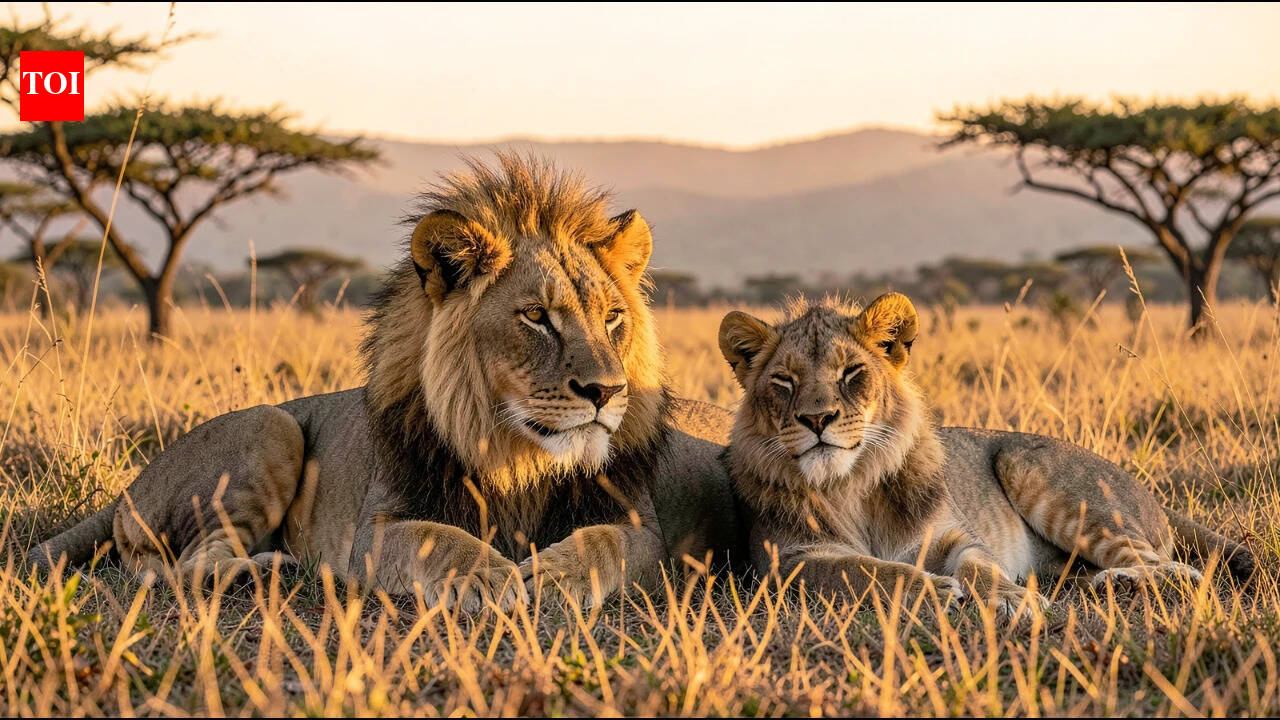
 Representative Image of lions in a restored habitat, showcasing conservation efforts by the Kevin Richardson Foundation (AI-generated image) The Kevin Richardson Foundation, established by South African animal behaviourist and conservationist Kevin Richardson, reports that its conservation work has helped protect 63,000 hectares of habitat, remove approximately 16,200 snares and educate 2,400 students. The figures, published on the foundation’s donation page and in its 2025 impact report, reflect its support for habitat protection, anti-poaching operations, conservation education and wildlife research. Known as the Lion Whisperer, Richardson established the foundation in 2018 to support the long-term survival of lions and other wildlife. The organisation works with conservation partners and reserve-based teams across South Africa. Its approach combines practical protection measures, educational programmes and scientific research, while its longer-term plans include developing its wildlife sanctuary into a predator rehabilitation centre.
Kevin Richardson, the Lion Whisperer: founder of the Kevin Richardson Foundation
Kevin Richardson was born in Johannesburg in 1974 and is described by his foundation as an animal behaviourist, conservationist, photographer and filmmaker. His involvement with lions began when he was entrusted with caring for 2 six-month-old cubs at a local lion park. According to his official biography, he developed relationships with lions and other large carnivores through an approach centred on trust, respect and understanding their behaviour. His work later became associated with the nickname Lion Whisperer. The Kevin Richardson Foundation was established in 2018 as a non-profit company and public benefit organisation. Its stated mission is to support the future of lions and other vulnerable wildlife through 4 pillars: habitat protection, education and upliftment, wildlife rehabilitation, and community collaboration. The foundation’s board includes Caroline Edmonds, its chairperson, and Etienne Toerien, its treasurer. HSH Princess Charlene of Monaco agreed to become its patron in 2018.The foundation says it receives no government funding and relies on donations. It also works with corporate partners and other organisations on conservation projects. Richardson’s words, published on the donation page, capture the organisation’s stated philosophy: “Every lion has a story and a right to exist.” Its activities extend beyond lions alone, supporting efforts to protect wildlife habitats, reduce poaching threats and involve nearby communities in conservation. The global lion is classified as Vulnerable on the IUCN Red List, with the assessment identifying a declining population trend. The foundation itself warns that lions are edging closer to the Critically Endangered category, but that wording should be understood as the organisation’s assessment of the conservation threat, not the species’ current official global classification.
Kevin Richardson Foundation habitat protection in South Africa: 63,000 hectares and 16,200 snares removed
Habitat protection and anti-poaching work are central to the foundation’s activities. The foundation reports 63,000 hectares of habitat restored in its 2025 impact report, while its donation page describes 63,000 hectares as protected. The public summaries do not explain how the land total was calculated or which areas and time periods it covers. The foundation also reports approximately 16,200 snares removed, without specifying the period covered by that cumulative figure. One of its key areas of support is Dinokeng Game Reserve, where the foundation funds anti-poaching operations and supports the Dinokeng Volunteer Rangers. The volunteer team works alongside the reserve’s anti-poaching unit, conducting patrols and removing snares. In its report on 2024 activities, the foundation recorded 551 snares removed by the reserve’s anti-poaching unit in 2024. Snares are wire traps that can injure or kill animals. Although they may be set to capture particular species, they can also trap other wildlife, including predators. Removing them is therefore part of protecting the wider ecosystem, rather than lions alone.The foundation partnered with the Endangered Wildlife Trust in 2023 to support carnivore conservation and anti-poaching work in the Greater Kruger landscape. Its 2025 impact report records 2,019 snares removed in the Greater Kruger National Park in 2024 and 14 lions and hyenas fitted with GPS collars for monitoring. Richardson also conducts aerial anti-poaching and wildlife-monitoring flights over the Dinokeng landscape using what the foundation describes as a micro plane. The flights help locate injured or snared animals, support emergency veterinary interventions and improve visibility over areas that are difficult to reach by ground patrols.
Kevin Richardson Foundation education, lion research and wildlife conservation
The foundation’s work also includes conservation education. Its donation page reports that 2,400 students have been educated, while its 2025 impact report specifies that this total has been reached since 2021. The Big 5 Schools Collective was launched in 2021 to introduce children living near Dinokeng Game Reserve to wildlife conservation. The foundation describes the initiative as combining classroom teaching with trips into a game reserve. Its public materials have cited more than 400 children at 20 early-childhood centres, although its current status should be confirmed before describing it as an ongoing programme. The foundation began working with Lessons in Conservation in 2024. In June 2026, it introduced or relaunched its Cubs to Conservation programme, which includes conservation workshops, high-school wildlife clubs, bush experiences and mentorship. The initiative engages older students from underprivileged communities through practical learning experiences, including game drives and demonstrations by conservation teams. The programme aims to strengthen understanding of biodiversity and encourage young people to consider conservation-related opportunities.Scientific research is another part of the foundation’s work. Its 2025 impact report describes financial support for wildlife research and conservation education at the University of Pretoria. It highlights a study on hyena immobilisation protocols published in the Journal of the South African Veterinary Association. Looking ahead, the foundation wants to develop its Wildlife Sanctuary into a dedicated rehabilitation centre focused on rescuing, rehabilitating and releasing predators into the wild where possible. Its website presents this as a long-term goal, rather than an already completed transformation. People wishing to support the foundation can donate through the payment options listed on its official donation page, including card and bank payments, SnapScan and cryptocurrency. The foundation’s reported figures offer a snapshot of the conservation work it supports, from snare-removal patrols and habitat initiatives to education and scientific research. Understanding the full scale of that work requires clearer information about how its headline totals are calculated. Its approach reflects a broader principle of lion conservation: protecting the animals also requires safeguarding their habitats, reducing poaching threats and involving the communities that live alongside wildlife.