
Wallace said airports, tourism bodies, Tourism New Zealand and others were already working together to stimulate demand.
The cruise industry was playing a role too, he said. And better infrastructure was now able to back up the sector’s ambitions.
He spoke to the Herald shortly after addressing the NZ Airports hui in Wellington’s Tākina convention centre, which opened in 2023.
Wallace said Auckland also had more infrastructure now, and Christchurch had undergone a remarkable transformation.
New infrastructure in the big cities enhanced New Zealand’s reputation as a strong tourism and visitor proposition, he said.
“We’ve been pretty confident about putting capacity in the market, whether Queenstown or even some of the smaller markets, so we’ve been encouraged with our load factors on the back of that relatively aggressive increase in capacity.”
But the fairly feeble New Zealand dollar has meant outbound demand for many markets has not been strong.
“It’s double-edged … it always has been quite well-balanced across the Tasman.”
Wallace joined Qantas three years ago and was with Air New Zealand for 12 years until 2020.
He said with so many Kiwis living across the Tasman, there was a large visiting friends and relatives (VFR) cohort as well as the leisure market.
He said New Zealand was still a well-priced destination.
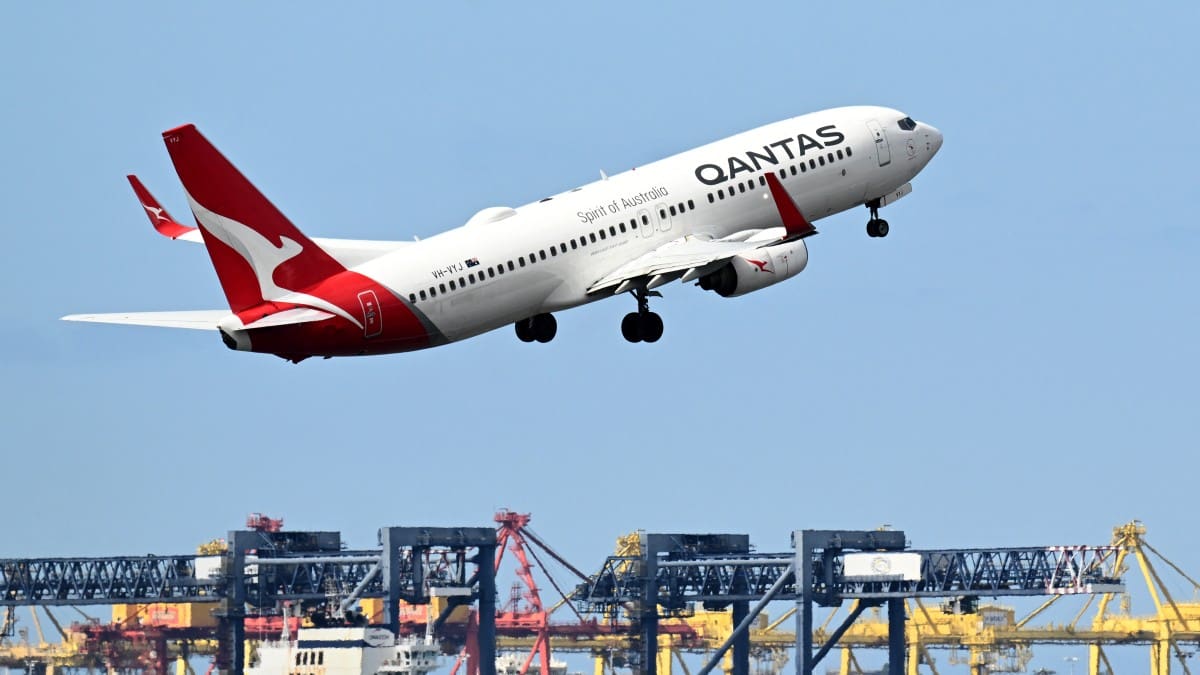
Qantas is expected to put 180,000 seats on sale tomorrow from Auckland, Christchurch, Wellington and Queenstown to six Australian cities.
Some tickets were expected to start from about $580, which Wallace said was an indication of that good pricing.
Kiwis still wanted to travel but might just adjust their ambitions, he said.
“Sometimes you can get a bit of a switch from medium or long-haul destinations to shorter-haul destinations.
Doubling tourism
By 2034, the New Zealand Government wants to have doubled the value of 2023 tourism exports.
That could possibly happen simply by encouraging wealthier or more extravagant visitors, but may well need a substantial increase in airline seats.
“We are well engaged with the wider tourism community in New Zealand including Government and there’s a few things that we continue to talk to them about,” Wallace said.
That included taxes, aviation system charges, and how to stimulate demand.
Simon Russell, chief executive at Eagle Aviation Consulting, said debate was needed on which specific markets, airline partners, and emerging routes should be targeted.
“The biggest thing that’s needed is alignment of tourism and aviation, and the role of the national carrier putting in capacity ahead of demand,” he said, referring to Air New Zealand.
While Qantas is taking delivery of new aircraft, Air NZ has said it was working with Boeing to adjust delivery of some 787-9 Dreamliners, delaying them.
Russell said non-stop capacity stimulated demand, so there was sense to what Qantas was doing.
An example, he said, was China Eastern Airlines flying from Auckland to Buenos Aires.
The 20,000km journey on China Eastern Airlines only stops in Auckland on the way to South America. Photo / Auckland Airport
Early indications are that the service has been a success in terms of passenger numbers and cargo.
The service, a “gas and go” which starts in Shanghai, has also helped reimagine Auckland as a hub between East Asia and South America.
“It’s a phenomenon all over the place. For example, if there was a flight to Mexico City, it would stimulate travel and tourism.”
Russell said more new non-stop flight opportunities existed for New Zealand.
“The demand is already there for India and the Philippines with resident communities.”
Russell said in the past, Air NZ was good at drawing European and British visitors into Pacific Island destinations but some of those services decades ago became too expensive to operate.
“The more recent ones are the Chinese carriers … Sure, we’ve got more liberal visa policies but equally we’ve got five Chinese airlines flying in plus Air New Zealand flies [to] Shanghai.”
Airlines could adopt an expansive attitude, and take a bet on stimulating demand, or shy away from new routes.
“The latent demand is there. The contrast would be shrinking your way to greatness. Qantas is always growing.”
Russell said Qantas would have a very clear strategy, though its details would not be disclosed at a public forum such as the hui.
The clue, he said, was getting ahead of demand.
“That’s good, because you’ll grow or you’ll steal [market] share.”
Flexible fleet
Qantas is getting more narrowbody Airbus A321XLRs and widebody A350s.
The latter are arguably most famously the A350-1000 ULRs for the Project Sunrise flights from Sydney to London and New York direct.
“We’re in the middle of our largest fleet renewal ever in our history … We’re getting a new aircraft every two or three weeks now so that’s going to provide us with more flexibility,” Wallace said.
“New Zealand in my view is a very attractive inbound destination so it should be an attractive place in the medium to long-term to deploy aircraft.”
Cam Wallace, Qantas International & Freight CEO. Photo / John Weekes
But how much time would the airline have if a decision to deploy capacity ahead of demand didn’t work out well?
“That’s a great debate that we have over many years across many markets and it’s very specific to markets.”
In some places, he said, airlines could expect an “economic lag factor”.
He said where those routes took time to grow, efforts could be made to raise awareness of a new destination.
Not every new route worked. Wallace said after Covid, Qantas went back to China from Sydney to Shanghai, a hugely competitive market.
But demand had not recovered as the airline anticipated. It ditched that route and at the same time announced a new Brisbane-Manila service.
Wallace also mentioned the company’s dual-brand strategy. Where a route might not work for Qantas, it could for the budget carrier stablemate Jetstar.
“Another example is South Korea, where we had services there. We deemed it more appropriate for Jetstar.”
A year from now, Qantas is expected to start its Sydney-London service on Project Sunrise.
“Not since Concorde has something transfixed the industry” in this way, Wallace told the hui.
He admitted he had called Project Sunrise a “publicity stunt” a few years ago.
But now, his colleagues frequently teased him about that as the airline prepared to start selling those flights in the new year.
The NZ Airports Hui continues.
John Weekes is a business journalist covering aviation. He also has experience covering consumer affairs, crime, politics and courts.
Stay ahead with the latest market moves, corporate updates, and economic insights by subscribing to our Business newsletter – your essential weekly round-up of all the business news you need.