
This post is brought to you by Yacademy
What does it mean for young architects to contribute to a project designed by one of the world’s most influential architectural practices?
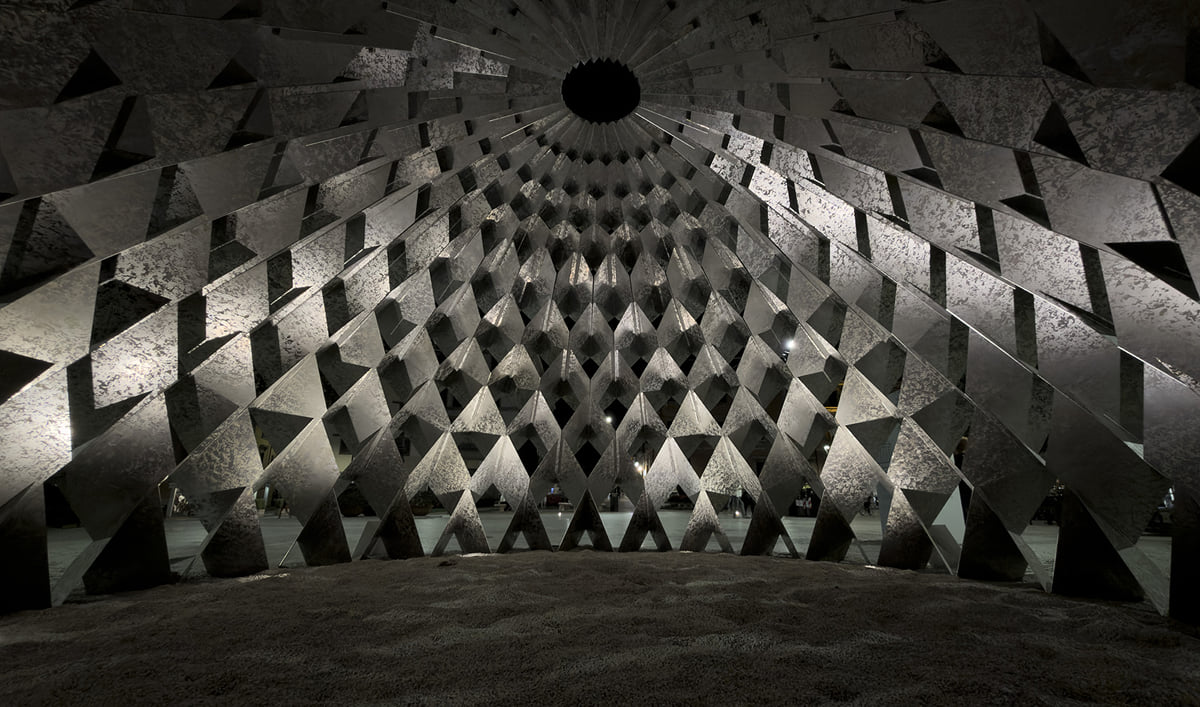
At the first Biennale di Architettura e Benessere di Montecatini Terme, a project supported by Over and BK1 and curated by Yacademy, internationally renowned architect Kengo Kuma explores the relationship between architecture, materiality and local identity through the installation Salt Pavilion, realised in collaboration with De Castelli, an Italian company renowned for its expertise in metalworking.
The project also bears the contribution of five Yacademy alumni: Astrid Jacquart, Miguel Alvarez, Alina Kashitsyna, Temitope Adedeji and María José García. Through a dedicated workshop led by Anteo Taro Sanada, Partner at Kengo Kuma & Associates, they took part in the conception of the installation, engaging directly with the studio’s design philosophy and creative process.
Invited by Yacademy, the Japanese architect was asked to reinterpret the distinctive identity of Montecatini Terme, one of Europe’s most iconic spa towns. The result is an installation situated in the heart of Piazza del Popolo that draws inspiration from one of the city’s most distinctive elements: salt, intrinsically connected to the mineral composition of its thermal waters and its centuries-old wellness tradition.
The installation is part of a wider programme that brings leading figures in contemporary architecture to Montecatini Terme, turning the city into a laboratory for architectural experimentation, where different approaches engage with its history, identity and future. Alongside Kengo Kuma’s contribution, the Biennale features Leaveitbe, an installation by Michele De Lucchi and AMDL CIRCLE, and Panorama, designed by COR arquitectos and realised in collaboration with Yacademy alumni.
Rather than representing salt literally, Kengo Kuma’s project translates its properties into an architectural language through an experimental approach to metal surfaces. Working closely with Kengo Kuma & Associates, De Castelli developed an innovative erosion process applied to stainless steel, creating irregular textures and organic variations that evoke the unpredictable processes of nature.
The result is a dialogue between craftsmanship, technological innovation and natural transformation, reflecting Kengo Kuma’s architectural philosophy and his continuous exploration of the relationship between materials, nature and the built environment.
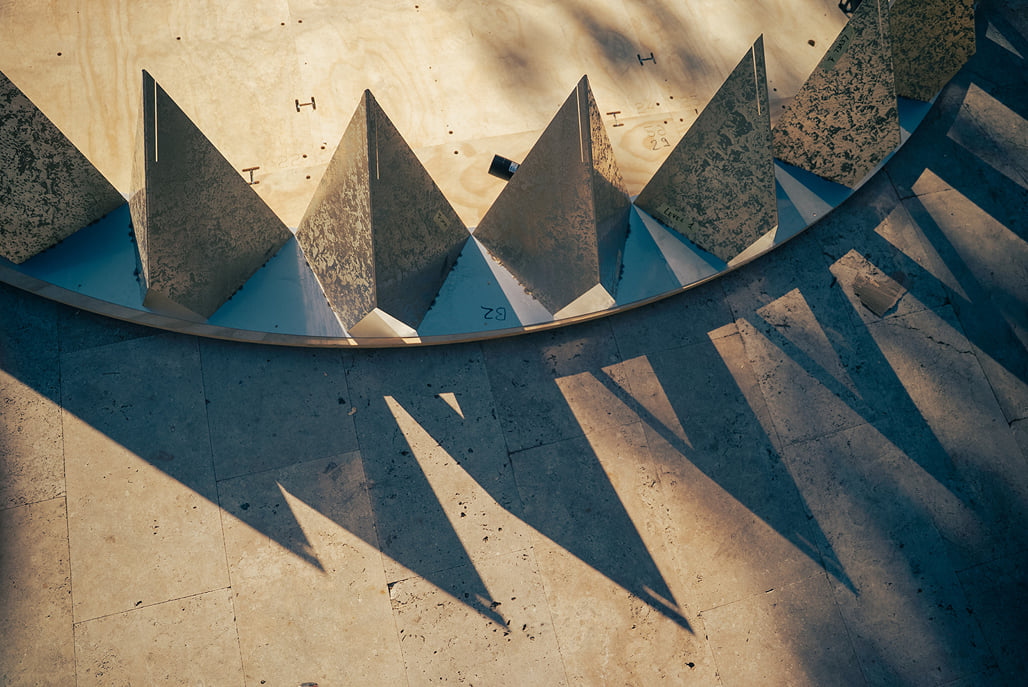
Detail of the folded stainless-steel elements of Salt Pavilion during fabrication and assemblyYacademy Alumni Behind the Conception of Salt Pavilion
For the Yacademy alumni involved, Salt Pavilion represented an opportunity to move beyond academic exercises and participate in the development of a real architectural project alongside an internationally renowned practice.
The workshop placed the alumni at the heart of the project’s early design development, allowing them to engage directly with the studio’s architectural philosophy and explore how an idea rooted in the identity of a place can evolve into a contemporary installation.
Under Sanada’s guidance, the participants explored the relationship between architecture, materials and the cultural heritage of Montecatini Terme, contributing to the creative process behind an installation developed by one of the world’s most internationally recognised architectural practices.
The experience reflects a distinctive aspect of Yacademy’s educational approach: the opportunity to move beyond academic exercises and engage with real architectural projects alongside leading international professionals.
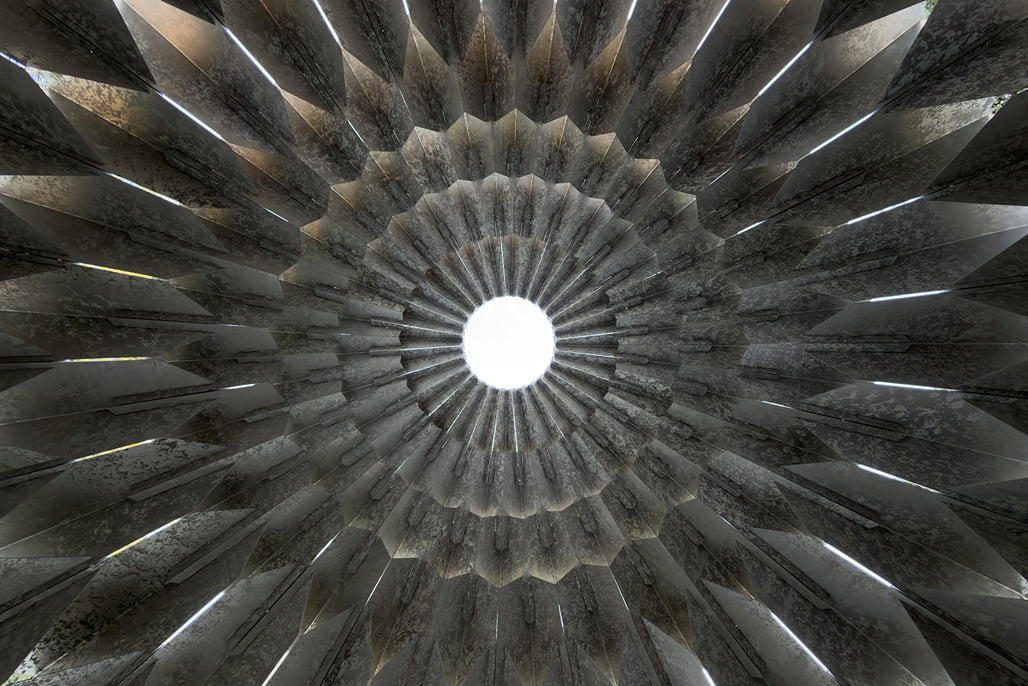
Interior view looking up through the layered stainless-steel structure of Salt Pavilion
Architecture as a Dialogue with Place
Salt Pavilion is more than a temporary architectural installation. It is an exploration of how contemporary design can reinterpret the history and identity of a place through materials and innovative construction techniques.
Kengo Kuma himself will attend the Biennale’s closing ceremony on November 29, an event open to the public, offering visitors the opportunity to meet the architect behind Salt Pavilion.
The event will mark the conclusion of a programme that has welcomed internationally renowned architects to Montecatini Terme, fostering a dialogue between the city, its architectural heritage and new perspectives on design and wellbeing.
From the material experimentation of Salt Pavilion to the involvement of emerging architects in its conception, the project illustrates how architectural ideas can develop through encounters between different generations, disciplines and areas of expertise.
It is precisely this exchange, between established practices and emerging talents, between architectural research and hands-on experimentation, that offers new possibilities for reinterpreting the identity and future of a place.
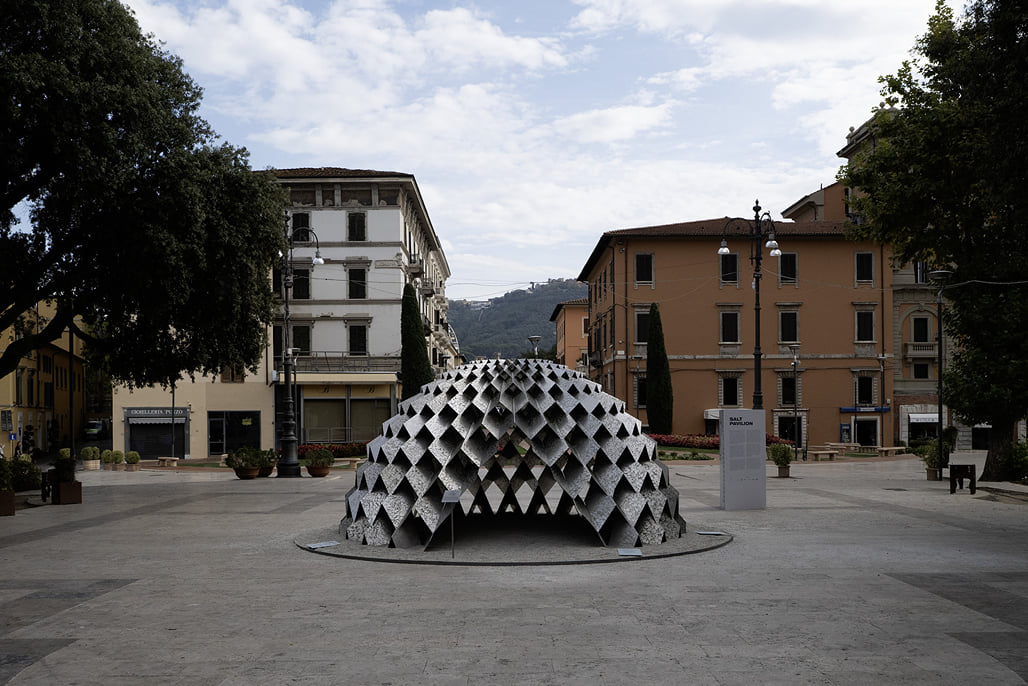
Salt Pavilion in Piazza del Popolo, Montecatini Terme
The Biennale is supported by Over and BK1, curated by Yacademy and backed by the Municipality of Montecatini Terme, Ordine degli Architetti di Lucca, Collegio Provinciale Geometri e Geometri Laureati di Pistoia and the Carlo Collodi National Foundation. wienerberger, De Castelli, KME, Goti Arredamenti, Gran Caffè Gambrinus and CNA Toscana are participating as technical partners.