
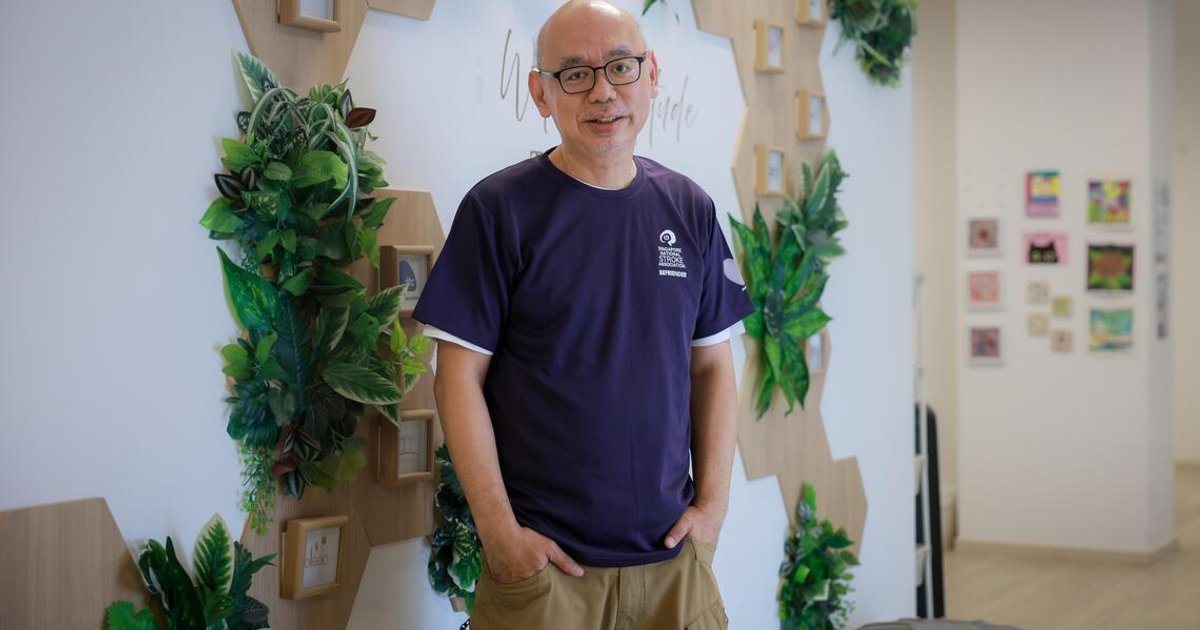
SINGAPORE – When Daniel Sim woke up one morning in March 2024, he found that he could not move his left arm and leg.
He tried to stand but fell to the ground. As a trained first-aider who knew the signs of a stroke, he suspected he was having one.
But calling for help was not easy. His wife was in another room, and his voice was barely audible.
“When she came over, I struggled to make myself understood because my speech had become slurred. I eventually managed to call 995, and my wife took over speaking to the emergency operator,” says the 55-year-old.
He was a freelance healthcare market researcher when the stroke happened, and is now retired.
Medical tests at Changi General Hospital confirmed that he had suffered a haemorrhagic stroke, or bleeding in the brain.
Doctors told his wife that the bleed was on the right side of his brain, but surgery was not an option because of its location.
Delays can hinder timely treatment
While Sim recognised his symptoms quickly and called for help, delays before patients reach hospital remain a major barrier to timely stroke treatment across South-east Asia, according to a report released in September by medical technology company Siemens Healthineers.
The report, Strengthening Stroke System Readiness Across ASEAN, draws on insights from experts in countries including Singapore, Malaysia and Thailand.
They identified major delays before patients reach a hospital, when low public awareness can slow response to stroke symptoms, and during inter-facility transfers, when fragmented referral pathways can delay access to the appropriate level of care.
Deidre Anne De Silva is head and senior consultant at the department of neurology at the National Neuroscience Institute (Singapore General Hospital Campus). She tells The Straits Times there is always room to improve public awareness of stroke symptoms and, crucially, translate that awareness into action.
Many stroke patients, she says, reach a hospital too late to be considered for acute treatments.
“This is because the brain damage is already permanent and cannot be reversed. The earlier a patient is treated, the more brain tissue can be saved and the outcome is better,” says De Silva, who is the chairwoman of the Ministry of Health’s Stroke Services Improvement Team.
Sim, who has high blood pressure, spent almost two months in hospital undergoing physiotherapy, occupational therapy and speech therapy.
Initially, he could barely do anything independently, beyond sitting up in bed.
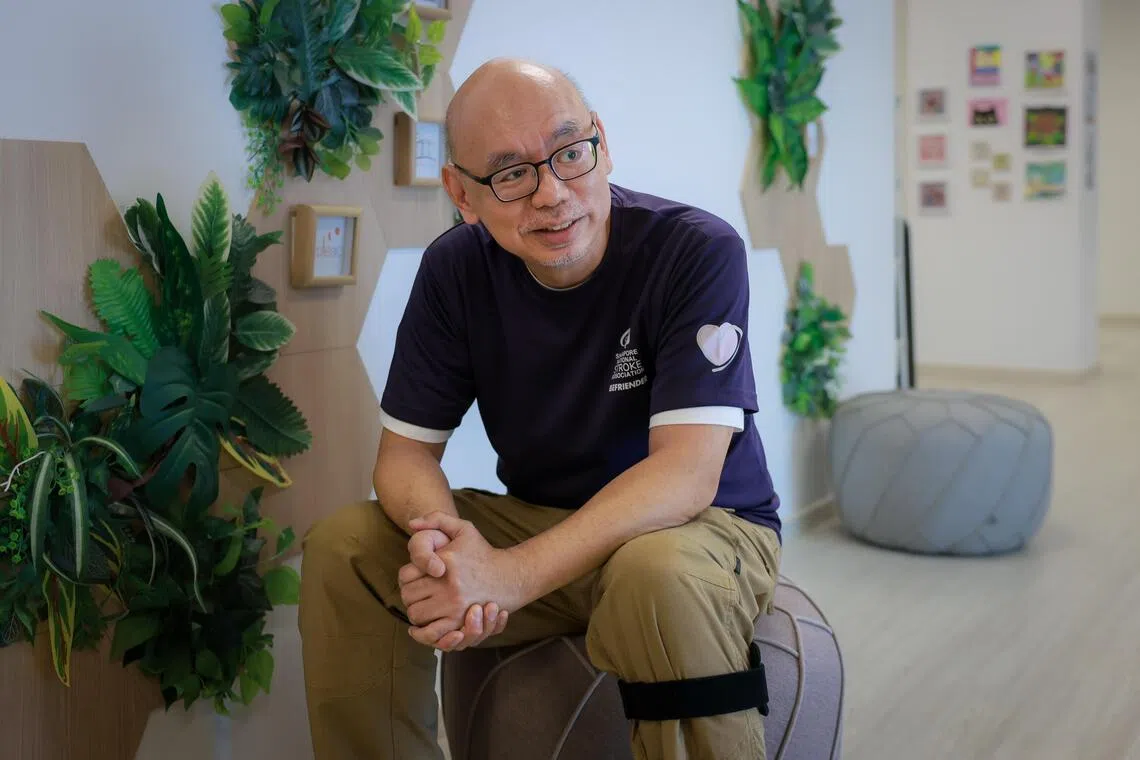
Sim was a meat lover who disliked vegetables and rarely ate fruits before his stroke, but now he opts for vegetables and eats almost every kind of fruit.
ST PHOTO: GAVIN FOO
He needed nurses to help him with basic tasks like showering, changing his clothes, using the toilet and washing himself.
“That was the most difficult part. I found it hard to depend on others for such basic needs,” says Sim.
After he was discharged, he underwent an intensive rehabilitation programme at St Luke’s Hospital, attending physiotherapy and occupational therapy sessions five days a week for about 2½ months.
By the end of his hospital and rehabilitation care, he was able to put on his clothes with one hand and move slowly with a walking aid. Eventually, he was able to resume leathercrafting, a hobby he had pursued before his stroke.
But recovery remains a work in progress. Sim estimates that he has regained only about 30% of his original strength in his left arm and leg.
He uses a walking stick and makes it a point to walk 3km to 5km daily, or clock 7,000 to 10,000 steps, to keep active.
From loving meat to eating fruit and vegetables
His diet has changed dramatically too.
He was a meat lover who disliked vegetables and rarely ate fruit. Now, he gravitates towards vegetables and eats almost every kind of fruit.
Naras Lapsys, chief clinical officer and senior dietitian at Chi Longevity Clinic at Four Seasons Hotel Singapore, says adopting a heart-healthy diet can help reduce stroke risk.
He recommends the Mediterranean diet, which emphasises plant-based foods, whole grains, nuts and seeds, healthy fats such as olive oil, and fish.
The DASH (Dietary Approaches to Stop Hypertension) diet is another option, as it focuses on lowering blood pressure, which is a risk factor for stroke. It includes fruit, vegetables, whole grains and low-fat dairy products.
Lapsys also advises reducing consumption of sodium and highly processed foods, and eating more plant-based proteins such as legumes and pulses.
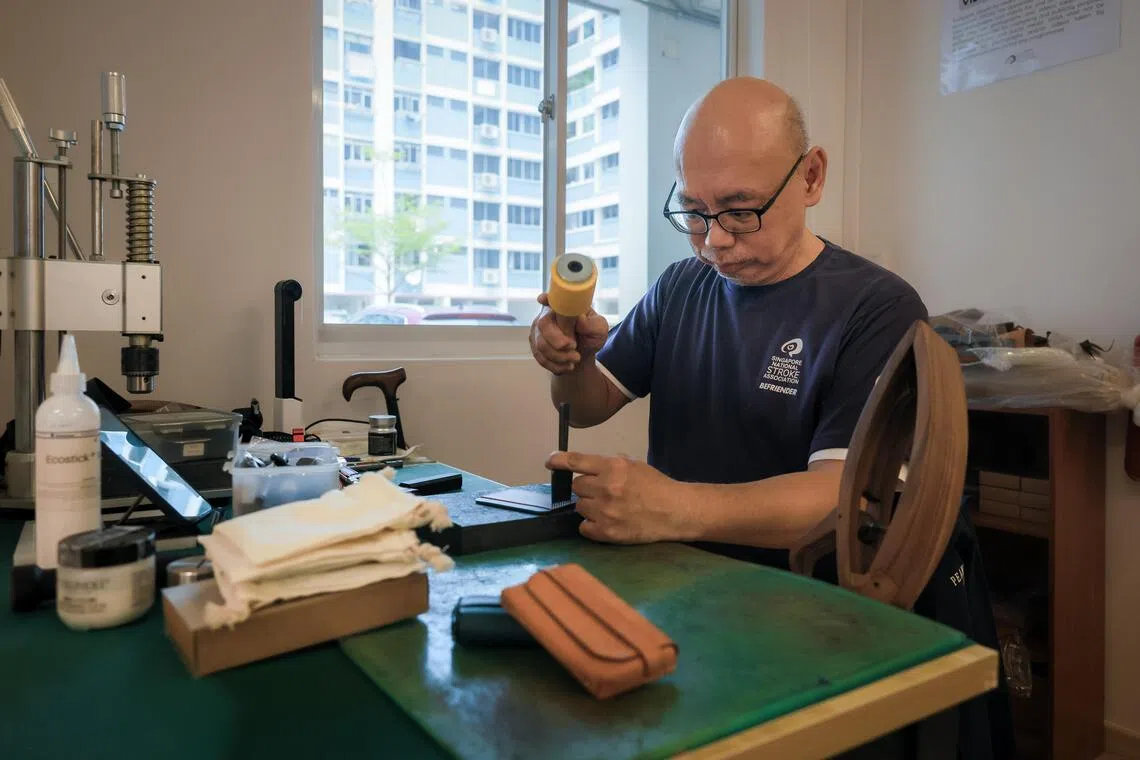
Sim has turned his pre-stroke hobby of leathercrafting into a way to help others, holding workshops for patients at the Singapore National Stroke Association.
ST PHOTO: GAVIN FOO
Having experienced the challenges of stroke recovery, Sim wants to give back by supporting others going through a similar journey.
Since 2025, he has been a befriender with the Singapore National Stroke Association (SNSA), visiting stroke survivors in hospital to encourage them in the early stages of recovery. He also conducts activities such as smartphone photography and leathercrafting workshops for stroke patients at SNSA.
Leathercrafting, in particular, has become a way for him to help others while adapting to his own limitations.
“A wallet that once took me about four hours to complete can now take up to three days because of stroke-related fatigue,” he says.
He has since improved and now takes about 1½ days.
De Silva says stroke recovery varies depending on the type of stroke and its severity, how quickly treatment begins, management of complications and rehabilitation.
“Recovery is a long journey and it is not the same for everyone. But there is hope and life after stroke,” she says.