
Does it feel like the cost of living has improved?
No, it does not.
Unfortunately, the data we’ll be getting this week cover the period between July and September 30, when global oil prices fell back to relatively low levels.
Of course, they’ve since spiked and now we’re all feeling it in the pocket as petrol prices head towards $4 a litre.
So all the economists’ previews for this week’s inflation release include ugly forecasts for what’s coming in the next one.
Expectations are that we’ll end the year with an inflation rate back above 4%.
ASB senior economist Mark Smith delivered a blunt assessment of the outlook.
“Sharp [fourth quarter] increases in vehicle fuels and airfares, rising construction costs and the low NZ dollar are expected to push annual CPI [Consumers Price Index] inflation to 4.5%,” he said.
“Worryingly, both annual tradeable and non-tradeable inflation rates are expected to end the year well above 3% and rising.”
The key there is the non-tradeable inflation.
That means the underlying, domestically driven inflation will also be at the top of the Reserve Bank’s (RBNZ) target range.
That’s what’s making it impossible for the RBNZ to look through what might (hopefully) be a short-term fuel shock.
The central bank will also look at underlying (core) inflation.
That’s a measure of inflation that strips out volatile items like fuel, food and power prices.
Westpac’s Satish Ranchood took a look at core inflation expectations for tomorrow’s September quarter data.
“We expect that core inflation measures will point to continued firmness in underlying price pressures, with several closely watched measures likely to take a step higher this quarter,” Ranchood said.
His forecasts are core inflation excluding fuel at 3%, and core inflation excluding fuel and food at 3.2% and core inflation excluding fuel, food and household energy at 2.9%.
Wouldn’t it be nice if we could also exclude those items from our household bills?
Higher rates
Essentially, what those numbers suggest is that the RBNZ will need to lift the Official Cash Rate (OCR) when it meets next week.
Markets now have odds of 85% that the rate will rise from 2.75% to 3% next Wednesday.
BNZ economists are picking there will be at least one, possibly two, more hikes to come before the RBNZ can pause and take stock.
I’ll do a more fulsome OCR preview for early next week.
Meanwhile, sit back and watch the political football (my least favourite code of football) around the so-called lower inflation rate.
It will almost certainly still grab headlines, but really the only thing that the topline figure will be good for is reminding us how desperately we need this data to be produced every month.
The really good news is that Stats NZ has been working hard and we’ll finally get monthly CPI data starting June next year.
Here’s hoping that it’s a lot lower by then and the urgency around the numbers isn’t quite so acute.
Powering our way out of deficit
Q: Hi Liam,
I enjoy your weekly section. I picked up on a comment made by a farmer who is promoting his use of solar power to power his activities including the home and also his EV farm vehicles (shout out to @electricorchadist).
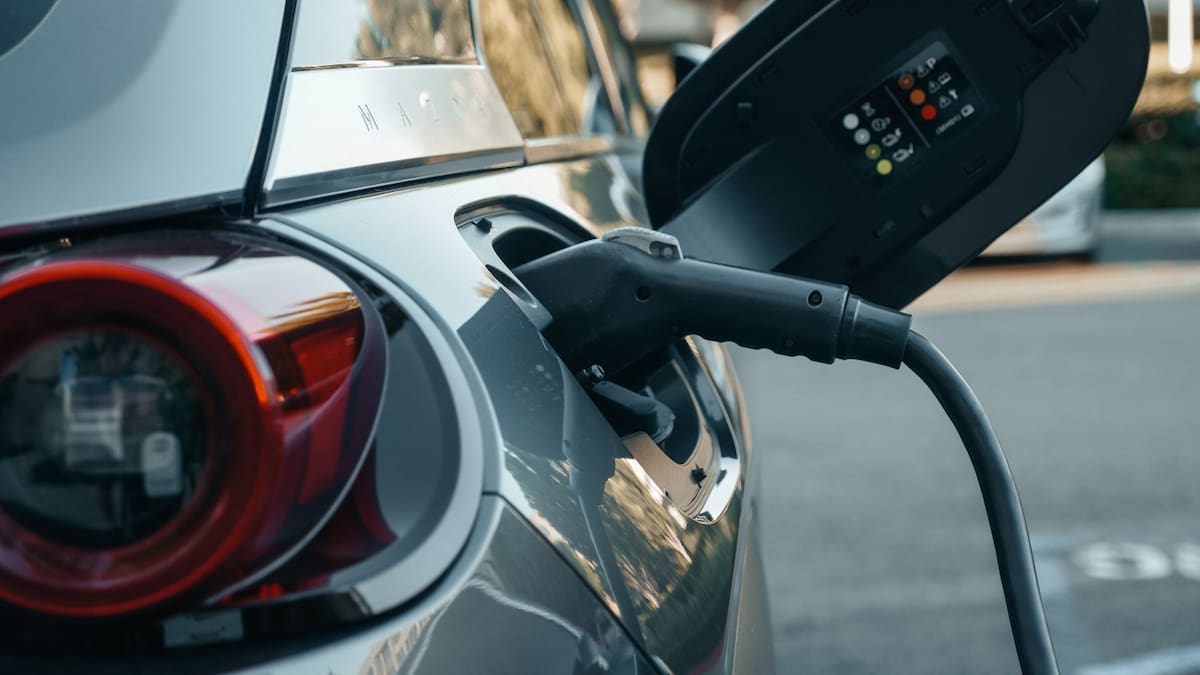
He said that generating renewable power locally reduces reliance on overseas fuel. Hard to argue with that. That got me thinking about how much fuel we import relative to our current account deficit and what the implications would be if we were able to electrify our car fleet in NZ powered by locally renewable energy (we’d need some more, obviously).
Cheers, Tom
A: Hi Tom, I agree. Regardless of your politics, it’s hard to argue with being less reliant on imported fossil fuels.
And, yes, in theory, if we didn’t have to buy imported fuel, the current account deficit – as it currently stands – would almost be largely erased.
As at the end of June, our annual current account deficit was $14.6 billion (or 3.2% of GDP).
Meanwhile, Stats NZ says petroleum imports in the year to July 2026 were $12.1 billion, up 23%, with higher prices for diesel, petrol and jet fuel all contributing.
If we got rid of most of that, it would deliver a meaningful shift in our balance of payments.
It wouldn’t turn us into a rich creditor nation overnight. But it would take pressure off our external debt, it would probably lift our international credit rating (reducing our interest bill), and leave us less exposed every time there’s a crisis in the Middle East.
At the annual meeting this week, Genesis Energy chief executive Malcolm Johns took a similar line to your farmer.
“Today, electricity only makes up around 30% of New Zealand’s total annual energy use. 70% comes from non-electrical sources, with 50% of our overall energy being imported,” he said.
Johns said if electricity made up 60% of New Zealand’s total annual energy today, the average household would be saving up to $3000 a year on total energy costs. New Zealand’s total annual energy bill would be around $10 billion a year less than it is today.
So is it achievable?
On the one hand, I think the full electrification of land transport in New Zealand (and the world) now seems inevitable.
The technology for generating and storing renewable energy is there and improving fast.
In New Zealand, we have abundant natural resources for renewable energy, so we are better placed than many nations to match the spike in demand for power that electrification would cause.
Electric vehicles are also already matching or bettering petrol vehicles for speed, performance and range, and they are getting cheaper every day. So I do think it’s when, not if.
But on the other hand, we need to be realistic about the turnover of the New Zealand vehicle fleet.
On that front, we’re up against it compared with many other nations.
In New Zealand, sales of new electric vehicles are still strong.
In June, battery-electric vehicles (BEVs) were 20.4% of all new registrations and plug-in hybrids (PHEVs) 10.4%.
Among passenger vehicles, BEVs and PHEVs together were 38% of new registrations.
That sounds promising until you look at how slow our national fleet is to turn over.
A large proportion of the cars imported into New Zealand are not new; they are used imports.
Data for August showed new registrations of 12,000-13,000 a month, plus used imports at about 8600.
Against a fleet of about 4.7 million, that implies turnover of about 5% per year.
So the 38% EV share of new sales changes the total fleet by about 1-2 percentage points annually.
Even on an optimistic reading of those numbers, it would take around 50 years to fully electrify.
I think it will be faster than that, for a few reasons.
The electrified proportion of new registrations will continue to grow.
We’ll start to see an increasing proportion of electric used imports.
In Japan, which still supplies the bulk of our used imports, the electric Nissan Leaf is now one of the top 10 most exported used cars.
Electric vehicles are also going to get a lot cheaper in the next few years.
Production in China has surged. It accounts for about three-quarters of global electric-car production now.
Consumer demand in China has been weak, so manufacturers have been exporting more.
China exported nearly 1.4 million electric vehicles in the first four months of 2026, more than double the same period last year.
Meanwhile, the United States has effectively blocked imports of Chinese cars with a 100% tariff.
All of which is good news for Kiwi consumers.
My hunch, simply based on other technologies I’ve seen get adopted over the last half-century, is that there is often a tipping point where price and convenience of a new technology get so compelling that adoption dramatically and rapidly accelerates.
I’m confident we’ll reach that point in the next decade.
But it’s worth noting that so far, even China, with a decade of heavy state support and a dominant domestic industry, has electrified only about one car in eight of the cars on the road.
Energy at the core of the economy
Q: When talking or writing about the economy, economists seldom seem to bring energy into the discussion, yet without it, there is no economy.
Let me illustrate my point. About 50 years ago, the American economist Robert Solow tried to work out just what had contributed to US growth over the previous 50 years.
He assumed that it would be some combination of capital and labour, but when he tried to marry the raw data with his equations, he found that these only accounted for about 13% of US growth.
He was forced to ascribe the missing 87% to technical change.
Astonishingly to me, a non-economist, the theory didn’t just vanish but remained unsolved until 2009.
Then the physicist Robert Ayres and the ecological economist Benjamin Warr set about constructing a new model, including labour and capital but adding in energy and bingo, the problem was solved.
I am puzzled. Can you enlighten me?
Keith L. Muir
A: Interesting question, Keith. I won’t pretend I had any kind of answer for you off the top of my head. In fact, I hadn’t heard of the Ayres and Warr research.
But I did some reading and found some interesting points. Perhaps unsurprisingly for economics, it turns out there wasn’t quite a consensus about the problem having been solved.
You’re on to something quite relevant though, especially as energy demand for artificial intelligence (AI) and data centres ramps up.
It’s true, mainstream growth models have tended to treat energy as just another input and Solow’s “residual” (the 13% portion of growth not explained by capital and labour) did go largely unexplained for a long time.
Ayres and Warr’s 2009 work, which adds the useful energy actually consumed in the economy, makes a serious case that energy accounts for much of it.
They weren’t working in isolation, to be fair.
Over the decades, economists have chipped away at the “residual” through better measures of education and skills, and through innovation theory that tries to explain technological progress rather than just assume it.
Ultimately, the energy explanation is still contested. That is largely because energy use and technological progress have moved together, which makes cause and effect hard to untangle.
Is cheap energy driving growth, or does a growing economy simply demand more energy?
But your instinct that economists underplay energy is shared by a number of physicists and ecological economists.
Intuitively, I agree that energy as an input is fundamental to economic progress.
But it seems to me that improved inputs around energy are driven by technological progress.
So I can’t help but feel that energy is a large subset of technological improvement in the productivity equation.
Of course, energy (as an input) should be much easier to measure than broader technology gains, so I’d certainly accept the argument that it should be taken more seriously when we talk about productivity and growth.
As an example of its value, the relatively cheap energy New Zealand once enjoyed played a crucial role in the growth of our dairy sector, as it meant drying milk to powder was relatively cheaper than it was for our competitors.
As we stare out a power-hungry, post-AI world, there’s a strong case for making a national push to dramatically boost renewable energy production.
That could once again give a globally competitive advantage.
We have abundant wind, rain and the sun in this country. And we have technology.
Shifting our mindset on the underlying economic value might be the missing piece of the puzzle.
Don’t forget to check out the Herald’s new podcast, The Economy of Everything, with Liam Dann and Tamsyn Parker – thanks to CMC Markets.
Liam Dann is business editor-at-large for the New Zealand Herald. He is a senior writer and columnist, and also presents and produces videos and podcasts.
He joined the Herald in 2003. To sign up to his weekly newsletter, click on your user profile at nzherald.co.nz and select “My newsletters”.
For a step-by-step guide, click here. If you have a burning question about the quirks or intricacies of economics send it to liam.dann@nzherald.co.nz or leave a message in the comments section.
Tags:
- about
- account
- as
- burning
- Business
- Click
- comments
- cost
- could
- current
- deeper
- dive
- economic
- Economics
- every
- EVs
- fall
- have
- here
- Inflation
- inside
- into
- intricacies
- leave
- leftfield
- liamdannnzheraldconz
- living
- message
- missed
- more
- New Zealand
- News
- newsletter
- NewZealand
- NZ
- of
- our
- Plus
- question
- quirks
- rate
- rises
- section
- send
- sign
- solve
- some
- take
- the
- week
- weekly
- welcome
- why
- will
- woes