
The race to enrol NZ’s youth
Over 100,000 young people may miss the chance to vote, with enrolment numbers still drastically low and the deadline to sign up just days away.
With the last chance to register to vote fast approaching this Sunday, still less than 69 percent of 18-24 year olds have signed up to cast their vote.
In many electorates, youth enrolments are even lower, sitting between 50 and 60 percent.
South Auckland’s Ōtāhuhu has the lowest numbers of all, with only 50.6 percent of rangatahi enrolled to vote.
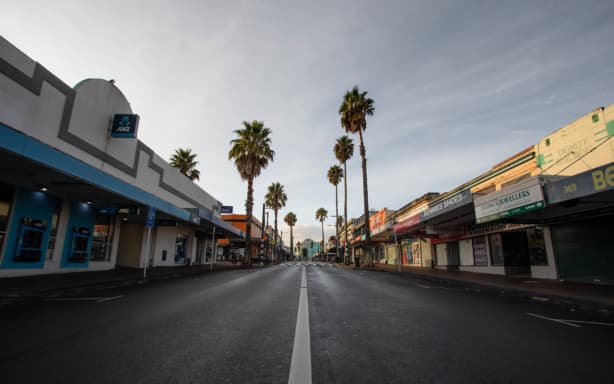
The main street of Ōtāhuhu. (File photo)
RNZ / Cole Eastham-Farrelly
By contrast, the Banks Peninsula has nearly 94 percent of young voters signed up.
Unlike the sparsely populated area most people know, the Banks Peninsula electorate consists of rural areas like Little River, Akaroa and Mount Herbert, but also includes the suburban edges of Christchurch, like Halswell and Cashmere.
But what exactly is causing the drastic difference, and why are so many young people not enrolling?
Checkpoint brought together three first time voters to find out what is on the minds of rangatahi as voting day fast approaches.
Enrolled, but ‘not that interested in politics’
Eighteen-year-old Gordon Shapiro lives in Little River, a tiny rural town on the Banks Peninsula, where he enrolled to vote last month, a few weeks after his 18th birthday.
He’s about to graduate from Akaroa Area School, where he’s one of less than 130 students from Year 1 to 13.
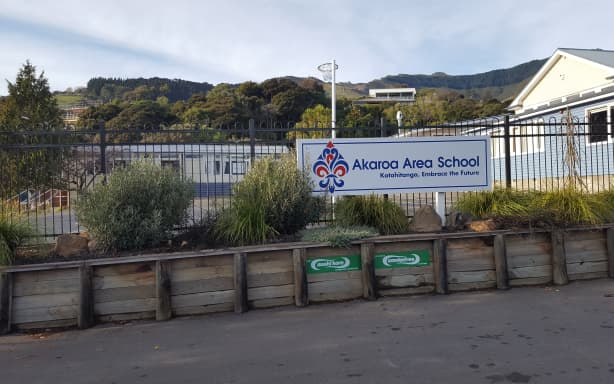
Gordon Shapiro is one of less than 130 students at Akaroa Area School. (File photo)
RNZ / Dan Dalgety
Shapiro said he has never really been interested in politics, and only started engaging in the past year.
With his first chance to vote only weeks away he’s not feeling too confident about where his vote will land.
“I feel like it’s pretty harsh on us because this year is a pretty interesting one… because what I’ve seen from looking at all the parties, I reckon it’s going to be quite a close one.”
Meliame Mafoa is also 18, and about to finish her last year at South Auckland’s Ōtāhuhu College, where she is head girl.
Coming from an electorate with the lowest enrolment rate for youth in the country, she’s also feeling unsure about who she will cast her vote for.
While her school encouraged her to enrol, Mafoa said she feels like there’s a lack of information for young people in her community.
“This group came over and they gave this whole presentation about voting and they even gave us a presentation about how we have the lowest enrolment rates… we were surprised to see that.
“My information either [comes] from a few of my friends who keep up with the news, with the politics, because I’m not interested in politics as well.”
She said she wants to access more information about the election, but doesn’t always know how.
Toreakore Ford-Takiri, 19, is in her first year of a law degree at Victoria University in Wellington, where she moved from her hometown of Tokoroa.

Tokoroa town centre. (File photo)
RNZ / Evie Richardson
She’s enrolled in the Māori electorate of Te Tai Hauauru on the West Coast of the North Island which takes in Tokoroa.
It’s been two years since she pre-enroled at 17, and now that she’s finally able to, she said it’s incredibly important to her to vote.
“Being a Pacific Islander, but also being of Māori descent, it’s technically in our blood. You know, it’s everything around us is political and it may not look like it, but it does impact us quite a lot.
“I want to vote on behalf of my siblings that cannot, and on behalf the mokopuna or the teina that may come after me. So for me, I’m thinking for the future and not just my present.”
What issues are young people worried about?
Checkpoint asked all three what they thought the biggest issues currently affecting rangatahi were.
Shapiro said living in a rural community, natural disasters and weather events were becoming a bigger issue.
“It’s certainly a major concern for a lot of the people who live here and a lot of the businesses out here, because a lot of the businesses are around the centre area, which is in the low ground, which is where all the water will go.”
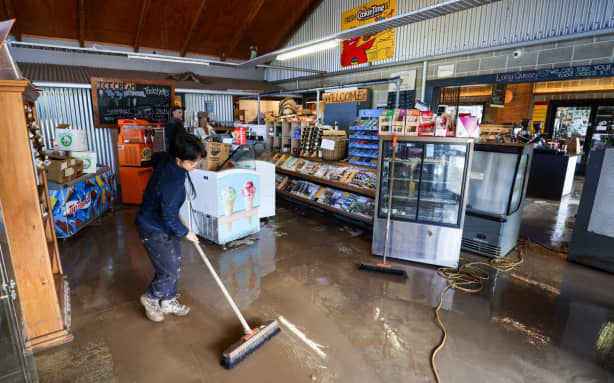
Little River has been hit by floods multiple times in recent years. (File photo)
Nathan Mckinnon/RNZ
As a first year university student living away from home, Ford-Takiri said she worried about the fact the fees free programme had been scrapped.
“I am so privileged to have been received a scholarship… from when I was a school leaver and that goes through three years of my studies, so that’s accommodation, taken off of my plate.
“But also the tuition fees just go up… I just see it go up and up each year and I just feel like next year, what is going to happen to our fees? Am I going to be needing to have an extra loan?”
Dreams to give back to the community
With record numbers of young kiwis leaving the country, politicians have been pushing to convince youth to remain in the country this election campaign.
But Mafoa, Ford-Takiri and Shapiro all said they don’t need any convincing, and have no plans to leave any time soon.
Shapiro, who aims to join the Defence Force as an army officer after finishing school, said he feels loyal to New Zealand.
“I don’t see myself really moving away, at least not just yet. Currently, I think I have a pretty good chance at staying in the country and doing well.
“What my friends usually do is they either go to uni or start traveling, and I feel like I don’t really want that big burden of debt initially. So what I want to do is I want to join the military who can pay for my education, teach me skills, let me lead people and help people overseas and in the country, I think it’s just a great way to start my adult life.”
After Mafoa finishes school at the end of this year, she plans to study to be a doctor. Specifically, a heart surgeon.
She said she wanted to stay and work in New Zealand to give back to her community.
With close to a decade of study in front of her though, she’s worried about the cost it will take to get there.
“The tuition fees, the debt that comes with that is very big, and that’s what pushes us to think, do we really, really want to go through this path, knowing that after this we have so much money to pay off.”
But she said her reasons for pursuing medicine were driving her forward.
“The reason why I want to become a doctor is because of my grandmother. She couldn’t go to any healthcare, any hospitals, no clinics because of that barrier with healthcare, because you don’t see many of our people there in that department, in that field.
“She didn’t feel like she would be understood, she couldn’t speak English very well.
“For me… getting into that medical field, I’m representing many, many cultures, many Pacifica families, not only my Tongan culture. Because seeing that familiarity in a place you don’t have much knowledge of – I mean, it’s healthcare, it’s medical stuff, you don’t know all these words, you don’t know where to go – but seeing that familiar face, it just brings that warmth in you, in you thinking, I’ll be understood because I see somebody I know, I see somebody that might understand me.”
After she finished her degree, Ford-Takiri hoped to work as a criminal and family lawyer.
She didn’t always see herself staying in the country after finishing high school, a few years ago she envisioned herself leaving to earn a higher salary, before bringing her skills back home.
But since beginning study, she said she’s realised what an impact she can have on her community.
“Having looked at this current coalition and what’s been going on, it just made me realise that I could be here for better things and I’d rather be serving my people from where I am than going away and coming back trying to serve them with knowledge that is so not relevant to them.”
‘It’s just the financial barrier stopping us’
With student loans looming, the cost of living was something all three rangatahi brought up.
Mafoa lives in an eight person household, with five siblings. Her father is the only income for the family.
“Sometimes we need a ration on some things to pay the bills, to pay rent, but then also send money back to the islands, help our family there, because they too are struggling.
“I know that my family has a lot of potential to do great things, me and my siblings, we have a lot of potential, it’s just that financial barrier that’s really stopping us.”
Ford-Takiri said she’s worried about the rising cost of petrol and how it’s impacting her whānau .
With 10 siblings, her family already have a lot on their plate.
“I also have little brothers who want to pursue rugby league, and for them to pursue rugby league, it’s very essential for them to be in clubs and be in rep teams and etcetera, so drive.
“My mum and dad, they drive to Auckland and back, to Rotorua and back.”
‘A lot of them are there just to show face’
The young people Checkpoint spoke to weren’t all that confident that politicians really knew what it felt like to be a young person today.
Ford-Takiri said studying in Wellington meant she often saw politicians out on the street, and at university events, but she said there presence alone didn’t feel like enough.
“Usually at our open days there will be like Labour Party, National, Greens and there will always be a few politicians there if not just their leaders. From what I have experienced a lot of them are there just to show face, just to be like yeah I’m in the community but they’re not, they’re not in the community, they’re not participating, they’re not taking part in any of the community events.
“They haven’t really… talked one-on-one or within a group or participating in an event that youth will be at or that youth will thrive in.”
Ford-Takiri threw a “special mention” to the Green Party’s Tamatha Paul, who also comes from Tokoroa, something she said was “mind-boggling.”
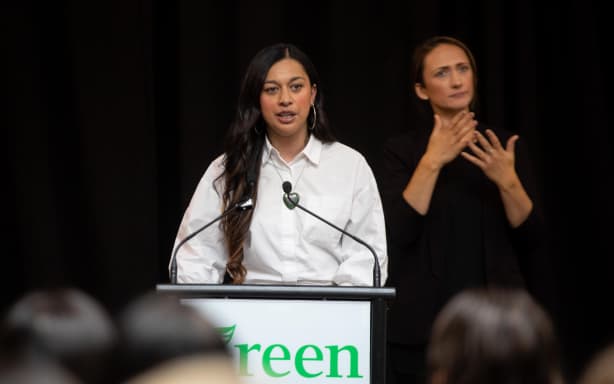
Tamatha Paul. (File photo)
RNZ / Mark Papalii
She said it mattered to her that she was able to see herself reflected in those sitting in parliament.
“What matters to me most is seeing people like her in our communities, not only in our universities or workplaces, but at DJing parties or having fun with youth for youth and coming up with bright ideas.”
Shapiro said the local candidates for Banks Peninsula had recently come into his school to answer their questions.
“My first initial reaction from meeting them was that most of them, I feel like most of them are from the outskirts of Christchurch… but I feel like it takes a real local to fully grasp things that are needed and what can be fixed.”
He said he’d like to see the candidates getting out in the community more often, particularly in between election cycles, to keep young people informed as they reach voting age.
“I feel like they should do a regular thing where they go to a school every, I don’t know, half a year or a year just to keep in contact with that younger community.”
Despite some of their apprehension about their knowledge of this election campaign, all three said they will 100 percent be getting out and casting their vote when election day comes around, both with themselves and their communities in mind.