
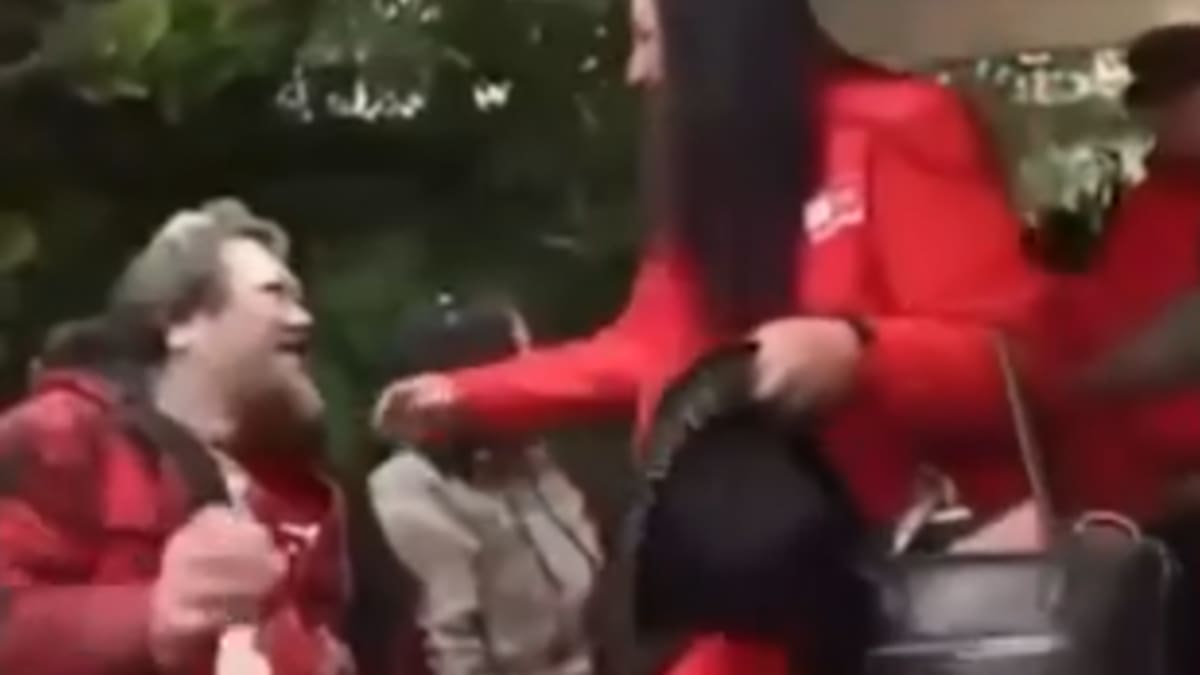
When asked if any other Labour candidates had attended meetings with gang members while on the campaign trail, Hipkins said he was aware of no other instances.
Because of the late stage of her resignation, Leoni’s name will still be on ballot papers as a Labour candidate.
In her statement, Leoni said the “intense focus on my whānau and community” had become “increasingly difficult”.
She continued to describe the event as a “whānau function attended by mokopuna, kaumātua, gang members and non-gang members”, saying it had “been turned into a political weapon, used for political gain and media clicks”.
“Is this really the kind of New Zealand we want to live in? Is this really the behaviour we want to model to our tamariki and mokopuna? Is this really how desperate some political leaders have become to cling on to power?” she said.
The resignation followed a day of speculation about whether Leoni had visited the same gang pad that members of Te Pāti Māori and the Greens visited earlier this month, earning them a stark rebuke from Hipkins, who would likely lead any post-election coalition of those parties.
Labour leader Chris Hipkins campaigning at the Hawke’s Bay A&P Show on Friday. Photo / Michaela Gower
“No, I don’t condone it. I think it was a bad judgment,” Hipkins said of the visit during the Herald’s leaders’ debate last week.
In the same debate, Hipkins went as far as ruling out allowing members of Te Pāti Māori and the Greens to serve in law and order portfolios in a Government he led.
As it turned out, there is no evidence of Leoni visiting a gang pad. But the footage that emerged on Thursday night showed Leoni in Labour gear appearing to campaign with patched gang members.
The latest round of the scandal was triggered during a Whakaata Māori debate when Leoni’s rival in the Tāmaki Makaurau seat, Te Pāti Māori’s Oriini Kaipara, alleged Leoni was at the pad.
By Friday, however, Te Pāti Māori co-leader Rawiri Waititi was trying to distance his party from its role in Leoni’s downfall.
“The right benefits every time we turn on each other, and we will not give them that victory,” Waititi said.
“We can disagree on how this has been handled without losing sight of what unites us. Our people cannot afford another three years of this Government.
“We will not allow this controversy to distract us from our collective responsibility to dismantle this Government.”
With Leoni out of the picture in Tāmaki Makaurau, the scandal gives Te Pāti Māori a better chance of succeeding in triggering a parliamentary overhang.
Greens co-leader Chlöe Swarbrick wouldn’t say if she was comfortable with the standard being set by Hipkins, who would lead any potential Government involving her party.
“We are in the Green Party very, very committed to our values and our principles, which look like appropriate decision making, which look like restorative justice, which look like a commitment to evidence-based policy. Those are the values of the Greens,” Swarbrick said.
The coalition parties criticised Labour for its handling of the scandal.
National leader Christopher Luxon said the fallout was “very chaotic”.
“Very chaotic on the Labour side is my read of it,” he said.
Luxon said he was “not tolerant of gangs at all. I have no time for gangs”.
Campaigning in Hawke’s Bay, Luxon said gangs had terrorised that part of the country.
He claimed the Mongrel Mob clearly wanted Labour elected to power because “they’re soft on crime”.
Act Party deputy leader Nicole McKee said that while Leoni could not pick her whānau, she could pick where she campaigned.
“Chris Hipkins has been caught out lecturing other parties about their judgment while his candidates campaign with gang members,” McKee said.
She said the footage showed “what’s at stake this election”.
“On the left you have two parties openly campaigning for gang votes, and one trying to do it secretly,” she said.
New Zealand First deputy leader Shane Jones accused Labour of wanting to “romanticise” gangs, saying that in reality they were “hardened thugs” who want to peddle “misery, meth and intimidation”.