
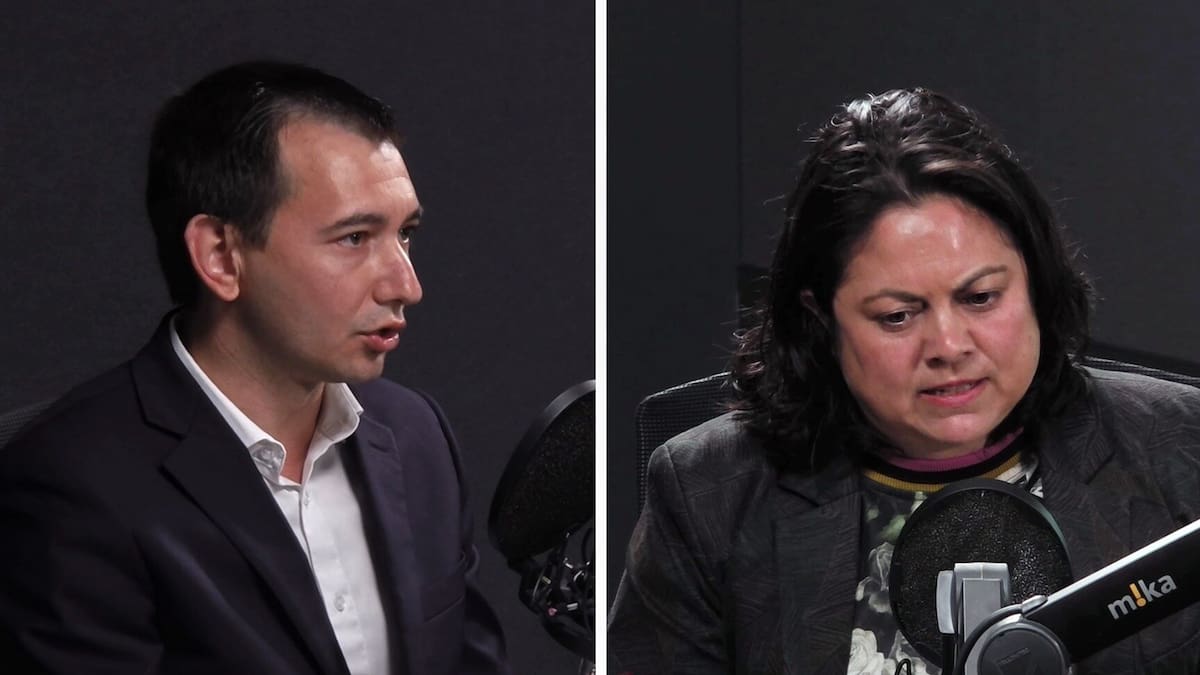
“General practice has to have attractive conditions and remunerations to have people want to specialise … It’s a 12-year training to become a general practitioner.”
He said there was little comfort in listening to politicians trying to address the issue.
He described hearing Labour’s Ayesha Verrall and National’s Simeon Brown on yesterday’s Morning Report health debate as “like listening to two seagulls fighting over the last chip”.
During the debate, Verrall confirmed that Labour would keep the coalition Government’s health targets if elected, while admitting some of its “three free GP visits” could be with a nurse practitioner rather than a GP.
She said the party would introduce “efficiency improvements” such as a triaging system to reduce acute demand.
Brown said Labour’s policy was going to “clog up” the health system.
Northland’s GP shortage leaves 25,000 without a family doctor. Photo / 123rf
He called on Labour to produce its modelling, which supposedly showed how it would free up 4.5 million appointments. He warned that the health system would be overrun.
Meanwhile, Brown claimed the system was “heading in the right direction”.
He highlighted the new Waikato Medical School, which is set to train another 120 doctors per year, with the first cohort entering in 2028.
One of Cunningham’s concerns was the push for a non-doctor workforce.
He said that, while this was being sold as a way to assist GPs, it raised safety issues.
Association of Salaried Medical Specialists head Sarah Dalton told Morning Report that no one was speaking in a “meaningful way” about the medical workforce in terms of specialist doctors, including GPs.
“If we want a health system that is responsive and safe, it needs to continue to be led and staffed by senior doctors and dentists.
“… I think the focus on non-doctor healthcare is more about cost-cutting and a refusal to engage in the challenges of recruiting to hard-to-staff areas rather than what’s best for patients.”
Dalton said that, while it was great that more doctors were to be trained at Waikato Medical School, the results would not be felt for another 10 to 15 years.
She gave some points to Labour for focusing on acute flow in its policy.
“We would argue that the targets that focus specifically on planned care and first specialist appointments are incentivising and, in fact, forcing hospitals to focus on those things at the expense of acute care and on follow-up appointments.
“So patients with chronic medical conditions, particularly those who rely on the care of physicians, combinations of medications, monitoring over time, mental health patients who need regular contact with psychiatrists and their teams, are missing out through this focus on first specialist appointments.”
On discussions around AI freeing up time for GPs, Cunningham said the technology was not “the great panacea for general practice”.
“It’s just a dictation service, really, for note-taking … it might just get you out the door at the end of the day, probably about 10 minutes sooner.”
He said a more successful model would be to triage patients at a clinic in the morning. This would include phoning patients to see if problems could be solved without an in-person appointment.
“That has a pretty high success rate, more so than telehealth, because obviously we know the patients, we have the notes there, but often patients are phoning merely for some pretty easy things.”