
An estimated 1 in 1,380 people worldwide suffer from inherited or genetic retinal eye diseases, according to a 2022 National Institutes of Health (NIH) study. Traditional methods for managing conditions like wet macular degeneration or diabetic retinopathy are limited by human biology; once the eye is damaged, inner skin or retinal cells scar and can’t be recovered. But what if a distant evolutionary ancestor could change all of that?
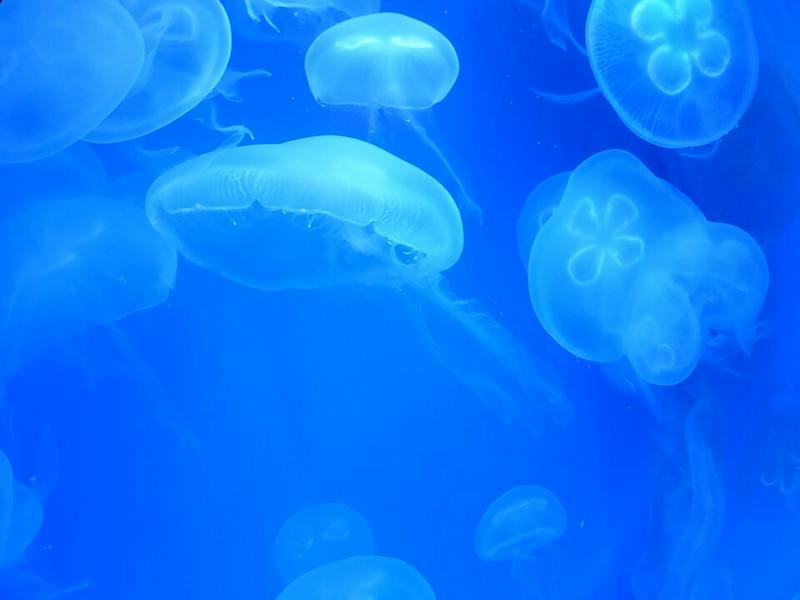
Found several branches out from humans on the evolutionary tree, jellyfish can regenerate light-sensing organs. Their ocular structures are remarkably similar to humans, with lenses, corneas, and retinas. When a jellyfish has a damaged eye, cells zero in on regeneration rather than forming scar tissue, growing a fully functional eye and preventing further damage.
Evolutionary biologist Aide Macias-Muñoz and her research team at the University of California, Santa Cruz want to study this phenomenon. The recipient of a recent $2 million NIH grant, she and her team aim to learn how jellyfish eyes regrow and whether single-cell sequencing of their DNA can help us understand future human vision gene therapy, described in an interview with The News-Letter.
From her lab in Santa Cruz, Macias-Muñoz explained her plans to study two classes of Cnidaria jellyfish: box jellyfish (Tripedalia cystophora) and moon jellyfish (Aurelia aurita) and observe them at different life stages. This will help test her hypothesis that development and regeneration are very different. If her team can discover the neural signals that tell jellyfish eyes to regenerate instead of scar, scientists may be able to utilize that data for human eyes too.
“Humans have two eyes that focus light into some cells, and then it all gets processed in a central brain… That’s how [jellyfish vision] is very different. It’s not centralized; it’s more decentralized,” Macias-Muñoz described.
To understand how these complex marine invertebrates navigate the ocean without a centralized brain, her focus will be on their nerve structures. Box jellyfish have 24 eyes encircling their body like a crown, attached to four tiny sensory centers called rhopalia. These rhopalia are like mini brains hanging from their cube-shaped body; each holds six eyes to interpret images. Moon jellyfish have eight rhopalia, with two eyes each that can sense light but aren’t image-forming. To study them at their earliest state, Macias-Muñoz plans to cut off the rhopalia and have the jellyfish regrow them.
“We are cutting off the whole sensory structure where they have both the neurons and the eyes located,” she explained.
She and her research group are preparing to find potential candidates for the study and want to learn how both species recreate these biological cells anew.
“Are there any cells that appeared in regeneration that were not present in development?… Is it purely stem cells that are changing when regeneration happens?… Or could there be some de-differentiation?” she asked.
For human eyes, the roadblock to regeneration is our own biology. When the inner eye is damaged, scar tissue often forms and can build up, tugging at the retinal layers, creating vision issues or even pulling the retina away entirely. When this kind of damage is present, support cells called Müller glia rush in to save neurons, rapidly multiplying in a process called reactive gliosis. This process is the nervous system’s defense response to seal off damaged tissue, but the scar that appears afterwards prevents new neural connections from forming.
Current treatments for blinding retinal conditions like retinal vein occlusion or uveitis focus on maintaining the retina and preserving the cells that remain. Standard practice involves frequent intravitreal injections of anti-VEGF medications — specialized medications injected directly into the vitreous, the gel inside the eye, blocking the growth of abnormal blood vessels and preventing further swelling.
While these injections currently hold the line for treatment, the reality of their application is much more daunting, with patients needing injections every four to six weeks.
For Nelan Hughes, a senior retinal scribe in South Carolina, providing care and reassurance to these patients is an everyday task. She described sitting in the rooms with her patients and crying along with them as they slowly lose their vision.
“The biggest challenge [in retinal therapy] right now is figuring out how to get the eyes to produce the medicine we’re injecting into them on their own,” Hughes emphasized.
Clinical innovation is already attempting to fix this problem. An emerging gene therapy called RGX-314 from REGENXBIO works by introducing a virus into the eye that doesn’t create a viral illness but instead delivers genetic instructions. Replacing frequent injections, this medication reprograms the eye to produce the anti-VEGF antibodies on its own. Early results are encouraging, with 78% of patients in one high-dose test group going long periods without needing additional injections. RGX-314 is currently administered during surgery, but trials are underway to incorporate it as a simple in-office procedure. While medications like RGX-314 offer hope, they work by modifying cells left behind after damage has already occurred. They still cannot rebuild what has been destroyed.
“Nerve tissue doesn’t regenerate,” Hughes stresses.
But jellyfish can override this genetic code and create something new. This is where a study like Macias-Muñoz’s could revolutionize these treatment plans, offering cellular regeneration instead of continuous injections into the eye. Macias-Muñoz explained how previous gene studies produced limited results.
“This has led to a “blind spot” in our understanding of whether the genetic mechanisms that dictate the ability to regenerate are fixed, or whether regeneration can happen in a number of ways,” Macias-Muñoz said in a press release from UC Santa Cruz.
Identifying that genetic roadblock could be the missing link the human eye needs. For patients facing a lifetime of retinal injections, that kind of transformative therapy could mean the difference between holding off blindness and empowering the eye to heal itself.