
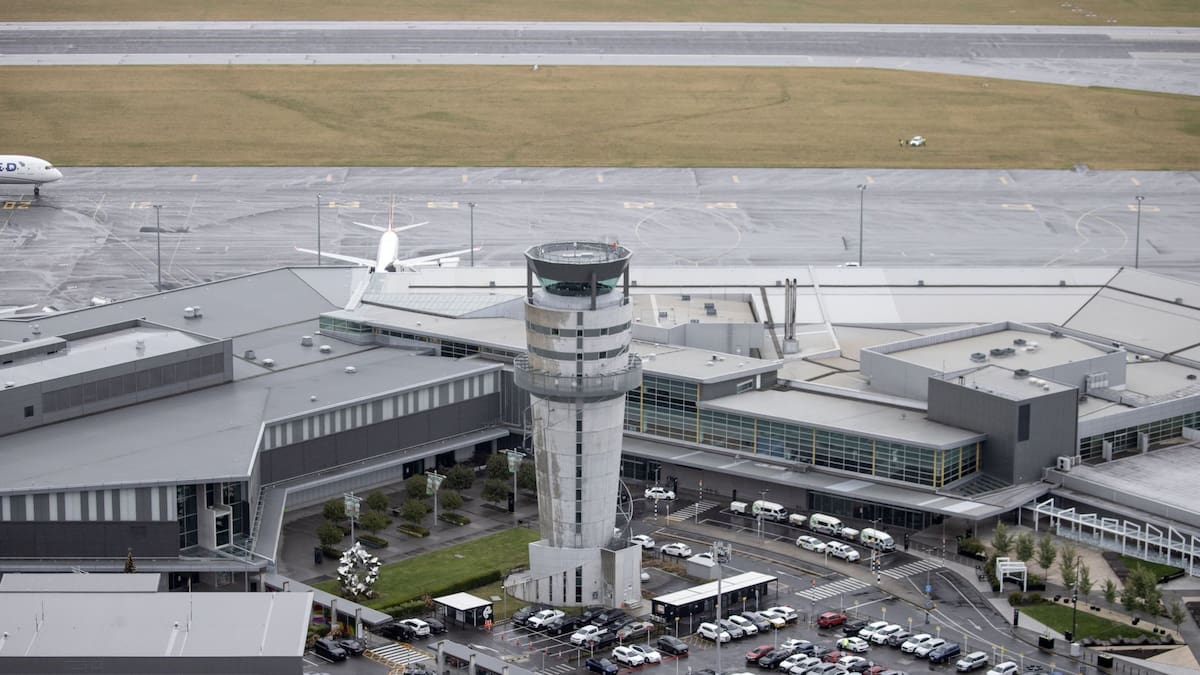
Visitors are also entering the country at different places, with South Island airports collectively welcoming more than one million arrivals in the year to June and Christchurch Airport looking forward to a 20% increase in international capacity, making it their biggest summer ever.
New Zealand’s geographic position acts as something of a deterrent – and also a blessing for attracting the much-sought-after high-spending visitor.
While not quite back to pre-Covid levels, when adjusted for inflation, Ministry of Business Innovation and Employment data shows international spending in the year to June is up by 20% on the previous year, reaching $14.3 billion.
Spending growth has been particularly strong from New Zealand’s top three visitor markets – Australia, up 25% year on year to $4.4b; the United States, up 20% to $2.2b; and China, growing 26% to $1.5b.
While airlines are feeling the pain of absorbing fuel price shocks, latest hotel revenue figures paint a sunnier picture.
Horwath HTL says revenue per available room is up 10.2% year-on-year, driven mainly by Auckland, Christchurch and Queenstown. Occupied room nights rose about 5%, as international demand increased 17%, offsetting a 1.5% decline in domestic demand.
Māori tourism is growing. Research commissioned by New Zealand Māori Tourism and undertaken by BERL established that in 2023, Māori tourism accounted for $1.2b of GDP, an increase from $975 million in 2018. Overall, there were 3595 Māori tourism businesses, employing over 15,000 people. This month it was further boosted when East of Eden star Florence Pugh spoke on United States television about how special a pre-shoot pōwhiri was, saying it left her “full of power and love”.
Lynda Keene, chief executive of the Tourism Industry Council says that as a long-haul destination that isn’t cheap or easy to reach, New Zealand naturally attracts high-value visitors.
“That holds across every segment we welcome: luxury, group touring, independent travellers, incentive and conference, and youth and backpackers. Whatever market they come from, these visitors stay longer and spend more than in many other destinations.”
Lynda Keene, chief executive of the Tourism Industry Council.
Christchurch Airport chief executive Justin Watson says the country needs both more and higher-value visitors.
“New Zealand only represents a tiny percentage of the global travel market, so we are a niche destination. The best growth is growth that delivers more value. That means encouraging visitors to stay longer, travel outside the traditional summer peak and explore more of New Zealand.”
“We know that today’s backpacker visitor is tomorrow’s high-value visitor,’’ says Justin Watson, chief executive of Christchurch Airport.
The airlines Christchurch works with already bring in high-value tourists, with every airline serving the city selling a business class and, in some cases, a first-class cabin.
“We know that today’s backpacker visitor is tomorrow’s high-value visitor who also brings along their family,” Watson says.
Keene says her members report that those long-haul visitors leave happy, consistently saying this country was well worth the cost and the long journey.
In return, MBIE data shows 95% of Kiwis rate tourism as being good for the economy, although there are regional differences in attitudes to it.
In Otago, 26% say there are too many international visitors, those figures show. Strain on infrastructure and additional costs for ratepayers ranges from a shortage of toilets in the Mackenzie Country to poor parking near North Island attractions.
Keene says context matters for the volume of tourists.
“The pinch points we’ve seen in the past, and those emerging again, come down to a lack of infrastructure in some areas. New Zealand doesn’t have a volume problem. It has an infrastructure investment problem.”
Tourism snapshot
For the year ending June, international visitors contributed $14.3b to the economy, up 20% on the previous year.
3.67 million international visitors, up 9%.
94% of pre-Covid arrivals.
98% of pre-Covid spending – after adjusting for inflation.
$3160 median spend in latest year — up 12% on the previous year.
$332 median daily – an increase of 14%.
$9.7 billion on holidays – up 30%.
China had the highest daily spend at $508, then US ($399), Asia ($363).
Median stay 10 days, German visitors had the longest median stay at 28 days.
Source: MBIE
How tourism businesses can boost growth
Christchurch Airport’s Watson puts the link between aviation and tourism plainly.
“You can create all the demand in the world, but ultimately international visitors need a seat on an aircraft to get here.”
And aviation capacity does more than support tourism.
Those aircraft also connect New Zealand businesses with international markets and provide freight capacity for high-value exports.
“If we are serious about growing tourism, growing aviation connectivity has to be part of the same conversation.”
Watson says Christchurch is positioned to become a bigger international gateway.
Air New Zealand’s new direct services to Singapore, Tokyo and Perth are particularly significant because they give South Islanders more choice, while also making it easier for international visitors to begin their New Zealand journey in the South Island.
“The pieces are increasingly coming together,” says Watson.
The biggest constraint on tourism growth is connectivity.
“Airlines have choices about where they put their aircraft, so we have to remain an attractive and commercially viable market. That means strong visitor demand, competitive costs, straightforward border settings and sustained destination marketing all working together.”
The aim isn’t to move visitors away from successful destinations such as Queenstown. It is to grow the whole South Island.
Les Morgan
Sudima Hotels and Hind Management chief operating officer
At Sudima Hotels, the tourism mix is where it should be.
Compared with pre-Covid, travellers who come here have more to spend, says Les Morgan, Sudima Hotels and Hind Management chief operating officer.
Les Morgan, Sudima Hotels and Hind Management chief operating officer.
“Volume-wise, we are at similar levels, but importantly, the market mix has changed. We are experiencing increasing demand for premium and luxury accommodation,” he says.
The next generation of international tourism accommodation will likely be more weighted to the premium traveller.
This will be supported by “sincere service experiences” and heavily influenced by local design and strong environmental care.
New Zealand has battled a perception problem of being over-priced. That’s no longer such a problem.
“Our comparatively low dollar with our key source markets places New Zealand as a destination delivering tremendous value,” says Morgan.
With seven hotels throughout the country, he sees big opportunities in most segments, especially in the regions.
New Zealand hotel investment remains a sound investment class and is becoming increasingly attractive, he says.
“If yields are attractive relevant to your funding arrangements. then the sector will continue to attract both investors and developers.”
Hotel investment needs to be encouraged in regions where demand is foreseen and where supporting infrastructure is also planned.
Ross Steele
Te Pae Christchurch Convention Centre chief executive
Open for just four years, Te Pae Christchurch Convention Centre is succeeding in the highly competitive battle for delegates.
Chief executive Ross Steele says the pipeline shows that demand for New Zealand remains strong.
Ross Steele, general manager of Te Pae Christchurch Convention Centre.
“Organisers are increasingly attracted to destinations that offer sustainability, authentic experiences and meaningful event legacies, all areas where New Zealand performs well.”
Christchurch is making more international shortlists than ever before.
“The challenge is conversion, as competition is intense and other destinations are investing heavily in event attraction and bid support.”
About 40% of Te Pae Christchurch’s convention business in the next financial year is internationally sourced, reflecting the city’s growing international profile, says Steele.
Business Events Industry Aotearoa figures show international conference and business event delegates spend an average of $645 a day here, twice the median spend across all visitors.
Steele says business events should be a core pillar of New Zealand’s tourism strategy.
Besides being high-value, they support year-round demand, fill hotels during shoulder periods and generate spending across the wider visitor economy.
As a long-haul destination, international air capacity and affordability are critical, but sustainable growth also depends on having the accommodation, transport and skilled people needed to deliver high-quality visitor experiences.
Nick Sautner
Eden Park chief executive
Chief executive of Eden Park Nick Sautner says New Zealand has become very good at delivering major events but is not consistently building tourism strategies around them.
The Jehovah’s Witnesses Special Convention at Eden Park demonstrated what is possible beyond sport and entertainment, he says.
It attracted about 3500 international delegates from 20 countries, around 12,000 people from outside Auckland, many of whom stayed in the city for a full week. The event created substantial demand for accommodation, hospitality, transport and other visitor experiences.
The State of Origin in June next year is an opportunity to take an even more deliberate approach.
“We are working collectively on an integrated strategy to attract visitors from Australia and across New Zealand, encourage them to stay longer and connect the match with the wider Auckland and New Zealand experience.”
The event creates the reason and date for travel, but the opportunity begins well before the gates open and continues after they close, says Sautner.
“Every major event should have a visitor strategy from the outset, with each ticketholder viewed as a potential tourist.”
“Every major event should have a visitor strategy from the outset, with each ticketholder viewed as a potential tourist,” says Eden Park chief executive Nick Sautner.
He says New Zealand’s connectivity and the cost of travelling to, and within the country is a constraint on our ability to compete with other international destinations.
“We are not lacking global recognition or demand, but we are competing against countries and cities investing heavily in attracting domestic and international tourists.”
Nikhil Ravishankar
Air New Zealand chief executive
Air New Zealand has seen soft domestic and Kiwi outbound demand, but inbound bookings are strong.
North America continues to offer significant potential, particularly for premium leisure, says chief executive Nikhil Ravishankar.
Both China and Japan still have some way to go to return to pre-Covid numbers. India (on the consideration list for direct flights) and parts of Southeast Asia are increasingly interesting longer-term opportunities, while Australia remains enormously important because of its scale, proximity and ability to support year-round visitation.
Air NZ CEO Nikhil Ravishankar.
Airline capacity can’t simply be switched on.
Long-haul aircraft are significant investments, and every aircraft can potentially be deployed into multiple markets. Airlines therefore look at the strength of demand, route economics, airport and operating costs, seasonality and the ability of a market to perform over the long term, says Ravishankar.
The airline will have its existing Dreamliner fleet refurbished by the end of the year and more of the aircraft entering the long-haul fleet, although at a slower rate than planned.
“As our fleet availability improves and we bring new aircraft into the business, our intention is to pursue targeted growth where those fundamentals stack up.”
Direct services are not the only answer. Strong partnerships and connecting networks can also allow Air New Zealand to build markets and give customers more ways to reach this country.
Stats NZ figures show international airfares were up 21% in the year to August – the biggest jump in three years – but Ravishankar doesn’t believe the cost of getting here is a barrier to premium international visitors.
As the Government puts more money into supporting smaller airlines, Air New Zealand is reviewing its regional services. They’re often the final link in the system that starts halfway around the world for some long-haul travellers.
‘’Regional connectivity matters enormously, but it also needs to be sustainable over the long term.’’
Carrie Hurihanganui
Auckland Airport chief executive
At Auckland Airport, chief executive Carrie Hurihanganui says there’s a growing appetite for premium travel.
“We’re seeing that particularly strongly from North America, with airlines responding to demand by providing more business and premium economy seats.”
Another changing pattern is how Chinese visitors are travelling. Increasingly, they’re travelling independently rather than in organised groups, putting together their own itineraries and exploring more of the country.
“That’s a really positive change because it creates opportunities for more communities and businesses around New Zealand to benefit from their visit,” says Hurihanganui.
Auckland Airport chief executive Carrie Hurihanganui.
As direct air links between China and New Zealand have grown, so has the visitor market. The alternative is asking someone to make a one- or two-stop journey, potentially navigating transit requirements and competing for seats with passengers travelling elsewhere.
India is the other side of that equation.
“Right now, an Indian visitor looking at New Zealand generally needs to travel through a hub such as Singapore, Kuala Lumpur, Sydney or Melbourne. If they’re choosing between New Zealand and another aspirational destination with a direct flight, convenience matters.”
Long-mooted non-stop flights remain on the radar for Air NZ and/or Air India but the airlines haven’t committed to any timeframe.
The tourism prize is a big one. In 2025, the World Travel and Tourism Council estimated 1.54 billion people travelled between countries last year and international visitor spending was close to US$2 trillion.
Hurihanganui says that while New Zealand has an extraordinary tourism proposition, there are plenty of extraordinary places in the world competing for the same visitor.
“We need a great tourism product and good value for money, alongside straightforward visa processes, direct air services and marketing that gets New Zealand noticed in a crowded global market.”
Craig Bonnor
Managing director Cordis, Auckland
The National-led Government plans to carve off more of the International Visitor Levy for local councils to spend. However, Cordis Auckland’s managing director Craig Bonnor has another idea.
“Take a healthy slice of the GST revenue tourists generate and plough it back into visitor attraction,” he says. “It could also fund tourism infrastructure improvements in regional areas where that is needed.”
Craig Bonnor, managing director of Cordis Auckland.
For the long-discussed bed tax, as “on the rocks as last week’s negroni”, Bonnor says there are other ways the Government can help, by easing up on visa restrictions for countries with very low visa overstay rates.
With 640 rooms, Cordis, Auckland has a big presence in the hotel sector and Bonnor says the post-Covid return of the business traveller to New Zealand has been slower than that of the leisure traveller.
Rising airfares mean businesses are looking to cut back on the frequency of travel.
“Australia is the primary source market for business travellers, aside from domestic, which is also down. Their economic headwinds seem to outweigh the favourable exchange rate and increase in flight frequency,” Bonnor says.
But the premium end of the market is very healthy, perhaps boosted by the weaker NZ dollar but overall the global trend to “premiumisation” is alive and well in New Zealand.
With the jet fuel price increases and the general cost of a holiday in New Zealand, it is unsurprising that the premium end of the market is more robust, he says.
New Zealand falls short in bid-funding required to win international conferences. All convention organisations are significantly underfunded compared with similar bodies in Australia and Asia.