
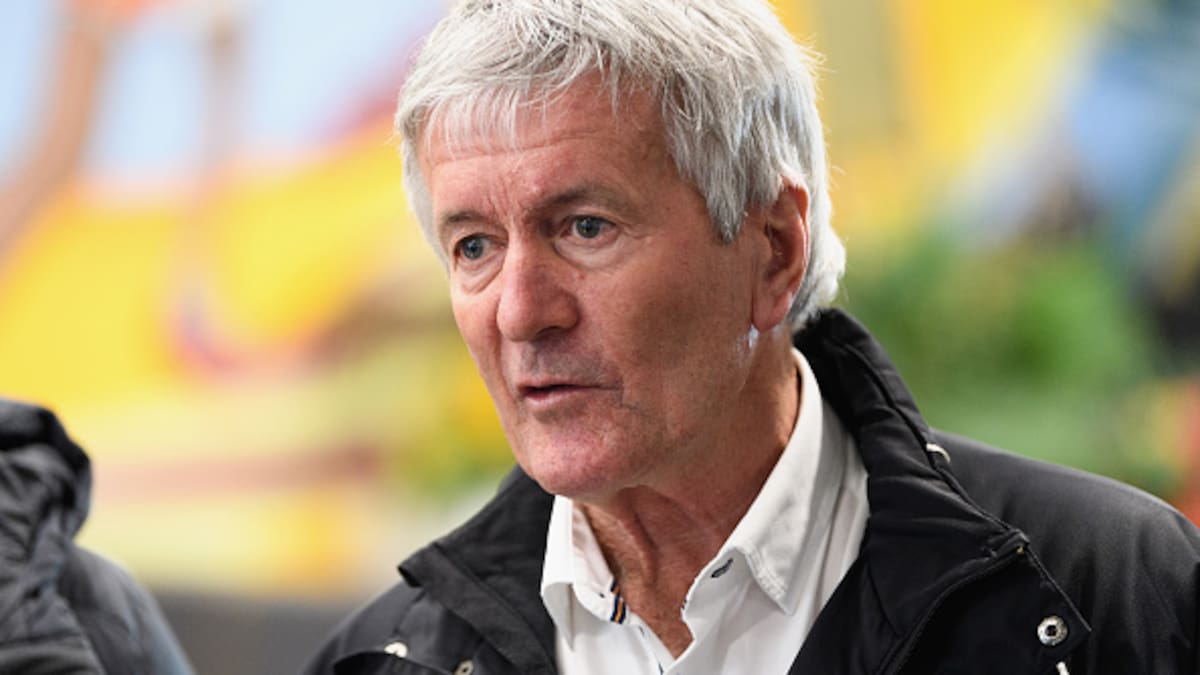
If it is Chris Hipkins in the box seat on election night, it could be difficult for him to be sworn in as Prime Minister within 10 days unless the result is clear-cut.
Sir John Key managed that feat in 2008, quickly negotiating confidence and supply agreements with the Act, Māori and United Future parties to form the fifth National Government.
Immediately after his first Cabinet meeting and swearing-in on November 19, 2008, Key flew to Peru to join international leaders addressing the unfolding global financial and economic crisis – the upshot of the Global Financial Crisis.
But the Greens are a much more significant player and want a seat at the table of a Labour-led Coalition. There is potentially Opportunity and Te Pāti Māori to contend with.
This is China’s third time hosting Apec. The first, in Shanghai in 2001, was just weeks after the September 11 attacks on the Twin Towers in New York.
A summit that had just welcomed China’s accession to the World Trade Organisation became dominated by security issues (although claims that China was manipulating its currency were also a point of contention from the US side, denied by the host).
China hosted again in 2014 in Beijing, with a focus on forming a Free Trade Area of the Asia-Pacific.
I went to the CEO summits held during those two Chinese-hosted Apec meetings and will do so again this year for what promises to be a tense affair, given that Donald Trump and Vladimir Putin will be there.
On October 19, the Kremlin said that Trump, Putin and Xi Jinping could meet alongside the Apec meeting. According to the Wall Street Journal, Putin proposed the idea during a phone call with Trump on October 9.
It has been referred to in some quarters as the “New Yalta”. But Trump has suggested that such a gathering should focus primarily on nuclear disarmament rather than Ukraine.
The Hudson Institute opined that the significance of such a summit would extend well beyond its immediate agenda.
“It would reflect a broader transformation in international relations: the growing temptation to replace established institutions, alliances and multilateral frameworks with direct transactions among great powers,” the US think tank said.
New Zealand is a founding member of Apec, the world’s largest trade forum.
The 2026 summit builds on work that this country’s leaders and officials established in 2021, when New Zealand hosted Apec virtually during the Covid pandemic.
The theme, “Building an Asia-Pacific community to prosper together”, is ambitious given the recent history of the US-China relationship.
Who will represent NZ?
Back to who gets to go. The final voting day is November 7.
But the official results will not be declared until November 27. The last day for the return of the writ, which is subject to any electorate recounts, will be December 3.
Unless a clear result is obvious at next Saturday’s election (and the leader of one of the two major parties concedes), it may take some time to form a Government, particularly if Opportunity is in the mix and tries to play the established parties off against each other.
In 2023, coalition-making was a drawn-out affair.
Outgoing Prime Minister Hipkins, who had conceded an election loss, could have chosen to go to San Francisco in a caretaker capacity. He chose not to, and outgoing Trade Minister Damien O’Connor was subbed in, taking part in the full leaders’ meeting alongside all the big political guns.
The press gallery pulled their bookings and stayed home to cover the protracted coalition negotiations between Luxon, Winston Peters and David Seymour.
Just a senior business journalist from RNZ and I were present, although I was there for the CEO summit, which sported impressive speakers such as former US Trade Representative Mike Froman, former US Secretary of State Condoleezza Rice and OpenAI’s Sam Altman, who got fired the next day … it was a mind fest.
O’Connor chaired a mini-ministerial discussion on the Comprehensive and Progressive Agreement for Trans-Pacific Partnership (CPTPP). He also engaged with the Biden-led Indo-Pacific Economic Framework talks, which Trump kicked to the kerb after winning the presidency again.
The prospect of Trump and Xi sitting down together at Apec is inevitably fuelling hopes that the world’s two most powerful economies can put their differences aside and strike a stronger trade truce.
Dr Zack Cooper, an American foreign policy specialist, has delivered a timely warning. The new buzzword surrounding the US-China relationship is “constructive strategic stability”, he says.
“If that were true, many Americans would be quite happy with that result,” he observed while delivering the Sir Howard Kippenberger lecture at Victoria University of Wellington. “The problem, of course, is that it’s not true.”
Cooper is one of the sharpest observers of US foreign policy, particularly as it involves Asia.
He has been in New Zealand this past fortnight as the 2026 Sir Howard Kippenberger visiting professor of strategic studies at Victoria.
He is a senior fellow at the American Enterprise Institute, where he studies US strategy in Asia, including alliance dynamics and US-China competition.
A new Yalta?
His assessment goes to the heart of the uncertainty facing Asia-Pacific economies. The question is not whether Trump and Xi can produce a cordial encounter, announce a deal or give markets a temporary lift. It is whether the two powers are prepared to confront the underlying disputes that continue to shape their relationship.
Cooper’s argument is that they are not there yet.
“The US and China have actually not resolved any of the core problems that we have in our relationship,” he said, arguing that both were sidestepping the most difficult issues, including the economic relationship and cross-strait tensions involving Taiwan.
Cooper is also sceptical of the “New Yalta” analogy.
At the original Yalta Conference in Crimea in February 1945, Franklin Roosevelt, Winston Churchill and Joseph Stalin met to discuss the final stages of World War II and the post-war settlement.
Yalta subsequently became shorthand for great powers carving up the world into spheres of influence.
The Soviet Union’s expansion of control across Eastern Europe, and the failure to honour commitments on free elections, helped to cement Yalta’s darker historical reputation.
The analogy is therefore politically charged. It suggests that the destinies of countries could be settled over their heads by a handful of powerful leaders.
Yet today’s strategic environment is fundamentally different. The US and China are not negotiating a post-war settlement after defeating a common enemy.
They are managing a long-running competition between different political and economic systems, with interests that extend across trade, technology, military security and international institutions.
For countries such as New Zealand, that distinction matters. The language of a new Yalta can obscure the complexity of the choices facing smaller states.
That’s why it is important that small states like New Zealand should be represented in Shenzhen.
Catch up on the debates that dominated the week by signing up to our Opinion newsletter – a weekly round-up of our best commentary.