
“It would need to be at least 1400-1500m, sealed. That’s probably a $20 million investment.”
The aerodrome today is used for gliders, skydiving and model aircraft flying.
For commercial aircraft, navigational aids and lighting would be required for Kaikohe, where an airstrip was built during World War II.
A better option might be further north, Russell said.
“The interesting one is Kaitāia has just upgraded its strip or is in the process of doing that.
“In terms of a gateway to the north, Kaitāia makes sense. Less so Kaikohe.”
The region could become “the new Queenstown of the north” if it had better infrastructure, Russell said.
The area had places of outstanding natural beauty, clean beaches and good surf breaks, including Ahipara, which Russell said could be a World Surf League venue.
The Far North was also less densely populated than the New Zealand average. Russell said some stretches of flat land suitable for airfields were available.
Some people in the industry have argued the country might have too many airports.
It was more a case of the country’s existing airports not being in the best places, Russell said.
Some civilian and military air traffic from Australia would benefit from being able to stop in Northland before proceeding to Pacific islands, he said.
A military-civilian runway in the north might also help Pacific search and rescue operations.
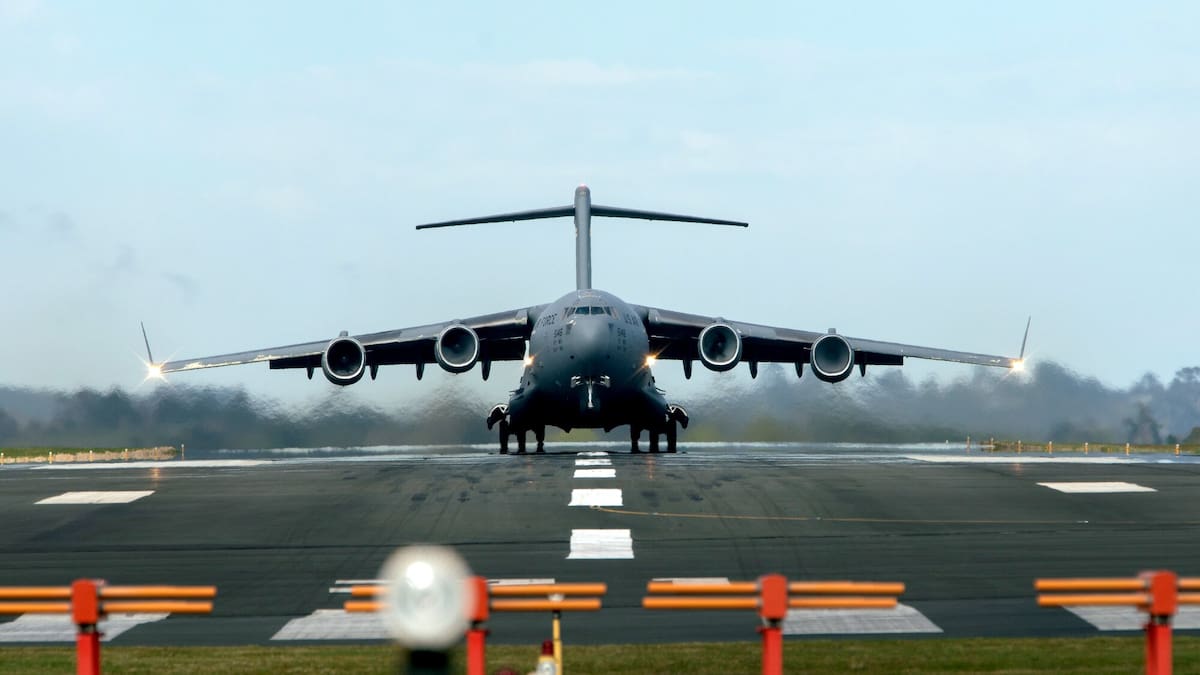
Russell said Royal Australian Air Force Boeing C-17 Globemasters based near Brisbane could use a bigger Far North airstrip as a transit point for deployments further afield.
He said the Far North was also an opportunity for a forward Royal New Zealand Air Force base.
He said the $20m investment required for paving, lighting and navigational aids at Kaikohe could be achievable for foreign investors.
A C-17 Globemaster III. This one belongs to the US Air Force and visited Whenuapai last month. Photo / Caleb Purcell
Far North District Council (FNDC) in a 2022 report said Kaikohe aerodrome’s location and size made it important for the district’s long-term strategic planning.
FNDC’s commercial arm Far North Holdings owns the airport land at Kaikohe and manages the airport at Kaitāia on behalf of the council.
The iwi Ngāi Takoto, and Ngāti Kahu hapū Te Paatu, Ngāi Tohianga and Patukoraha own Kaitāia Airport land and are leasing it to FNDC until 2059.
At Kaitāia, the main runway is being resurfaced, drainage improvements are completed and new
aircraft fuel facilities are being built. Photo / FNDC
Prime Minister Christopher Luxon today said he had no knowledge of any attempt to build a new Kaikohe airport.
“It’s not something that I’m well briefed on at all.”
The NZ Airports Association and Aviation Industry Association were also unaware of the Kaikohe project or talks Peters referred to.
Aviation historian Reverend Dr Richard Waugh said Union Airways and the former NZ National Airways Corporation started regular air services to Kaikohe and Kaitāia in 1947, part of an efficient network of postwar airline services.
Waugh in his 1998 book Electra Flying – the Lockheed 10 Electra in New Zealand and the Pioneering of the Main Trunk Air Service, said Kaikohe and Kaitāia had especially long runways and excellent surfaces because they were built during World War II.
Available evidence suggested regular passenger services to Kaikohe were abandoned in the 1980s.
A meth addict was jailed in August for a series of break-ins at Kaikohe Gliding Club earlier this year.
“We’ve got to make sure that Kaikohe’s law and order was enhanced very, very quickly,” Peters said during a public meeting in Ōrewa on the weekend.
Far North airports
Kaikohe: 1518m grass runwayKaitāia: 1402m sealed runwayKerikeri/Bay of Islands: 1190m sealed runway
John Weekes is a business journalist covering aviation. He also has experience covering courts, consumer affairs, crime and politics.
Stay ahead with the latest market moves, corporate updates, and economic insights by subscribing to our Business newsletter – your essential weekly round-up of all the business news you need.