
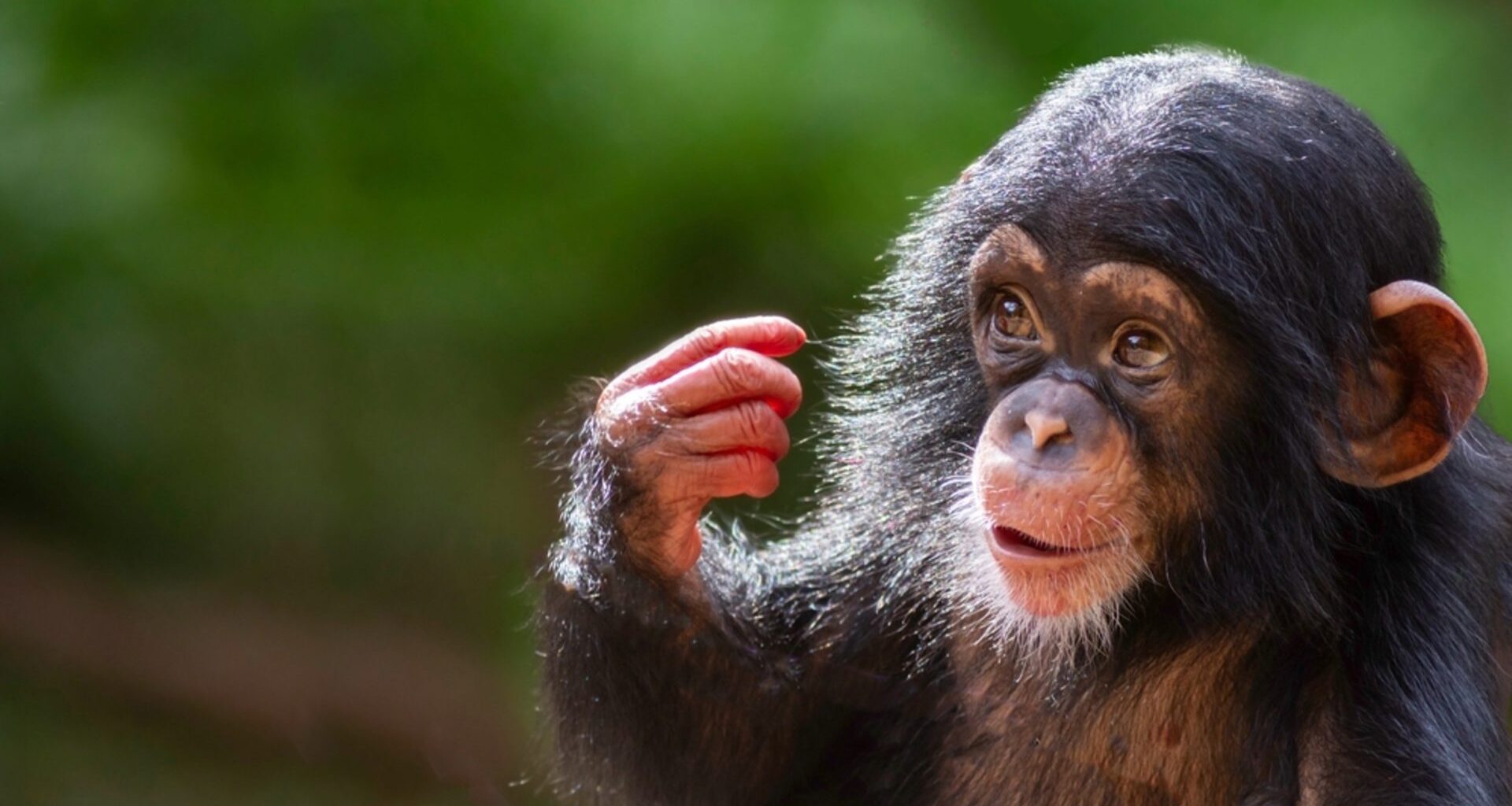
Textbooks say human birth is uniquely hard because of our big heads. A new primate comparison found squirrel monkeys, bushbabies and others face an even tighter fit.
For decades, textbooks have taught for decades that human birth is uniquely hard because newborns carry large heads and mothers have narrow hips suited to walking upright.
Researchers who compared birth canals across primates found that several monkeys and bushbabies face an even tighter fit than humans do.
The team’s 3D models estimate that a newborn squirrel monkey‘s head has almost twice the area of the bony opening it has to pass through. Squirrel monkeys do give birth, though, and the researchers describe how they manage it.
Scientists at UCL Anthropology in London built the models from bone scans of 130 adult females and head measurements of 40 newborns, covering 29 species. The team watched no births. It measured how a head fits inside a ring of bone, not how any delivery went.
“Much of the data that informed earlier studies was flawed,” said Dr. Nicole Torres Tamayo, a co-corresponding author of the study. Earlier work measured monkeys as it would a human pelvis, she said.
Redrawing a famous diagram
In the 1940s, the primatologist Adolph Schultz compared the birth canals of a handful of primates. His diagram showed a snug fit in humans and plenty of room in most other primates, and textbooks still reproduce it.
The new team found two problems. Schultz measured the opening from the pubic bone at the front to a bump on the sacrum, the triangular bone at the base of the spine. That distance is often the narrowest gap in a human pelvis, but it usually isn’t in monkeys.
He also measured a newborn’s head as if it came out crown first, as most human babies do. Many monkeys arrive face first, which presents a smaller head.
The team used species-specific measurements. In non-human primates, the opening was, on average, 11% smaller than the old method suggested, and in a few species, more than 18% smaller.
Small primates fit tightest
For each species, the team divided a newborn’s head area by the opening’s area. A ratio of 1 means the head just fills the opening; above 1 means the modeled head is larger.
In humans, the head nearly fills the opening. That is the tightest fit among living apes.
Several monkeys beat the human fit. The ratio was 1.92 in squirrel monkeys and 1.87 in tamarins, and bushbabies and patas monkeys also fit more tightly than humans.
Across all 29 species, the smaller the mother, the tighter the fit tended to be. Newborn squirrel monkeys and cotton-top tamarins weigh about 10% to 15% of their mothers’ weight, and small primates tend to have small openings.
In humans, a large newborn head and an unusually small opening for an ape our size combine to produce the tight fit, the authors wrote. The human fit is tight. It just isn’t unusual.
Face-first births ease the fit
A tight fit on paper doesn’t always mean a hard birth, and the authors say so themselves. When the team measured a head face-first, its area came out 23.6% smaller on average than when it measured the same head crown-first. Human babies usually arrive with the back of the head first, which also presents a small head.
Hip joints help too. Dr. Lia Betti, the other co-corresponding author, said female rhesus macaques fuse their pelvic bones later than males do. She said bushbabies never fuse theirs, which lets the pelvis widen during birth.
A 1995 doctoral thesis the paper cites took X-rays of baboons and squirrel monkeys in labor. Their hip bones briefly separated, widening the opening by 30% in baboons and 100% in squirrel monkeys.
The cost is still real. In a captive squirrel monkey colony, 16% of infants were born stillborn, and 34% died within 100 days.
Japanese macaques, which also have a tight fit, did better. In a 2024 study, researchers monitored 281 of them for 27 years and found no maternal or newborn deaths linked to birth.
Fossil teeth test another idea
None of this erases the trade-off in humans. The same pelvis that evolved for walking upright also has to deliver the baby.
In 1960, anthropologist Sherwood Washburn proposed that human babies are born less developed than other primates’ babies, with more brain growth after birth.
That keeps the head small enough to pass through the birth canal and leaves infants dependent. Fossil skulls suggest Homo erectus babies were helpless too, more than a million years ago.
A second idea says big brains stretched out human childhood. Fossil teeth from an early Homo individual in Georgia, about 1.77 million years old, led another team to suggest that a long childhood may have come first.
A 2026 analysis found that in several primate lineages, body size grew first and brain size followed. Another study argued that glucose from fruit and honey may have helped fuel a big brain.
What remains unknown
The team measured only the pelvic inlet, the bony ring at the top of the birth canal. Most primates lack measurements of how far the pelvic joints loosen during labor and how much the sacrum tilts.
A 2024 chimpanzee study reported that chimpanzees and humans have a similar fit. The new authors found chimpanzees to be roomier and said the methods differ.
The 2024 team measured lower in the canal, near the end of the sacrum, while the new team stayed at the inlet, where the bones form a full ring.
Tamarins often have twins, and the data doesn’t separate them from single births. Captive animals, which often need cesarean sections, tend to be overfed and less active than wild ones, and that may raise their risk of complications. A tight fit in the models also doesn’t measure how hard a birth was.
Researchers also lack comparisons of newborn shoulder width, and they have yet to survey the soft gaps between newborn skull bones across primates. Until those numbers exist, a tight fit shows where birth could be hard. It doesn’t show how often it was.
The full study was published in the journal Nature Ecology & Evolution.
How to get involved
Follow the IUCN SSC Primate Specialist Group to track wild primates. The group’s experts assess every species for the Red List, and close to two-thirds are threatened.
Donate to the Duke Lemur Center to back research on lemurs and bushbabies. Gifts, grants, tours, and shop sales fund about half of the center’s work.
Support Every Mother Counts to fund safer childbirth. This nonprofit gives grants to maternity care programs in places including Bangladesh and Tanzania.
—–
Like what you read? Subscribe to our newsletter for engaging articles, exclusive content, and the latest updates.
Check us out on EarthSnap, a free app brought to you by Eric Ralls and Earth.com.
—–