
ISTANBUL, Turkey — Turkish retailer Beymen has made a bold bet on luxury with the opening of its largest store to date, located in Istanbul’s emerging Tersane district.
Formerly a military-controlled zone, the waterfront area in the Golden Horn is being repurposed into a mixed-use development that aims to cater to the country’s growing luxury cohort and well-heeled tourists with a mix of high-end hotels, innovative shopping formats and cultural experiences.
At the center of it lies Beymen Tersane — Galleries of Luxury, a 130,000-square-foot multibrand store that has taken residence in a 600-year-old former Ottoman naval shipyard.
Designed by Dutch architect Rem Koolhaas’ OMA agency, it is the most sophisticated expression to date of Beymen’s luxury strategy under the ownership of Qatari investment fund Mayhoola for Investments, its sole owner since 2019.
One year after opening to the public, the store on Saturday celebrated the launch of an exhibition of exceptional handbags that illustrates how contemporary designers have tapped into the rich cultural heritage of Anatolia and the Ottoman Empire.

Diana Ross performs at a gala event at Tersane Istanbul Event Hall.
REHAALAN_PHOTO
Guests at a welcome dinner on Friday included Alessandro Michele and Antonin Tron, creative directors of the Mayhoola-owned luxury brands Valentino and Balmain, respectively, while Nicky Hilton, Giuseppe Zanotti and Harry Nuriev were among the 700 revelers at the next day’s bash, which ended with a concert by Diana Ross.
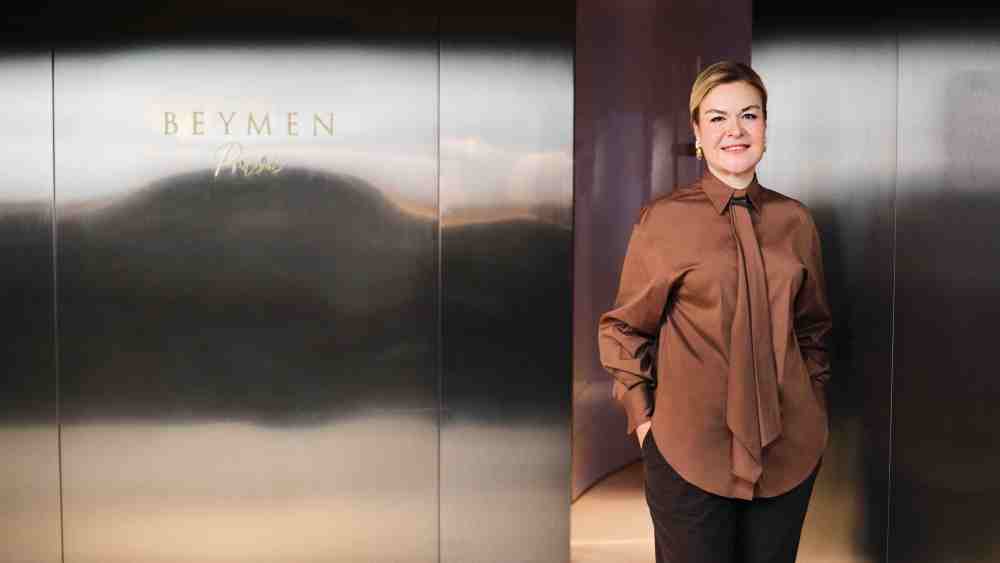
Beymen Group chief executive officer Elif Çapçı sat down with WWD to discuss why Turkey’s luxury market has so far defied a global slowdown, how the retailer is tapping into new growth engines like beauty, and why she’s confident that Tersane will become one of Istanbul’s prime luxury shopping districts.
“This is more than a store for us. From a business perspective, it is now our biggest store, so there is a sizable business plan and a big expectation for this business to scale up,” she said.
The project was four-and-a-half years in the making. When Fettah Tamince, the driving force behind Tersane Istanbul, reached out to Beymen, the area was a wasteland. Picturing the final development, with an estimated global investment of more than $2 billion, required a leap of faith.
“I was very scared, to be honest,” Rachid Mohamed Rachid, CEO of Mayhoola and chairman of Beymen, said during a visit to the store on Saturday. Adding to the challenge, Beymen had to conjure a world-class retail experience without touching the walls of the historical structures, requiring an innovative architectural approach.
The waterfront Beymen Tersane store in Istanbul.
Courtesy of Beymen Group
Turkey’s leading luxury retailer, it jumped at the opportunity to anchor the area, which eventually hopes to draw 45,000 to 60,000 visitors per day, with peaks exceeding 100,000 during weekends and major art events like Contemporary Istanbul, according to local media reports. Beymen has invested close to 20 million euros in the store.
“Forget what is happening in the rest of the world: The reality of luxury in Turkey is that it’s a growing market and it will continue to grow,” Rachid said. “We could not miss a location like this. We have to be here, and we have to be the biggest store.”
Bring the Drama
Unlike a traditional department store, Beymen Tersane has a horizontal layout, with nine interconnected fashion galleries, each dedicated to a specific segment and distinguished by unique color palettes and materials. The front of the store looks out over the Bosphorus and the colorful houses of the trendy Balat district.
“If you’re in a shopping mall, what you can do and how you can make the customer feel is very different than an environment like this. We have probably one of the best views of the town,” Çapçı noted.
With its spectacular volumes, the interior is a showcase for works of art, such as a flying sculpture by Portuguese contemporary artist Miguel Rodrigues, and furniture by the likes of Mario Bellini, Verner Panton and Patricia Urquiola, alongside custom pieces crafted by South Korean designer Saerom Yoon.
The Beymen Tersane store in Istanbul.
Courtesy of Beymen Group
“I always say in multibrands, the drama effect is important, because you have very strong monobrand competitors,” Çapçı said. “Also digital is growing very significantly, so multibrand stores have to be beyond transactional shopping.”
Beymen Tersane has an in-house restaurant, Bardot Bleu, and a coffee shop operated by Golden Goose. The first floor houses a homewares department and four VIP shopping suites, and there are dedicated spaces for pop-ups and temporary exhibitions.
“Definitely, this store allows us to step up in terms of the way we look at experiential retail,” Çapçı said.
The new exhibit, “Timeless Treasures — The Eternal Journey of the Bag,” features 80 ornately embellished bags from 55 luxury brands including Dior, Etro, Dolce & Gabbana and Roger Vivier — many of them created exclusively for the event.
They are displayed alongside the three winning designs of the Beymen Young Talents Design Competition for local university students, and a Louis Vuitton wardrobe trunk made in 1886 for Sultan Abdülhamid II.
The “Timeless Treasures — The Eternal Journey of the Bag” exhibition.
Courtesy of Beymen Group
Curated by Laurence Benaïm, who previously worked with Beymen on its “Golden Opulence” 50th anniversary exhibition and a companion coffee table book by Assouline, the display boasts an immersive midnight blue set design by Bureau Betak.
Set to remain open until Feb. 6, it’s one of several initiatives designed to attract foot traffic to the Tersane enclave, which is coming up in stages.
Phased Expansion
An adjacent open-air luxury mall, designed by Foster + Partners, is set to be completed by September 2028. A scale model of the project indicates future tenants will include Chanel, Louis Vuitton and Miu Miu, among others.
Another mall, which is already operational, houses mainly high-street brands like Sephora, Gap, Levi’s and Victoria’s Secret, alongside a Chanel fragrance and beauty boutique. There are two hotels, Aliée and Rixos, with a third in the works, and future plans include two marinas, two museums and a new ferry stop.
“That means we have a business plan that’s quite phased — not a very aggressive business plan, I must be very open about that. But we are running slightly ahead of that business plan. We are happy with the direction,” Çapçı said.
She expects Beymen Tersane to overshoot its first-year sales target by around 15 percent, with a particularly strong response from international visitors, who account for 18 percent of sales at the store, compared with an average of 10 percent across Beymen’s other multibrand locations.
An Etro by Marco De Vincenzo bag designed for Beymen for the “Timeless Treasures — The Eternal Journey of the Bag” exhibition.
Courtesy of Beymen Group
Recent additions to the complex include a Starbucks flagship featuring a dedicated Turkish coffee craft showcase. “The Starbucks has been open for 10 days only, and the team downstairs were saying they started to feel the impact,” she said.
Other tenants have also come in with special formats, like Golden Goose’s artistic and creative hub Haus Istanbul, and they are organizing customer events, such as Alo community and wellness meetups, to familiarize locals with the destination.
“It’s really in the heart of Istanbul but for centuries, it was always military, so the public was not allowed, and we don’t have the memory of coming here and spending time. It takes some getting used to,” Çapçı said. “Every newcomer brings something.”
In the meantime, Beymen Tersane is heavily dependent on VICs. “The traffic will grow over time, but the customers who come here, the ticket sizes are much bigger,” she explained.
Beymen expects Tersane will eventually rival its top two luxury retail developments in Istanbul: Zorlu Center and İstinyePark.
The Beymen Tersane store in Istanbul.
Courtesy of Beymen Group
“We see signs of that happening. What’s very crucial for that is obviously how the monobrands, the direct operators, view this location. Almost all of them signed up for the upcoming luxury part, so we’re excited, and we are increasingly relieved that this is developing as intended,” the executive said.
Beymen Group overall is in growth mode. The retailer, which has a total of 290 locations, expects to post revenues between 1.4 billion euros and 1.5 billion euros in 2026, up from 1.3 billion euros in 2025. Revenues in the first nine months of the year were up 15 percent year-over-year in euro terms, Çapçı said.
Aside from fueling a global increase in oil prices, the conflict in the Middle East has had no direct impact so far on customer demand or logistics in Turkey, despite the fact that the country shares a border with Iran, she reported.
“If anything, what we are seeing is a bit of traffic being diverted to our side from Dubai,” she said, noting a rise in Russian shoppers.
Tourism accounts for just 15 percent of Beymen’s revenues, according to Rachid. Instead, the group is banking on sustained growth in domestic luxury demand, fueled by rising disposable incomes among the expanding middle class.
The Beymen Tersane store in Istanbul.
Courtesy of Beymen Group
“In Turkey and in the Middle East, we know disruption. We know that every year, every two years, there’ll be some reason that you will see tourists coming down and then coming up again,” he said, cautioning against over-reliance on tourist income.
“We had two decades of globalization. I think we are going to see more localization now, so you are going to see more interaction with local cultures and local artworks and local workmanship,” Rachid predicted.
Future Potential
The group runs 25 Beymen department stores in nine Turkish cities, including two locations that opened in September in Istanbul, where it does half its luxury business. Due to the geographical layout of the city, Beymen has also opened smaller neighborhood formats of between 32,300 square feet and 43,000 square feet.
“We obviously have a certain DNA for Beymen, but every store is designed from scratch,” Çapçı said. “No two stores are the same, neither in terms of design nor the collection, the brand mix. The portfolio varies. The design varies. We try to fit in to the location.”
The Beymen Tersane store in Istanbul.
Courtesy of Beymen Group
It also operates 56 monobrand boutiques for partner brands, a roster that has expanded with its acquisition in July of Dilasima Group, whose portfolio includes Max Mara, Boggi Milano and Furla. Openings in the pipeline include boutiques for Valentino, Ferragamo, Pucci, Zadig & Voltaire and Toteme.
Beymen has also introduced a new stand-alone beauty format, Beymen Beauty Studio, or BBS, to cater to rapidly growing demand for categories including niche fragrances, makeup and skin care. Launched last year, it has three locations so far in Istanbul, with a further four planned for next year.
“We don’t have enough space for it in the stores,” she said of the beauty category. “So this became a very obvious business opportunity for us. In order to grow, we have to go outside of the stores.”
Beymen expects to eventually open 30 BBS stores in a dozen key cities. The timing of the rollout will depend on the availability of prime real estate in upscale, high-traffic zones, Çapçı said. It has also rebranded its beauty departments inside the stores as BBS, with a single loyalty program across all locations.
The Beymen Tersane store in Istanbul.
Courtesy of Beymen Group
The retailer continues to invest in e-commerce, which accounts for 30 percent of revenues in luxury and beauty, with a targeted high-end offering.
“The offer now on Beymen.com, whether you’re looking for a gift for your kid, or a technology item, or a hobby, it’s there in a very selective, curated way. So all these are different growth channels for us,” she said.
Looking ahead, Çapçı sees continued strong motors for growth in the Turkish luxury market.
“This geography is a strong market for luxury for a number of reasons. It’s a big population. We are more than 86 million people. It’s a young population. In its essence, it’s an emerging market, and it’s aspirational,” she said. “It’s a global clientele and it’s a sophisticated clientele. Fashion plays a big role.”
Due to the country’s history of chronic inflation, the majority of transactions are conducted through credit cards which offer payment in installments, which also supports consumer spending. Added to that, Istanbul and Antalya are now among the world’s top 10 most visited cities, according to Euromonitor International’s Top 100 City Destinations Index 2025.
“Despite luxury not doing great over the last years, this has been a much more resilient and growing market, and the rest depends on how well you execute,” Çapçı said. “We continue to invest because we believe in the future potential.”