
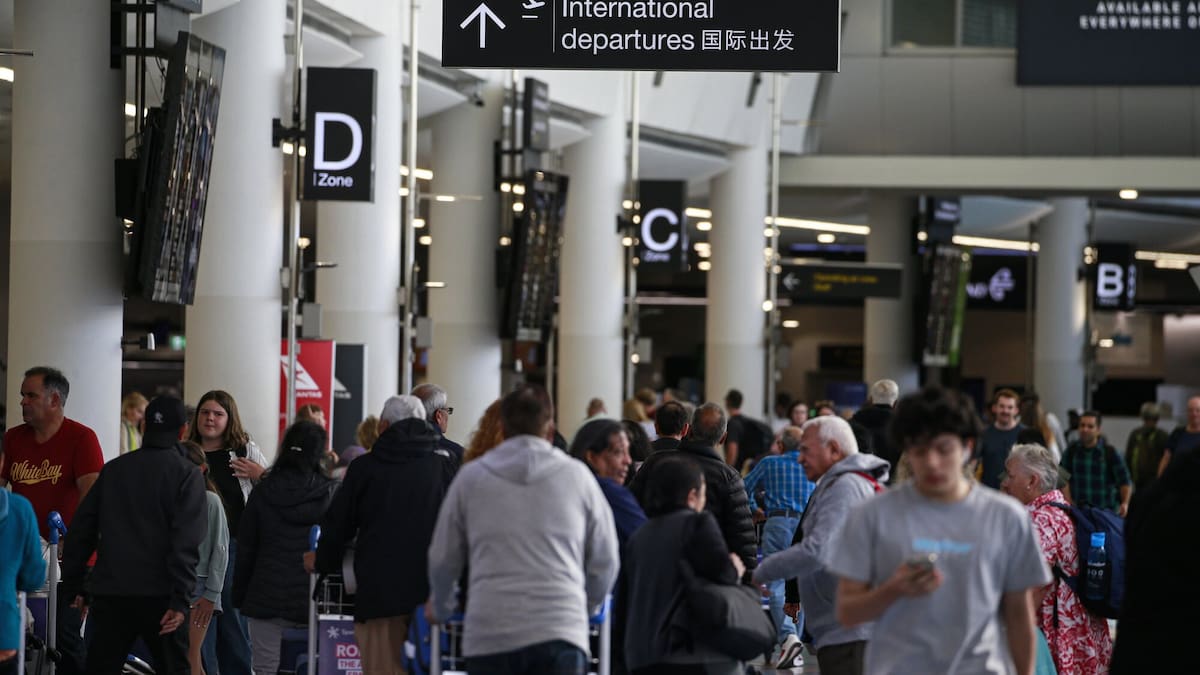
Auckland Airport chief operations officer Chloe Surridge said the airport was required to have qualified rescue and firefighting staff available at all times for flights to operate.
“With all members of its AES team covered by the strike notice, the notified strike action would leave the airport without the people required to maintain that service.
“If the strike activity goes ahead as notified, flights may need to be cancelled or diverted … causing significant disruption to tens of thousands of travellers as well as the airlines, freight operations, exporters and businesses that rely on the airport.”
E tū assistant national secretary Mat Danaher said workers wanted pay that reflected the physical and psychological demands of their roles.
“When something goes wrong on that airfield, these are the people who run towards it.
“They protect passengers, airport workers, and the public, and they have to be fit, sharp, and ready every single shift.”
The team provides aviation firefighting, rescue, marine response and medical care across the airport and on the Manukau Harbour.
E tū said the airport’s live-fire training facility had closed after “years of underinvestment”, forcing firefighters to travel to Singapore for five days each year to meet Civil Aviation Authority requirements.
From next year, the training would require two five-day trips annually.
“Firefighters are being flown to Singapore to keep their skills up, away from their partners and kids, and the airport won’t properly compensate them for it. That cost is landing on firefighters and their families,” Danaher said.
“Auckland Airport made $309 million in underlying profit last year and paid out $224.9 million in dividends. It can afford to do right by the team that keeps it open.”
The airport was working through contingency plans to minimise disruption, while passengers were being encouraged to check with their airlines for updates.
Surridge said the emergency staff were valued members of Auckland Airport and the company remained committed to reaching “a fair and reasonable agreement through constructive negotiation”.
“We are encouraging E tū to continue working with us at the bargaining table so this disruption can be avoided.”
Danaher said the union also wanted to avoid disruption to travellers.
“Nobody wants to strike and nobody wants travellers caught up in this. We continue to bargain with the company in good faith and we want to reach a deal – this could be resolved tomorrow if they make a reasonable offer.”