
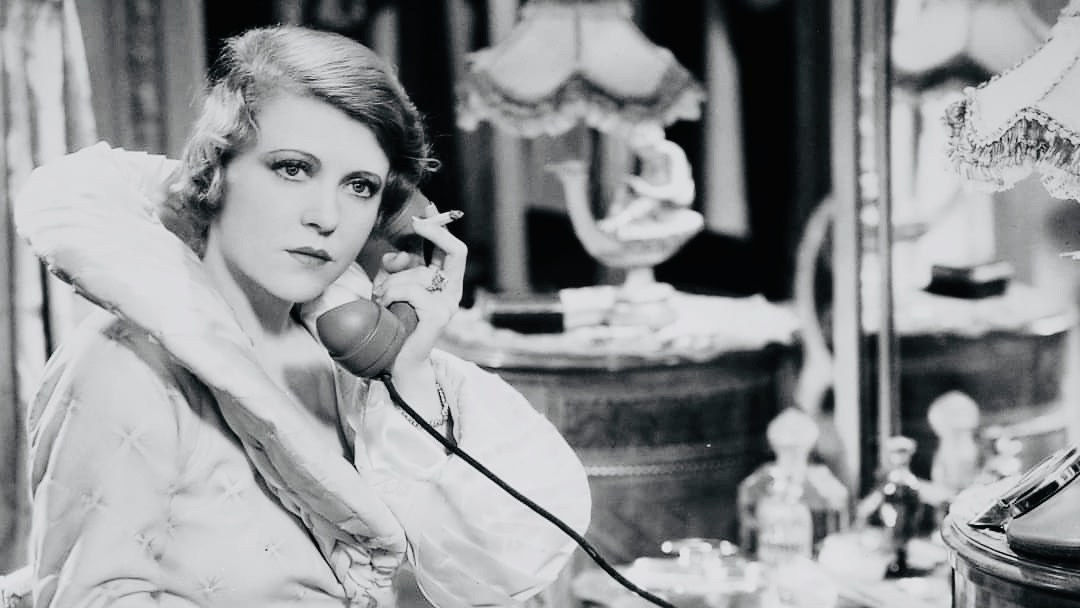
F Scott Fitzgerald didn’t get it quite right. Prohibition America was drunk all right, although not so much on gin rickeys as on the stock market. With liquor outlawed, speculation became the nation’s legal intoxication. Speakeasies buzzed in the shadows, but the real action was on Wall Street, where a different sort of binge unfolded.
Financiers were not quite pin-ups in the Roaring Twenties, but their faces graced those new bibles of pecuniary ambition, Time and Forbes. And it was no accident that Ruth Chatterton’s guileful heroine in the 1932 flick The Crash seduced money men for their stock tips.
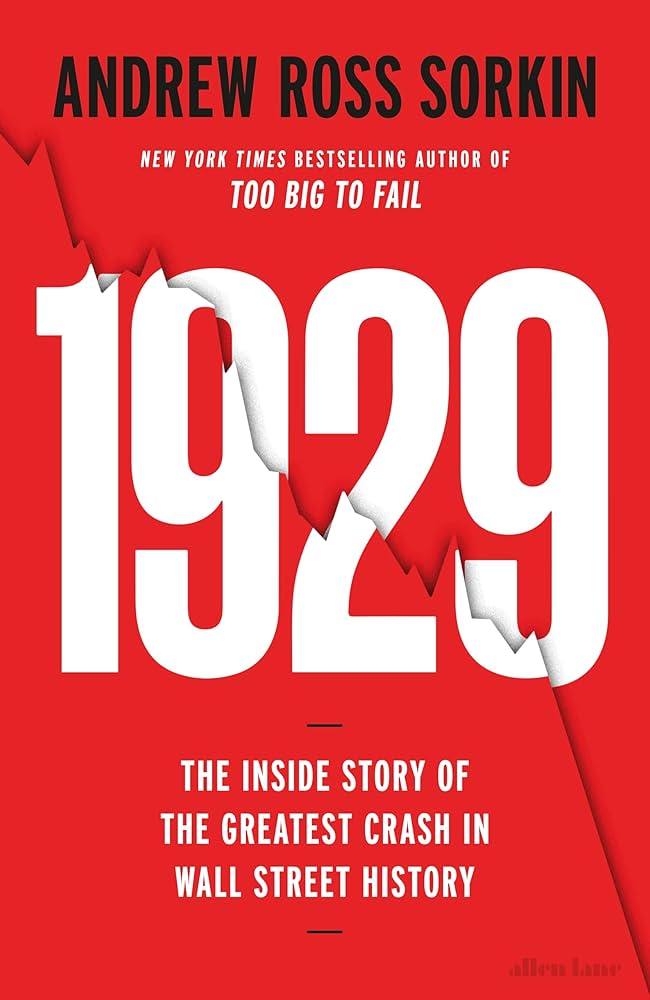
Andrew Ross Sorkin, whose instant history Too Big to Fail defined the story of the 2008 financial crisis, turns his gaze backwards to an earlier frenzy of leverage and illusion in this pacey, blow-by-blow account of the 1929 crash. He reconstructs a Wall Street that is at once a period piece and familiar setting: ticker tapes instead of Bloomberg terminals, mahogany offices instead of glass towers.
It was an age inebriated on invention: washing machines and vacuum cleaners, talkies and automobiles. The Radio Corporation of America was the Nvidia of its day, its share price up fiftyfold in seven years. The new gospel was debt: buy now, pay later. This applied to stocks as well. Faith in an ever-tumescent capitalism was the national creed. “You don’t see any Fifth Avenue mansions built by bears,” went the saying in this bull market.
• Stop mocking us millennials — the 2008 crash ruined our lives
The Empire State Building was conceived in that fevered climate, just before the perpendicular plunge of October 24, 1929, Black Thursday, when the music stopped. By the time the art deco eyesore opened two years later, in the depths of the Depression, it stood as a mausoleum of vanished dreams. Wags called it the Empty State Building.
Sorkin’s book is, in the main, a gallery of finely drawn pen portraits. We have the whip-smart, high-strung Jesse Livermore, who made pots of money shorting the market on Black Thursday, only to lose it all betting against the recovery. In 1940, the short seller turned his pistol on himself. “The bullet tore through his skull,” Sorkin helpfully tells us.
Then comes Carter Glass, the folksy Southern Democrat who loathed the “money devils” of the northeastern banking elite and the black voters he sought to disenfranchise. Raging at the inequities of finance while entrenching older and crueller injustices, he emerged as the presiding spirit behind the Glass-Steagall Act, which drew a regulatory line between investment and commercial banking.
The cast, inevitably, is mostly male, although we have a cameo from Evangeline Adams, the astrologer-turned-stockpicker who advised her clients — Charlie Chaplin, Mary Pickford, even JP Morgan — to buy according to the zodiac signs. “The Dow Jones could climb to heaven,” she declared, before losing $100,000 on Black Thursday and instructing her broker to sell everything.
• The Trolls of Wall Street by Nathaniel Popper review — the gamer geeks who beat the hedge funds
Meanwhile, Pat Bologna, a bootblack, invested the bulk of his life’s savings in National City Bank on the advice of its chief executive, whose shoes he polished daily. The bank collapsed, and Bologna’s nest egg vanished. Below stairs, the mood was bleaker than upstairs, as The Times’s foreign correspondent Claud Cockburn observed from the dining room of the financier James Speyer; the meagre investments of his kitchen staff were unravelling before their eyes while Speyer calmly ate pompano and a saddle of lamb.
In Twenties America insider trading was not a crime but a craft. Wall Street was the Wild West in pinstripes. Small wonder so many innocents, seized by fomo, were duped. Winston Churchill, a latecomer to the speculative carnival, was also taken in. Visiting America in 1929, he marvelled that, unlike in the old world, “the old antagonism between the millions and the millionaire had become obsolete”. In the US, he wrote, capitalism advanced under the banner of “high wages, enough leisure to spend them in, and better times for all”. He had spoken too soon. On the day of the crash, Churchill recorded an auto-defenestration: “Under my very window, a gentleman cast himself down fifteen storeys and was dashed to pieces.”
In the months after the crash America remained in denial. The New York Times didn’t even rank it the biggest story of 1929. That honour went to Admiral Richard Byrd’s flight to the South Pole. In the 1932 election it was not economics but alcohol that decided the outcome. Franklin Delano Roosevelt triumphed because he opposed Prohibition. Herbert Hoover, its dour defender, found himself arrayed against a large majority of Americans who detested the dry regime.

A cartoon published in The New York World three weeks before the stock market crash on October 24, 1929
SHUTTERSTOCK
At first Wall Street’s collapse seemed confined to itself. Then the contagion spread to Main Street: banks failed, breadlines lengthened, industrial output halved, unemployment soared past eight million. Shanty towns, soon christened “Hoovervilles,” sprouted on the edges of every city.
The cult of the financier did not die easily. Its eventual executioner was Ferdinand Pecora, the Sicilian-born prosecutor who led the Senate investigation into the crash, extracting confessions from “banksters”. Lacking their club ties and old-school polish, Pecora was immune to their charm. Out of his work came Glass-Steagall, deposit insurance, the Securities and Exchange Commission and new powers for the Fed, the central bank.
Sorkin doesn’t tax our simple minds with complicated explanations. Indeed, he elects to present his story as a morality tale, cautioning us against greed and consigning the banksters to Dante’s fourth circle of hell (for the avaricious and prodigal). “We all love an easy buck,” Sorkin preaches. “Temptation has driven human folly for centuries, whether the serpent in the Garden of Eden or the market manias of cryptocurrency or artificial intelligence.” With his perches at CNBC and The New York Times, Sorkin is a clever enough fellow, so I suppose this editorial decision to swap explanations for vignettes constitutes a kind of intellectual slumming.
• Read more book reviews and interviews — and see what’s top of the Sunday Times Bestsellers List
The cupidity of bankers, of course, only caused the crash. It did not cause the depression. The bigger and more interesting story is the deflation and monetary contraction that followed: the money supply shrank by a third, banks failed by the thousands, credit vanished. The Fed, barely 16 years old, tightened policy instead of easing it, afraid of losing gold reserves. Bound by those “golden fetters”, as the economic historian Barry Eichengreen has called them, the economy bled out.
Money fled into mattresses. Confidence, the oxygen of capitalism, was gone. Keynes’s A Treatise on Money, published in 1930, argued that government spending was the only antidote to such paralysis. But Washington and the federal government, still running a surplus, believed thrift was virtue. It would take Roosevelt, Pecora and a decade of hardship to prove otherwise. Sorkin’s book, for all its colour, leaves that harder lesson largely untold.
The lesson, it seems, has now been unlearnt. Once again, the star of the financier is in the ascendant, and contempt for regulation has returned with it. One recalls JP Morgan’s sneer at Pecora’s hearings: senators, he said, were “sex-suppressed old maids who think everybody is trying to seduce them”. That same hauteur drips today from Silicon Valley’s titans, who mistake scrutiny for sacrilege.
The 40 leading stocks rose 42 per cent in the year before the crash. Today, the Nasdaq, I nervously note, is up 50 per cent since April. When this bubble bursts, Sorkin will no doubt find a fresh audience. But shun the market at your peril. Since Sorkin’s birth in 1977, the Nasdaq has risen 4,000 per cent in real terms; real wages in the US, by contrast, a meagre 12. Here, in a nutshell, lies the celeb economist Thomas Piketty’s original insight from his slab of a book Capital in the Twenty-First Century: money is better at making money than you are.
1929: The Inside Story of the Greatest Crash in Wall Street History by Andrew Ross Sorkin (Allen Lane £30 pp400)