
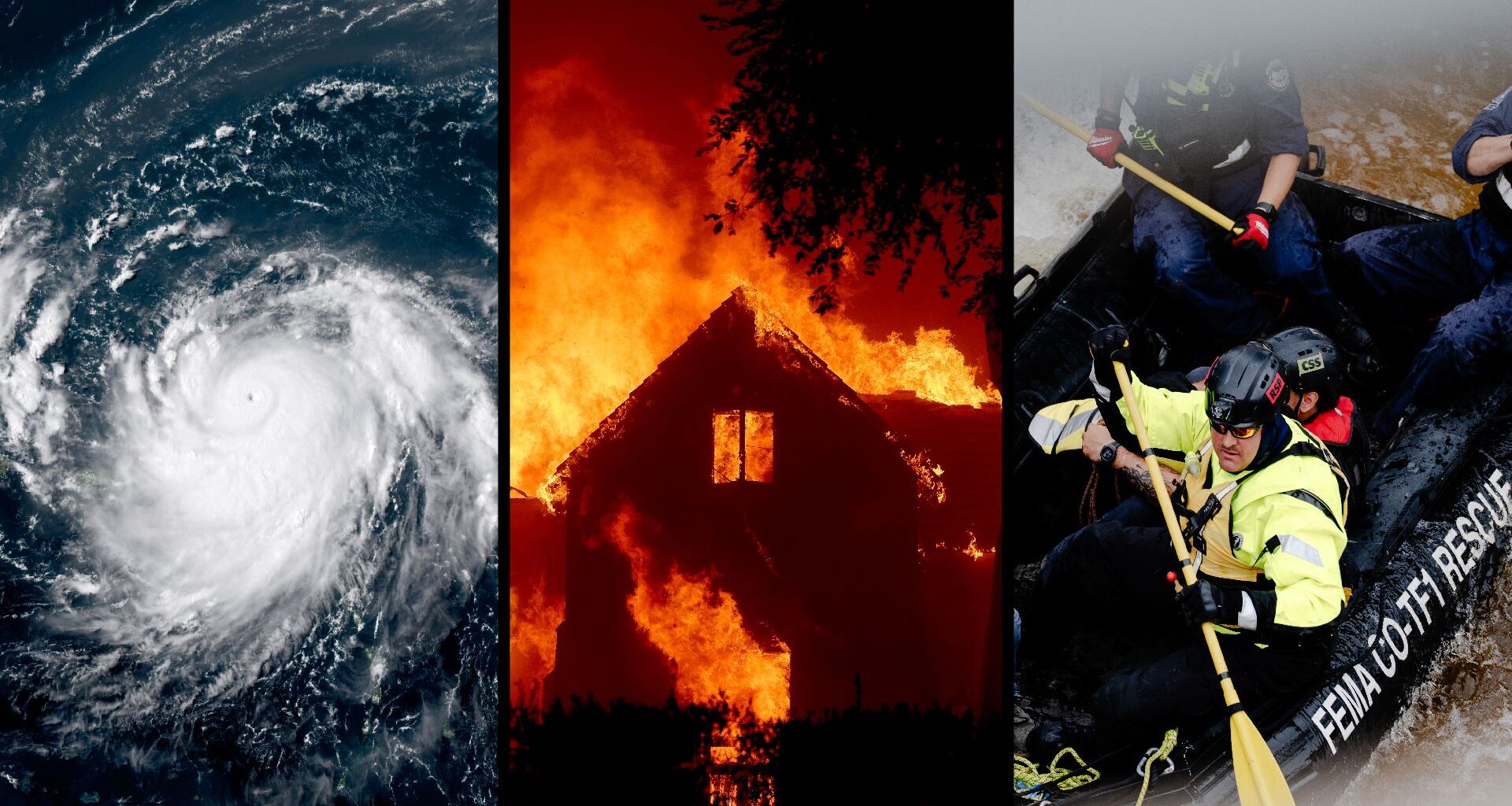
The first half of 2025 logged the most damaging extreme weather on record in terms of cost, even after accounting for inflation, data shows.
This is partly because of a handful of extraordinary events, such as the Los Angeles wildfires. But the number of natural disasters that struck this winter was also “exceptional,” Paul Ullrich, a professor of regional climate modeling at the University of California, Davis, told Live Science.
You may like
This is part of a larger trend. Natural weather disasters have become more frequent and destructive over the past several decades as a result of climate change and land use changes, and that trend is likely to continue.
“As long as we continue to warm the planet, we can expect extreme weather to grow more severe and more frequent,” Kristina Dahl, a climate scientist and vice president for science at Climate Central, told Live Science in an email. “Combine that with our propensity to build communities in areas prone to climate-related hazards — think of the heavily built-up shoreline along the hurricane-prone coast of Florida or of small California communities tucked up against flammable forests — and we can expect the economic cost of those events to continue to rise as well.”
So far, these natural disasters haven’t led to a dramatic increase in deaths, due in part to advances in weather forecasting and early warning systems that help get people out of harm’s way, experts say. But as climate change intensifies, that could change, as some disasters are projected to increase in parts of the U.S., such as floods and regional heat waves, will be more difficult for people to avoid.
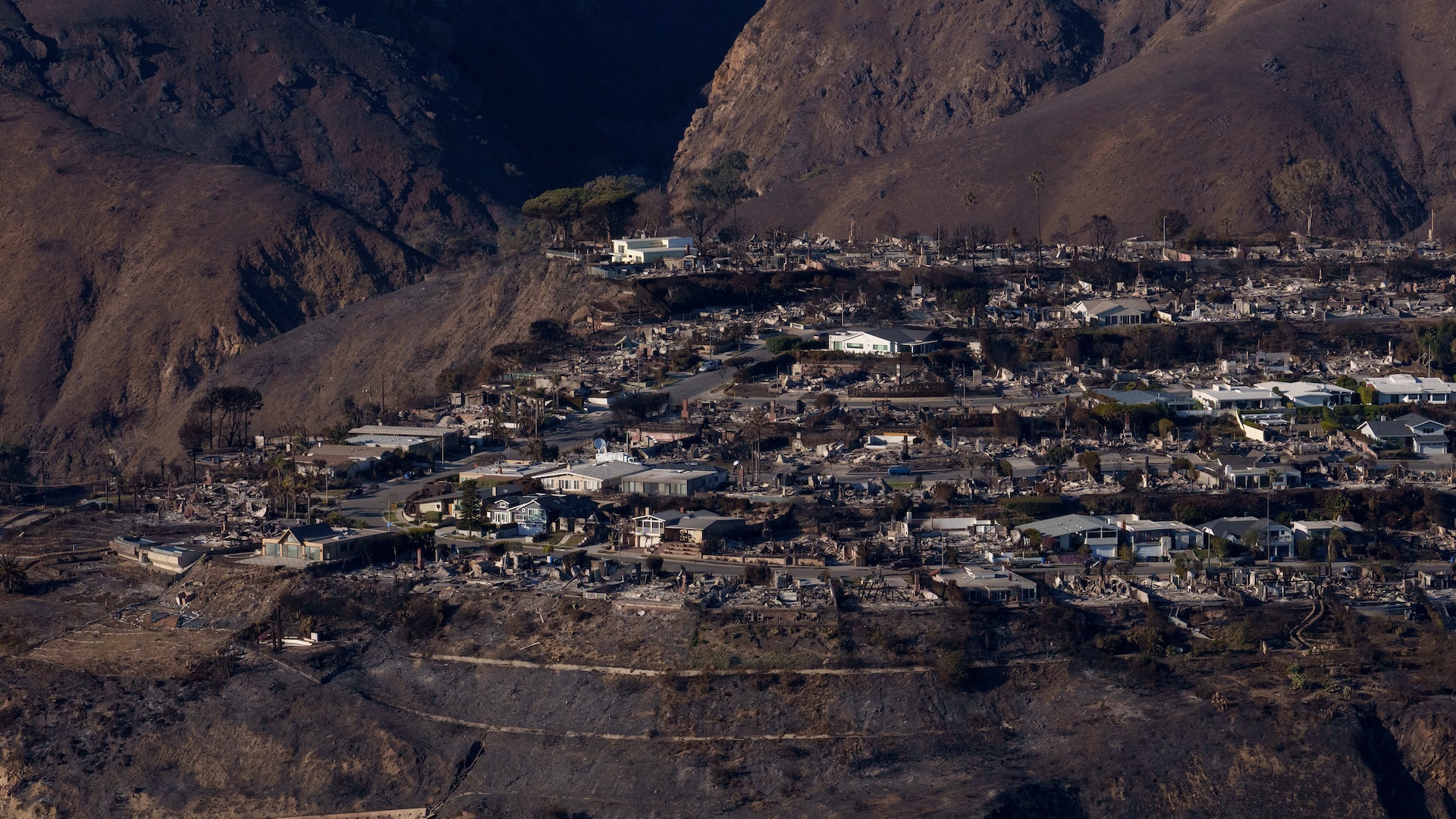
The Palisade and Eaton fires ripped through highly valuable properties in Los Angeles, contributing to the record-breaking costs. (Image credit: Bloomberg via Getty Images)Record-breaking winter
One event this winter caused much of 2025’s natural disaster damage — the Los Angeles wildfires. In January, wildfires burned through mostly “high-value single-family homes” in Pacific Palisades and Eaton Canyon, Zhiyun Li, a climate economist at UCLA, told Live Science in an email. Together, they are the most costly wildfires in U.S. history — and the costliest in world history.
Insurance companies Gallagher Re, Munich Re and AON estimated total damages between $53 billion and $65 billion, taking into account direct losses such as property damage. Other estimates, which factor in property damage, rebuilding costs and capital losses such as impacts on gross domestic product (GDP), and in some cases health care and relocation costs and other factors, range from $76 billion to $275 billion.
In comparison, California’s entire 2018 wildfire season — the costliest season on record — incurred $30 billion (inflation-adjusted) in damages, according to estimates from NOAA.
The LA fires were extraordinarily destructive because they intensified quickly, as a result of strong Santa Ana winds, extremely dry conditions and overgrown vegetation from previous wet years, which dried rapidly.
You may like
“We could call it a one-two or a one-two-three punch, leading up to the catastrophic events in January,” Daniel Swain, a climate scientist at UCLA, told Live Science.
And unlike most previous wildfires, these blazes hit expensive, densely populated urban areas.
In addition to the California wildfires, a high number of other extreme weather events have occurred across the U.S. — in particular tornadoes. Two tornado events, in March and May, each caused at least $8 billion in insured losses each, according to AON. Floods and winter weather have also caused a lot of damage this year.
These have all helped make the first half of the year extremely costly.
Costly year in the forecast
If hurricane season is bad, 2025 could turn out to be the most expensive in history for weather disaster damage.
The most damaging and deadly weather events in the U.S. have been hurricanes, NOAA data show. So far, the Atlantic hurricane season has been quiet— but the season runs through November, and forecasters have predicted an above-average season.
Since 1980, tropical cyclones have caused more than $1.5 trillion of damage in the U.S. (inflation-adjusted) — more than all other types of extreme events combined — and have caused 7,211 deaths, more than any other extreme weather type, NOAA data show.
One reason hurricanes can be so destructive is that they often make landfall in heavily developed areas. “One of the most desirable places for building new homes and places to live is the ocean against the shore,” said Stephen Strader, an associate professor of geography and the environment at Villanova University. “It is beautiful 99.9% of the time, until the hurricane comes knocking and you end up with a lot of people in very highly exposed areas,” he told Live Science.
Government cuts mean NOAA has stopped publishing data on billion-dollar weather disasters. But overall, if the second half of this year is in line with the five-year average for July to December, the year’s total damage cost could be in the ballpark of $220 billion. This would mean $110 billion January through June and $110 billion for July through December.
To calculate this number, Live Science took the estimates of the first half of 2025 from Gallagher Re, AON and Munich Re — which NOAA previously said is comparable with its own estimates — and combined the average of those with NOAA’s estimates of average damage costs from July through December between 2019 and 2024.
Climate change impact
The destruction caused by natural disasters has been rising rapidly in recent decades.
In 1980, there were just three events that caused more than $1 billion in inflation-adjusted damage and the 1980s in total saw 33 such disasters, according to NOAA data. By comparison, 2024 alone saw 27 inflation-adjusted billion-dollar events, and the 2020s so far have experienced 115 disasters that cost at least $1 billion, not including this year.
“It just seems like every year we have an increasing trend. And it’s ticking up and up and up,” Strader said.
Part of this is due to human-caused climate change, which is making extreme weather events increasingly likely and intense.
“We’re just going to see more intense storms,” Ullrich said. “They’re going to intensify more rapidly as they make landfall, and you’re going to see larger storm surge associated with them, which is going to affect coastal infrastructure.”
“Any sort of extreme storm, particularly ones producing heavy rainfall, [is] worsened by climate change — that is, they produce more precipitation because of warmer atmospheric conditions,” Ullrich said.
This effect was seen during the Texas flash floods in July, when a large storm dropped about a foot (30 centimeters) of water in just a few hours over the Texas Hill Country, in turn causing the Guadalupe River to rise by more than 26 feet (8 meters) and burst its banks.
Flood losses are projected to increase by as much as 147% in Louisiana and 74% in Florida in 2050 relative to 2020’s losses, according to Climate Central. Much of this will be driven by climate change, Climate Central found.
But it’s not just storms that are supercharged by climate change. “We know that climate change is increasing the frequency and severity of fire weather — the hot, dry, windy conditions that are so conducive to the spreading of fire,” Dahl said.
The rapid transition between wet and dry conditions that fueled the LA blazes also may be worsened by climate change, research suggests.
Overall, “there’s abundant and overwhelming evidence that climate change is increasing the severity and likelihood of extreme fire conditions in the American West,” Swain told Live Science.
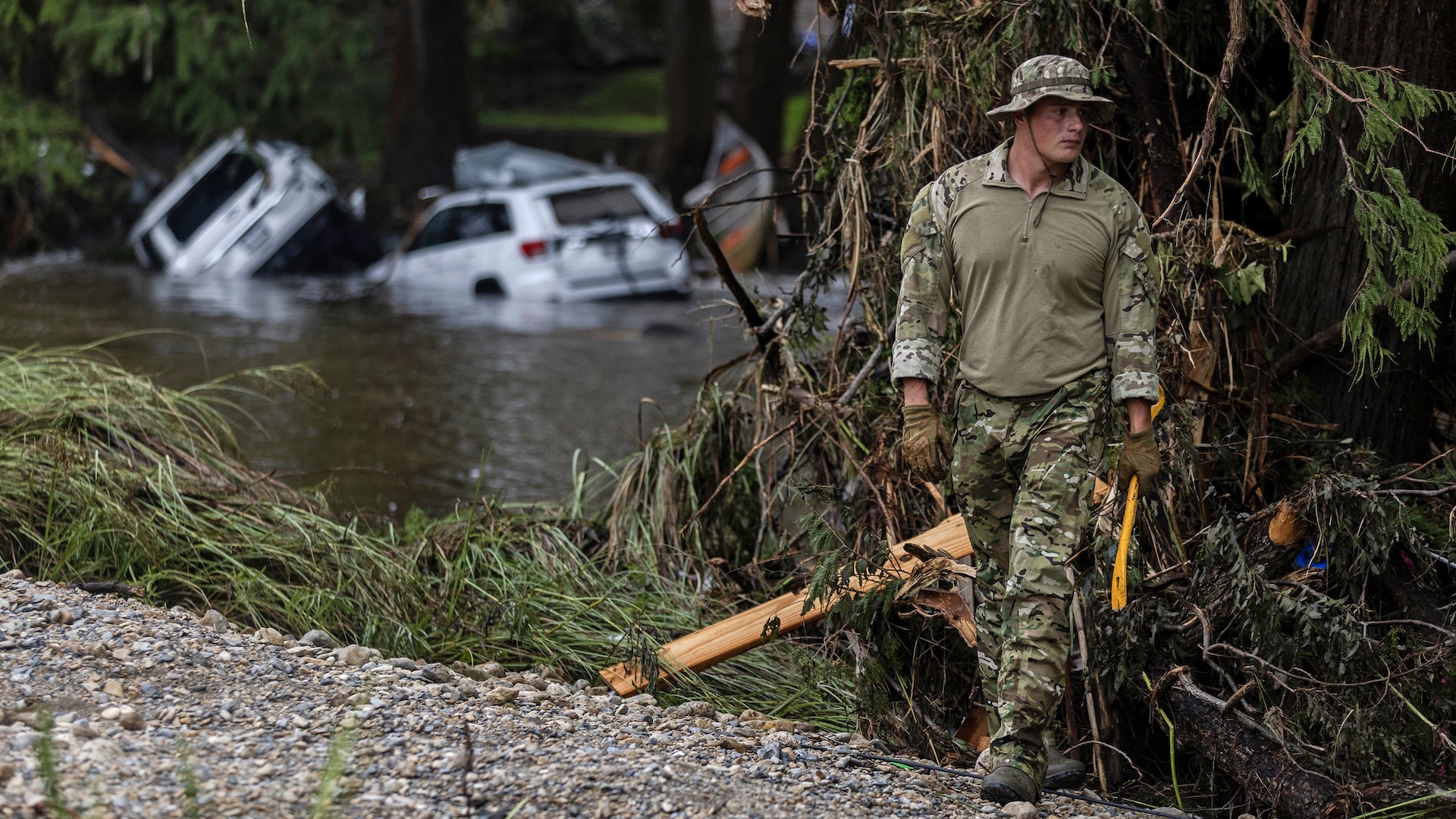
In July, deadly flash floods left 135 people dead after heavy rainfall caused the Gaudaloupe River to burst its banks. (Image credit: Jim Vondruska via Getty Images)Expanding bull’s-eye
Land-use changes also contribute to the increased devastation of natural disasters.
“We sort of have this two-headed monster going on in the world, which is our climate is changing; we’re having [worse] extreme weather,” Strader said. At the same time, more people live in the U.S. and on the planet, which increases our exposure, he added.
One factor that makes natural disasters more destructive is the expansion of urban areas. In 2017, 3.3% of the entire land area in the U.S. was urban — up from 2.2% in 1982 and just 0.8% in 1949. Population density has also increased, and the urban population has ballooned from 167 million in 1980 to 249 million in 2010.
This means there are more buildings and infrastructure to be destroyed, that weather events are more likely to hit urban areas, and that more people are affected when these areas are hit. Experts have dubbed this the “expanding bull’s-eye effect.”
Strader noted that the expanding bull’s-eye effect creates a particular risk for tornadoes.
“We’re not really seeing any change in the number of tornadoes,” and those tornadoes aren’t getting stronger, Strader said. Instead, tornadoes are now more damaging because we have built more homes and infrastructure in tornado-prone areas, he noted.
In addition, we are modifying the land in ways that make some disasters more likely. Replacing open space with roads, for instance, can worsen flooding.
“If we’ve modified the environment to have more pavement versus open areas where water can percolate, then we may have increased that urban flood hazard, even if the rain hasn’t changed and the size of the city hasn’t changed,” Swain said.
Our actions have also worsened the risks of wildfires. In the past, small, low-intensity fires regularly cleared out brush and helped regenerate forests in the American West. But after a century of fire suppression, the wilderness is overgrown. “There’s a deficit of natural, beneficial fires,” Swain said. This leads to a large buildup of fuel for wildfires, so when one does occur, it burns hotter, grows larger and is more devastating, Swain said.
Deaths versus damages
Even though natural disasters are becoming more frequent and destructive, more people aren’t dying as a result. That’s largely because warning systems and forecasting have improved, which, in turn, helps people get to safety in time, experts noted.
However, as climate change worsens, forecasting may not prevent a rise in fatalities.
“The two biggest [disaster types] I worry about are heat and flooding,” Strader said. “When we have very high heat waves, it affects a huge portion of the country, and heat is something you can’t escape from, especially if you’re vulnerable” or if you don’t have resources, he added, noting that minority groups are particularly affected.
Cities can become like “concrete ovens” — and while such extreme weather events may not always cause massive infrastructure damage, they can be as deadly as a massive hurricane or wildfire. For instance, a heat wave in the Midwest in September 1995 killed 872 people and caused $2 billion (inflation-adjusted) in damage, according to NOAA. But 2017’s Hurricane Harvey — the second-most-destructive extreme event on record, which hit Texas and Louisiana — caused $160 billion (inflation-adjusted) of damage and just 89 deaths.
And government policies could lead to more deaths in the short term, experts said.
The government is looking to cut funding and staff headcount at the Federal Emergency Management Agency (FEMA), the Forest Service and NOAA. These cuts will likely lead to significant impacts, both in the near future and longer term, experts told Live Science.
“It is actually highly plausible that the cuts that are being done right now … will probably increase disaster losses. It’s very much a self-inflicted wound,” Swain said. “The savings by cutting these programs are almost certainly to be far less than the costs incurred through greater disaster losses to come as a result of these objectively very short-sighted decisions.”