EEnvironment Read More Floods and droughts are both signs of water insecurity – they show up in these four placesSeptember 12, 2026 After the UK’s hottest ever summer on record, when much of the country has experienced a fraction of…

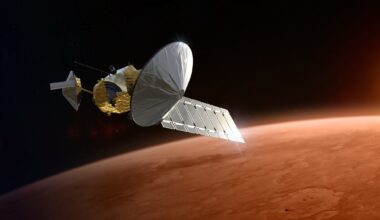
SSpace Read More Rocket Lab protests NASA’s decision to award Blue Origin $700 million Mars orbiter contractSeptember 12, 2026 Rocket Lab still holds out hope that it can build NASA’s next Mars orbiter. The agency picked Blue…
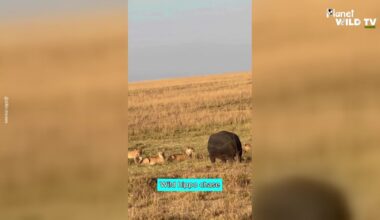
WWildlife Read More Hippo Turns To Confront Lions In Wildlife EncounterSeptember 11, 2026 A hippo has a tense encounter with a group of lionesses after becoming the target of their attention…
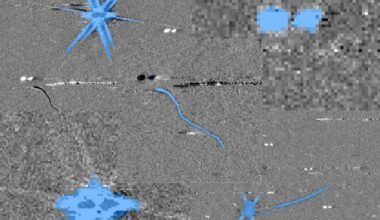
SScience Read More Refine Telescope Data with New Artifact InSPECtorSeptember 11, 2026 How do scientists studying space with data from a telescope hundreds of thousands of miles away know that…
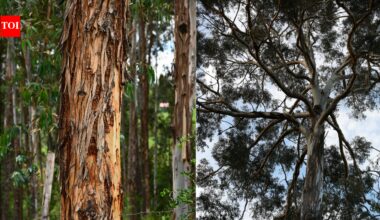
EEnvironment Read More Ethiopia planted eucalyptus to fight deforestation; decades later scientists found the trees can threaten springs and water supplies | World NewsSeptember 11, 2026 Eucalyptus trees were introduced to Ethiopia more than a century ago as the country struggled with shortages of…
SSpace Read More Copa Looks To Complete Fleet-Wide Starlink Installation By Mid 2027September 11, 2026 Copa Looks To Complete Fleet-Wide Starlink Installation By Mid 2027 | Aviation Week https://aviationweek.com/themes/custom/particle/dist/app-drupal/assets/AW_logo_horizontal_small_white.svg Skip to main content…
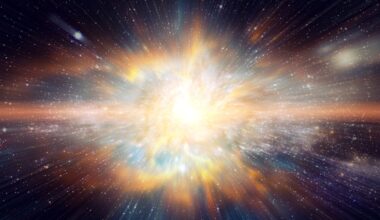
SScience Read More A star is exploding 45 million light-years away — here’s how you can see itSeptember 11, 2026 An extraordinary exploding star has been spotted in a distant galaxy, and astrophotographers are racing to capture it…
EEnvironment Read More Australia and Canada can learn from each other on climate if we separate action from declaration | Rosa GalvezSeptember 11, 2026 Canada and Australia are both democracies built on abundant resources, extraordinary biodiversity and world-class science, with prosperity built…
SSpace Read More Help Refine Data from Space Telescopes with Artifact InSPECtorSeptember 11, 2026 How do scientists studying space with data from a telescope hundreds of thousands of miles away know that…
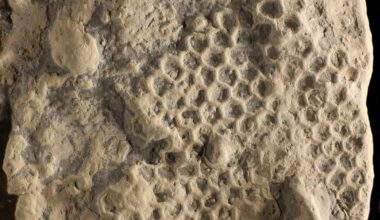
SScience Read More “One of the longest-running cold cases of palaeontology.” Scientists may finally know what created these strange markingsSeptember 11, 2026 An international team of scientists, led by palaeontologist Andrea Baucon from the University of Cagliari, Italy, have partly…
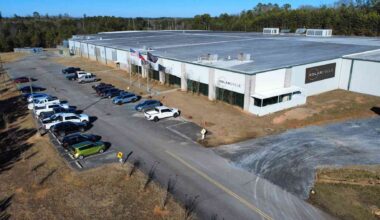
EEnvironment Read More Inside a 255,000 square foot plant in northwest Georgia, a recycling line processes worn solar panels and says it recovers 96 percent of the material value, with nothing going to a landfillSeptember 11, 2026 A flat panel slides off the back of a truck in Cedartown, Georgia, and onto a belt. It…
SSpace Read More The Moon is airless, radiation-drenched and can swing from about minus 173 to plus 127 degrees Celsius, yet NASA-led modelling found that some common Earth fungi and bacteria—from human skin, soil and damp bathrooms—could survive dormant for weeks or even months in cold, shaded niches near the lunar poles.September 11, 2026 The Moon appears to offer Earth microbes nowhere to hide. It has almost no atmosphere, no stable liquid…