New Zealand News Beep | NewsBeep.com
  • News Beep
  • New Zealand
  • Headlines
  • Business
  • Entertainment
  • Health
  • Science
  • Sports
  • Technology
New Zealand News Beep | NewsBeep.com
  • News Beep
  • New Zealand
  • Headlines
  • Business
  • Entertainment
  • Health
  • Science
  • Sports
  • Technology

Browsing Category

Science

48430 posts
EEnvironment
The place that never freezes: the Arctic habitat where global heating threatens more ice, not less | Sea ice
Read More

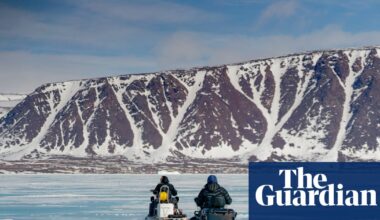
The place that never freezes: the Arctic habitat where global heating threatens more ice, not less | Sea ice

  • September 3, 2026
Electric-blue meltwater sprays up under Terry Noah’s snowmobile as he races across sea ice extending out from Canada’s…

SSpace
Could the Pentagon launch rockets into space from Banks Peninsula?
Read More

Could the Pentagon launch rockets into space from Banks Peninsula?

  • September 3, 2026
The National Aerospace Centre’s new policy on what to launch into space would say yes to the New…
SScience
Space scientists share 16 stunning ‘cosmic gem’ images | National
Read More

Space scientists share 16 stunning ‘cosmic gem’ images | National

  • September 3, 2026
(NASA/CXC/SAO et al. via SWNS) By Dean Murray Space scientists have revealed a gallery of “cosmic gems.” A…
EEnvironment
Whyalla steelworks sale faces potential delay as locals react to uncertainty
Read More

Whyalla steelworks sale faces potential delay as locals react to uncertainty

  • September 3, 2026
On and off for the past five months, a thick plume of steam has puffed out of the…
SSpace
Arab News
Read More

Arab News | Helene Huby: The rocket scientist and entrepreneur aiming to boost Arab countries’ presence in space

  • September 3, 2026
PARIS: Helene Huby may still be aged under 50, but she leads one of Europe’s most ambitious space…
SScience
Paranthropus Skull
Read More

The Human Family Tree May Need a Major Rewrite

  • September 3, 2026
New Monash University research argues our Paranthropus (pictured) and Australopithecus ancestors who lived up to 5 million years…
EEnvironment
Climate change past the point of no return, UN says, as worst impacts are now unavoidable
Read More

Climate change past the point of no return, UN says, as worst impacts are now unavoidable

  • September 3, 2026
In a strategic retreat in the fight against climate change, the United Nations has acknowledged that Earth has…
SSpace
China's private, reusable Pallas-1 rocket aces debut launch (video)
Read More

China’s private, reusable Pallas-1 rocket aces debut launch (video)

  • September 3, 2026
Another reusable Chinese rocket has taken to the skies. Pallas-1, a launcher developed by the Beijing-based company Galactic…
SScience
Giant mega-Earth: Large, rocky planet similar to Earth with the Milky Way in the background.
Read More

Giant mega-Earth is 23 times more massive than Earth

  • September 3, 2026
View larger. | Artist’s concept of a giant mega-Earth. The newly discovered mega-Earth GJ 523b is 23.5 times…
EEnvironment
Trump administration cut funds for landslide monitoring in Nepal
Read More

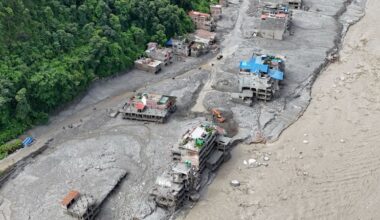
Trump administration cut funds for landslide monitoring in Nepal

  • September 3, 2026
In January 2025, the Trump administration cut off funding for a long-running natural hazards program that aimed to…
SSpace
NASA's Hubble Tracks New Decagon Encircling Saturn’s South Pole
Read More

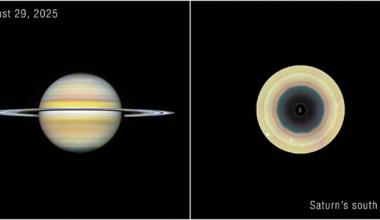
NASA’s Hubble Tracks New Decagon Encircling Saturn’s South Pole

  • September 3, 2026
Recent NASA Hubble Space Telescope images show the gas giant Saturn and its southern pole, where astronomers have…
SScience
Astronomers can identify water vapour, carbon dioxide and even oxygen across light-years—but nitrogen, despite filling 78 per cent of Earth’s atmosphere, is exceptionally difficult to see because N₂ lacks the strong infrared fingerprint of most gases. Only the faint signal created when nitrogen molecules collide gives it away.
Read More

Astronomers can identify water vapour, carbon dioxide and even oxygen across light-years—but nitrogen, despite filling 78 per cent of Earth’s atmosphere, is exceptionally difficult to see because N₂ lacks the strong infrared fingerprint of most gases. Only the faint signal created when nitrogen molecules collide gives it away.

  • September 3, 2026
The most abundant gas in Earth’s atmosphere is almost invisible to the methods astronomers use to read distant…
New Zealand News Beep | NewsBeep.com
www.newsbeep.com