SSpace Read More Amendment 72: New Opportunity: A.17 HydrosphereSeptember 2, 2026 A.17 Hydrosphere solicits research on the Earth’s Hydrosphere: to advance the understanding of the physics of Earth’s water…
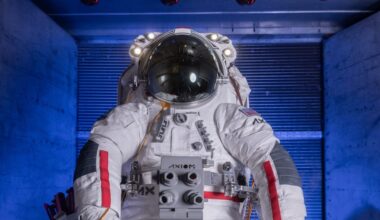
SSpace Read More Wary of Artemis IV timeline, NASA is changing lunar spacesuit designSeptember 2, 2026 NASA has decided to use a simpler spacesuit for its initial missions to the lunar surface, Ars has…
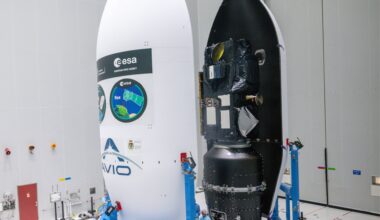
SSpace Read More FLEX and Sentinel-3C sealed within Vega-C fairingSeptember 2, 2026 Applications 02/09/2026 158 views 3 likes At Europe’s Spaceport in French Guiana, preparations for one of the year’s…
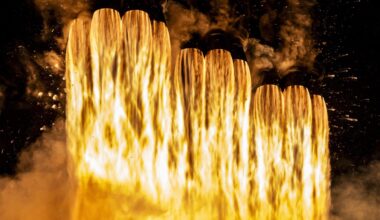
SSpace Read More Falcon Heavy brings the heat photo of the day for Sept. 2, 2026September 2, 2026 Fire spews from the 27 Merlin engines of a SpaceX Falcon Heavy rocket during the launch of NASA’s…
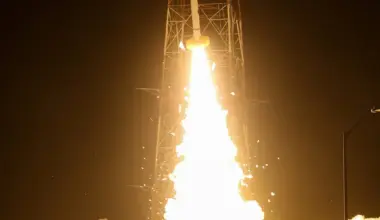
SSpace Read More NASA Rocket Takes First Multi-Point Look Inside Radio-Disrupting CloudsSeptember 2, 2026 High above Earth, thin veils of metallic haze drift through the edge of space. Known as sporadic E…
SSpace Read More Scientists may have detected the 1st direct evidence of dark matterSeptember 2, 2026 In what could be a groundbreaking discovery, scientists report they may have detected the first direct evidence of…
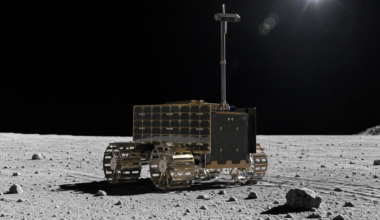
SSpace Read More ESA’s first lunar rover rolls forwardSeptember 2, 2026 Science & Exploration 02/09/2026 781 views 17 likes Yesterday evening, during a signing ceremony at the Space for…
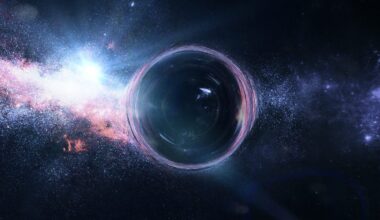
SSpace Read More A strange, dark object is warping the Universe. Scientists still don’t know what it isSeptember 2, 2026 Astronomers have found a small, dark object that’s so impossible to see, it can only be detected by…
SSpace Read More In 2025, astronomers mapped Quipu, the largest reliably identified cosmic superstructure yet—a branching filament roughly 1.4 billion light-years long, 13,000 times the diameter of the Milky Way’s stellar disc, with an estimated mass of about 200 quadrillion Suns.September 2, 2026 Quipu is difficult to picture because even the comparisons used to make it manageable are enormous. The structure…
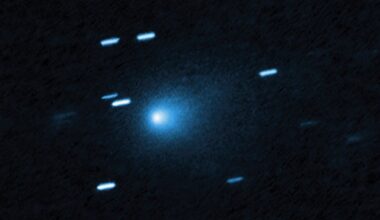
SSpace Read More Interstellar comet 3I/ATLAS arrived from the direction of Sagittarius with the highest incoming speed of any known interstellar visitor, accelerated to nearly 250,000 kilometres per hour near the Sun, and is now escaping on a hyperbolic trajectory that will never bring it back.September 2, 2026 Interstellar comet 3I/ATLAS is doing something no ordinary long-period comet does. It is leaving the Solar System without…
SSpace Read More Every galaxy in our neighborhood, including our own, is being pulled toward a single point in space hidden directly behind the crowded disk of the Milky Way, and when astronomers finally looked through the dust, they found a large, previously hidden cluster of thousands of galaxies sitting almost exactly where the pull was coming fromSeptember 2, 2026 In 1986, a small team of astronomers noticed something that did not add up. They were measuring how…
SSpace Read More All 16 New Russian Starlink-Rival Satellites Short of Target OrbitSeptember 2, 2026 An entire batch of Russian low Earth orbit satellites, intended to help create Moscow’s version of Starlink, has failed…