New Zealand News Beep | NewsBeep.com
  • News Beep
  • New Zealand
  • Headlines
  • Business
  • Entertainment
  • Health
  • Science
  • Sports
  • Technology
New Zealand News Beep | NewsBeep.com
  • News Beep
  • New Zealand
  • Headlines
  • Business
  • Entertainment
  • Health
  • Science
  • Sports
  • Technology

Browsing Tag

Marshall Astrophysics

13 posts
SSpace
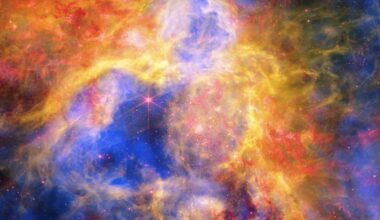
NASA Telescopes Create Colorful ‘Craft’ From Nearby Nebula
Read More

NASA Telescopes Create Colorful ‘Craft’ From Nearby Nebula

  • August 11, 2026
Like a collage made of layered sheets of colored cellophane, a vibrant new image layers observations of a…
SSpace
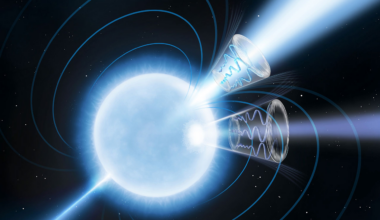
NASA’s IXPE May Have Proven 90-Year-Old Theory
Read More

NASA’s IXPE May Have Proven 90-Year-Old Theory

  • August 6, 2026
A first of its kind measurement of a magnetar may have captured empty space behaving in a way…
SSpace
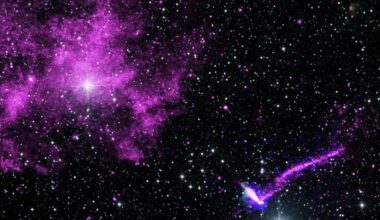
NASA Space Telescope Maps Magnetic Fields of ‘Lighthouse’ Pulsar
Read More

NASA Space Telescope Maps Magnetic Fields of ‘Lighthouse’ Pulsar

  • July 10, 2026
For the first time, scientists have used NASA’s IXPE (Imaging X-ray Polarimetry Explorer) to directly measure the magnetic…
SSpace
NASA's Chandra Finds Unexpected Fireworks in Aftermath of Stellar Explosions
Read More

NASA’s Chandra Finds Unexpected Fireworks in Aftermath of Stellar Explosions

  • June 15, 2026
The aftermath of a supernova, a stellar explosion, is usually a slowly fading cloud of hot gas. So…
SScience
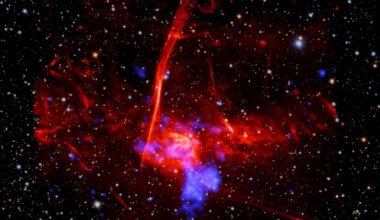
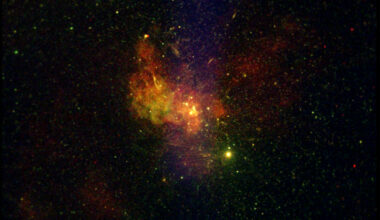
Astronomers may have uncovered a new supernova remnant in a star-forming region near the center of the Milky Way galaxy using data from Chandra and XMM-Newton. If confirmed, this would be one of the closest supernova remnants to the supermassive black hole in the Galactic Center. This image shows the region where the evidence was found, which contains X-rays from Chandra and XMM-Newton, radio data from the MeerKAT telescope in South Africa, and an optical image from the Pan-STARRS telescopes in Hawaii.
Read More

NASA’s Chandra Discovers Possible Supernova Remnant in Galactic Center

  • June 11, 2026
Using data from NASA’s Chandra X-ray Observatory, astronomers may have found a supernova remnant in an intriguing neighborhood…
SSpace
NASA Finds Young Stars Dim in X-rays Surprisingly Quickly
Read More

NASA Finds Young Stars Dim in X-rays Surprisingly Quickly

  • April 15, 2026
Scientists have found that young stellar cousins of our Sun are calming down and dimming more quickly in…
SSpace
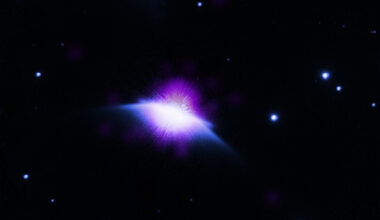
HD 61005 in X-ray and Infrared light.
Read More

Young ‘Sun’ Caught Blowing Bubbles by NASA’s Chandra

  • February 24, 2026
For the first time, a much younger version of the Sun has been caught red-handed blowing bubbles in…
SSpace
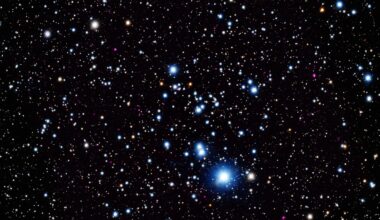
This image contains lower-, medium-, and higher-energy X-rays in red, green, and blue respectively.
Read More

NASA’s Chandra Releases Deep Cut From Catalog of Cosmic Recordings

  • January 24, 2026
Like a recording artist who has had a long career, NASA’s Chandra X-ray Observatory has a “back catalog” of cosmic…
SScience
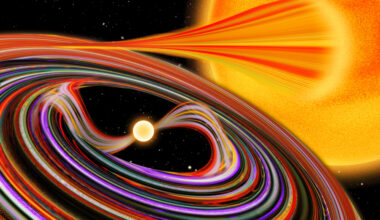
This artist’s concept depicts a smaller white dwarf star pulling material from a larger star, right, into an accretion disk. Earlier this year, scientists used NASA’s IXPE (Imaging X-ray Polarization Explorer) to study a white dwarf star and its X-ray polarization.
Read More

NASA’s IXPE Measures White Dwarf Star for First Time

  • January 5, 2026
By Michael Allen  For the first time, scientists have used NASA’s IXPE (Imaging X-ray Polarization Explorer) to study a…
SScience
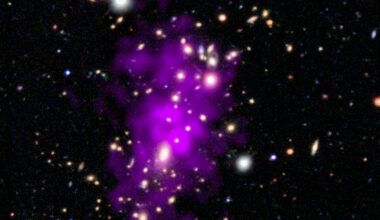
This release features a composite image of a galaxy cluster first discovered on New Year's Eve day, 2020. The cluster appears here as a large collection of brilliant white lights, each a distinct galaxy. A neon purple cloud stretches across the cluster's crowded core. Many of the hundred-plus galaxies in the cluster are in two clumps of galaxies towards the top and bottom of center. Some are encircled by a faint glowing haze, while a few foreground stars gleam with diffraction spikes. Some of the smaller galaxies are tinted blue, orange, or red, and some appear more oblong than round, suggesting spiral shapes viewed edge-on. The neon purple cloud sits at the heart of the image, surrounding the most densely-packed part of the cluster. This cloud, which spreads vertically across the cluster, is multimillion-degree gas observed by Chandra. The two clumps of observable galaxies, and the spread of superheated gas, reveal that the Champagne Cluster is in fact two clusters in the process of colliding. With the two clusters of sparkling light clinking together, and the auspicious discovery date, astronomers have dubbed the merged cosmic structure "The Champagne Cluster".
Read More

NASA’s Chandra Rings in New Year With Champagne Cluster

  • December 30, 2025
Celebrate the New Year with the “Champagne Cluster,” a galaxy cluster seen in this new image from NASA’s…
SScience
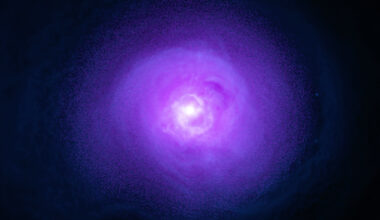
Chandra & IXPE composite image of the Perseus Cluster.
Read More

NASA IXPE’s Longest Observation Solves Black Hole Jets Mystery

  • December 16, 2025
Written by Michael Allen An international team of astronomers using NASA’s IXPE (Imaging X-ray Polarimetry Explorer) has identified…
SSpace
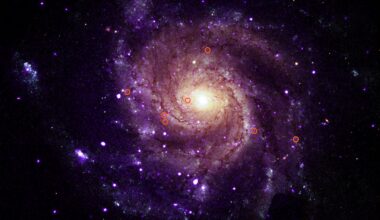
Painting Galaxy Clusters by Numbers (and Physics)
Read More

Painting Galaxy Clusters by Numbers (and Physics)

  • December 10, 2025
Galaxy clusters are the most massive objects in the universe held together by gravity, containing up to several…
New Zealand News Beep | NewsBeep.com
www.newsbeep.com