SScience Read More Did Humans Nearly Go Extinct 900,000 Years Ago? A Biologist ExplainsJanuary 25, 2026 At some point in the deep past, humans may have come frighteningly close to disappearing altogether. Here’s what…
SScience Read More It Was Longer Than A PersonJanuary 25, 2026 Long before dinosaurs, Earth’s forests were ruled by a many-legged giant. Here’s why this millipede’s size still challenges…
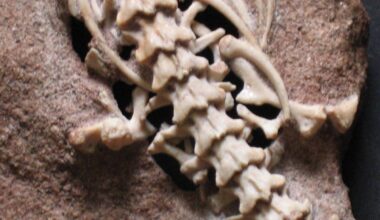
SScience Read More Meet The Snake That Refused To Lose Its Legs — A Herpetologist ExplainsJanuary 17, 2026 This ancient, leg-bearing snake is rewriting the story of how serpents slithered, and sometimes walked, their way through…
EEnvironment Read More Projected human land-use pressures and natural habitat conversion risk within global terrestrial protected areasJanuary 13, 2026 Protected Planet Report 2020 (UNEP-WCMC and IUCN, 2021). Pringle, R. M. Upgrading protected areas to conserve wild biodiversity.…
SScience Read More Deep conservation of cis-regulatory elements and chromatin organization in echinoderms uncover ancestral regulatory features of animal genomesJanuary 7, 2026 Sebé-Pedrós, A. et al. The dynamic regulatory genome of capsaspora and the origin of animal multicellularity. Cell 165,…
SScience Read More Repeated adaptation in sperm-related and neuronal genes in brood parasitic birdsJanuary 4, 2026 Publisher’s note Springer Nature remains neutral with regard to jurisdictional claims in published maps and institutional affiliations. This…
SScience Read More New Study Supports Sahelanthropus as the Earliest HomininJanuary 3, 2026 For all the attention devoted to human evolution, we still don’t know who our direct ancestors were, let…
WWildlife Read More Cave of Wonders: Where Prehistoric Bees Made Nests in the Bones of Animals Eaten by Colossal OwlsDecember 23, 2025 – credit, Lazaro Viñola López via SWNS Burrowing bees generally prefer to make their nests in the open,…
WWildlife Read More Anacondas Reached Their Enormous Size 12 Million Years Ago and Never Looked Back » ExplorerswebDecember 9, 2025 For as long as humans have known them, anacondas have been giants. The colossal snakes average four to…
SScience Read More Fossil tracks in Italy record a turtle stampede from 80 million years agoDecember 6, 2025 In the spring of 2019, free climbers scaling the risky cliffs of Monte Cònero on Italy’s Adriatic coast…
WWildlife Read More Meet The 42-Foot Snake That Ruled Earth After The Dinosaurs — A Biologist ExplainsDecember 5, 2025 About 60 million years ago, long before humans and just after the dinosaurs vanished, a giant snake rose…
WWildlife Read More Fossils Reveal the Green Anaconda Has Been a Giant For 12 Million YearsDecember 4, 2025 Nowadays, anacondas are usually four to five meters long, but they can reach seven meters. Credit: Andres Alfonso-Rojas…