
What if the pivotal moment of 90s sci-fi wasn’t where everyone is looking? A movie with endless nights planted ideas that others harvested, only to reappear where no one expected it.
If “The Matrix” became a benchmark, a year earlier another tale of alienation and control slipped through the public’s fingers. Today, “Dark City” returns triumphantly through streaming, inviting a reexamination of its narrative boldness and the reasons for its initial commercial failure. From John Murdoch’s wanderings to the threat of the Strangers, the work reflects fascinating echoes and differences with the success of the Wachowskis. Between Alex Proyas’ vision, the performances of Rufus Sewell, Jennifer Connelly, William Hurt, and Kiefer Sutherland, and the support of critics like Roger Ebert, its rehabilitation speaks as much about our era as it does about the film itself.
When “Dark City” falls into the shadow of “The Matrix”
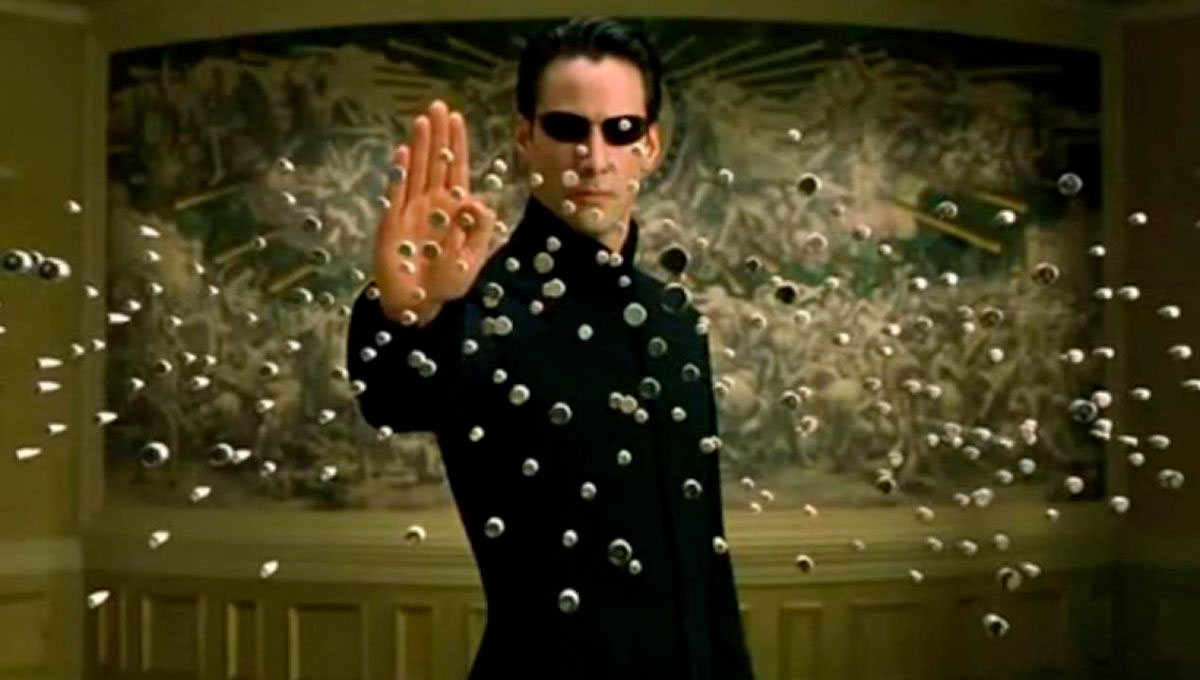
At the end of the 90s, science fiction cinema shifted towards a technological and metaphysical imagination. In 1999, The Matrix reshuffled the deck with its virtual reality, ballistic fights, and massive marketing. A year earlier, in 1998, Dark City was already exploring the illusion of reality and identity manipulation, with an expressionist nocturnal aesthetic and labyrinthine storytelling that could have established it as a reference. Its formal and conceptual daring, however, was not enough to prevent the cultural eclipse caused by the Wachowski phenomenon.
A fascinating but forgotten plot
Directed by Alex Proyas, “Dark City” follows John Murdoch, played by Rufus Sewell, an amnesiac accused of murders he has no memory of. In a metropolis frozen in eternal night, mysterious entities, the Strangers, reconfigure the urban architecture and rewrite the inhabitants’ memories. Like “The Matrix,” the film questions the nature of reality and the construction of the self, but favors mystery, urban nightmare, and suggestion over spectacular excess. Weakly supported in theaters, it did not benefit from the promotional momentum of a studio like Warner Bros. behind “The Matrix”.
Why didn’t “Dark City” find its audience?
Upon its release in 1998, “Dark City” captivated part of the critics but struggled to establish itself commercially, falling victim to uneven distribution and a reduced marketing budget. Influential voices, however, highlighted its significance: Roger Ebert hailed it as a standard-bearer of the genre and called it a “visionary masterpiece“, praising its philosophical obsessions, gothic art direction, and elliptical storytelling. The audience, still unfamiliar with this blend of anticipation, film noir, and metaphysics, turned more towards more conventional entertainments, relegating “Dark City” to a success of esteem.
A reevaluation thanks to the streaming era
Digital word-of-mouth and easy access via streaming platforms offer the film a second life. Rediscovered by new generations, “Dark City” captivates with its modular sets, practical effects, twilight photography, and the chemistry of its trio of performers — Rufus Sewell, Jennifer Connelly, and Kiefer Sutherland. The parallels with “The Matrix” become more apparent: many observers note visual and conceptual echoes, even mentioning the reuse of certain sets, which give the impression that “Dark City” paved a path that the 1999 blockbuster followed and amplified.
A masterpiece status (finally) recognized
The vision of Alex Proyas now stands as a unique contribution to science fiction: a complete universe where philosophical fable intertwines with a somnambulistic visual imagination. The critical reevaluation and late enthusiasm consolidate its place in the history of the genre, reminding us that some films, too ahead of their time, require the patience of rediscovery to fully reveal their brilliance.