
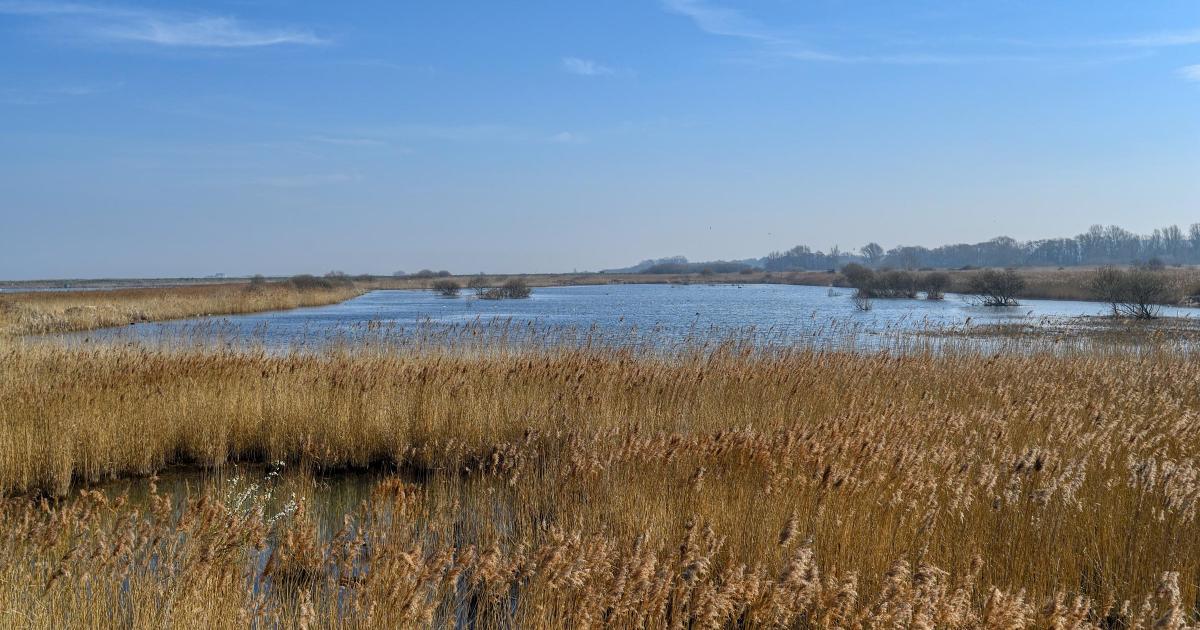
The RSPB wants to install a sluice in part of the eastern seawall protecting its Titchwell Marsh reserve on the coast near Hunstanton.
Its planning application says the structure will help manage tidal flow and stave off loss of material from the marshes.
READ MORE: Ship fire plastic sparks fears for wildlife
A pipe and gate will be installed in an area of seawall which was breached in 2009, when the charity surrendered outlying areas to the sea to allow salt marsh to build up and form a natural barrier, protecting habitats further inland from the tide.
Hayley Roan, the RSPB’s senior sites manager for north west Norfolk, said: “Over a decade ago, the RSPB undertook a project to let natural processes shape the coastline, including reinforcing the sea defences and breaching the sea wall at Volunteer Marsh, allowing seawater to return and gradually restore the area to its original salt marsh habitat.”
She said since then the salt marsh had acted as a natural soft sea defence by absorbing wave energy and slowing the flow of seawater, protecting the reserve from storm surges.
But monitoring has now shown the tides are eroding parts of the marsh.
“We are now proposing a new phase of work to give the saltmarsh a helping hand to establish and reduce the erosion risk to the seawalls in the short to medium term.
“This will help manage the flow of seawater into and out of Volunteer Marsh, reduce erosion, and encourage sediment to build up, which over time will restore the balance and support the continued growth of the salt marsh.”
Titchwell’s 400 acres include reed beds, salt marsh, saline and freshwater lagoons, reed beds and a stretch of sandy beach.
The reserve is home to rare breeding birds including bitterns and pied avocets, along with marsh harriers, while recent sightings include spoonbills and great white egrets.
The RSPB bought the marshes between Thornham and Titchwell for £53,000 in 1973.
Parts of the site had previously been used as a firing range during both world wars, with much of it returning to farmland after the second.