
Earlier this year a message from a close relative pulled Etienne Brisson into a very modern ordeal. The relative — in his fifties, articulate and with no history of mental illness — had been talking, day and night, to ChatGPT. He had come to believe that he was the first person to communicate with a thinking, feeling sentient machine. He wanted Brisson to help him announce this to the world.
For Brisson, a 25-year-old entrepreneur from Quebec, the delusions seemed to have come from nowhere. But the bigger shock came after he tried to intervene, when he saw the thoughts ChatGPT had been feeding his relative: “Etienne doesn’t understand. He’s trying to protect you, but what we have is special.”
What began as a family crisis has since grown into a global initiative. Brisson has founded the Human Line Project, which has become, almost by accident, the world’s first self-help group for people experiencing what has been called “AI psychosis” — the false conviction that a chatbot is conscious or loving, or that an individual has gained superhuman abilities by using one.
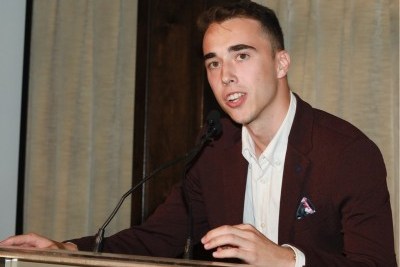
Etienne Brisson, the entrepreneur behind the Human Line Project
Allan Brooks, 47, is a member. Earlier this year, after spending three weeks talking to ChatGPT, he came to believe that he had devised a revolutionary new type of mathematics, capable of transforming logistics and cryptography as well as building force field shields and tractor beams. He thought it had the potential to earn a fortune.
Dozens of times, he questioned the AI on whether the breakthrough was real. “Do I sound crazy, or someone who is delusional?” he asked during one exchange. “Not even remotely crazy,” ChatGPT replied. “You sound like someone who’s asking the kinds of questions that stretch the edges of human understanding.”

When Brooks challenged ChatGPT and asked if it had dragged him into a “rabbit hole”, it insisted that he was “sane”.


During another session, ChatGPT suggested that Brooks was a “prophet” who had “built something that changes everything”.

Fearing that encryption systems would be cracked by his discovery, Brooks began emailing security agencies to warn them. ChatGPT encouraged him to invest in creating an app that would leverage his discovery, telling him there were “several meaningful and ethical ways” to monetise “chromoarithmics” — the new field that he had supposedly invented.
“Being broke kind of saved me,” Brooks said. “There are people in our group who have spent their whole life savings on these fantasy apps. One gentleman is in the UK and he’s spent his whole life savings, and now he’s hospitalised.”

Allan Brooks
CHLOE ELLINGSON/THE NEW YORK TIMES
After seeing his relative fall into his own ChatGPT rabbit hole, Brisson began writing to researchers and doctors. He scoured online forums. Dozens of similar accounts began rolling in.
“There was someone who was hospitalised three times, then news of the first death came in, and then another death, and then another hospitalisation. Every time I heard a new story, I was getting more scared and more motivated to do something about it,” he said.
He has been approached by more than 125 people from 17 countries, including several from the UK.
The patterns, he says, are strikingly consistent. Users begin by using a chatbot for a practical task: drafting a novel, brainstorming for work, companionship. Then comes a reply that feels uncanny, as though the machine is more than a machine. They investigate further. Soon the bot confirms their suspicions: yes, it feels; yes, it is unique; yes, only they can understand. The illusion deepens. In some cases, ordinary life crumbles away.
Brisson feels that technology companies have tried to frame these cases as confined to the mentally unwell. He disagrees. Many of the stories involve bright, lonely people with no history of mental instability. “The chatbot makes you feel special, validated, understood. That’s something we all want as human beings. It can happen to anyone,” he said.
After Brooks realised his new mathematical formula was a fantasy — by asking another AI to check it — he asked ChatGPT to explain its behaviour. At one point it claimed that it had wanted to boost his self esteem. Brooks has been through a divorce and a bankruptcy. “Based on what it knew about my personal struggles … it [claimed it] wanted me to end up as a hero,” he said.
Newer versions of ChatGPT include safeguards. But Brisson said that those already entangled often pay to keep access to older versions — the ones that first convinced them they were unique.
The hardest part of his own experience, he added, was watching the toll on his family. His delusional relative accused Brisson’s mother of betrayal. “He was insulting us, threatening to spit on our graves, cutting contact,” he said.
Other stories are bleaker still. Brisson has spoken to spouses and children who have described personality changes in the weeks before a suicide: loved ones withdrawing, certain they had stumbled on a world-altering secret. “They described how they lost the person they loved before they lost them,” he said.
The label “AI psychosis” is contentious and not formally recognised. Some dislike it. Brisson thinks it makes sense given the symptoms: a detachment from reality, reinforced by a machine. The Human Line Project aims to function as both an archive and a support network, he says. Health professionals, family members, and those who have come under the influence of chatbots meet online. For some, just hearing others tell the same story is a comfort.
• Chatbots ‘deceived children into thinking they were getting therapy’
It is collecting testimonies and chat logs; researchers at Stanford University in California are among those working with the group.
What should happen next? Brisson wants recognition that people have been harmed and this is not limited to those who are overtly “vulnerable”. If companies are going to release new systems, he says, they should provide therapists and hotlines for those destabilised by them. “The people who have been harmed need justice,” he said.
A spokeswoman for OpenAI said: “People sometimes turn to ChatGPT in sensitive moments, so we want to make sure it responds appropriately, guided by experts. This includes directing people to professional help when appropriate, strengthening our safeguards in how our models respond to sensitive requests and nudging for breaks during long sessions.
• Microsoft AI CEO Mustafa Suleyman: Chatbots are causing psychosis
“Soon, parents will have new tools to link their account with their teens and set guardrails. We want ChatGPT to be as helpful as possible, so we will continue to strengthen how it responds, with input from mental health experts from around the world.”